

























































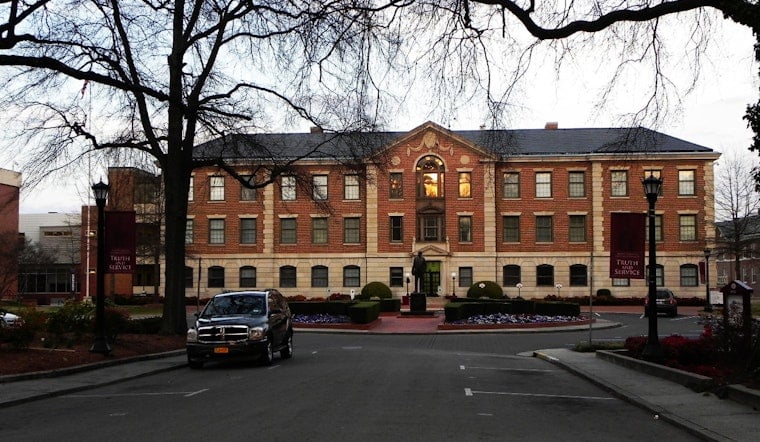
North Carolina Central University has become the first Historically Black College or University in the nation to open a dedicated artificial intelligence research center, unveiling a $7.2 million, 5,000-square-foot facility at Fayetteville and Lawson streets in Durham. More than 150 people turned out for the ribbon-cutting, touring six specialized learning studios that include an XR Innovation Sandbox and a Robotics Lab.
The new Institute for Artificial Intelligence and Emerging Research, known as IAIER, was financed through a mix of federal Title III grant funding and university trust funds, according to North Carolina Central University. As ABC11 News reported, students and faculty toured the new building during the ribbon-cutting ceremony, and university leaders framed the milestone as a point of pride for the campus. David Goings, who studies information technology at NCCU, said the institute's first-in-the-nation status fuels campus pride and gives students an opportunity to express themselves in AI.
The institute serves as a hands-on hub for AI literacy, robotics, machine learning, extended reality and ethical technology development, per the station's report. Lenovo provided equipment for the center, adding to the technology infrastructure inside labs designed to encourage experimentation and innovation.
A Project Years in the Making
While the building itself opened this month, IAIER's roots stretch back to January 2025, when it began initial operations with a $1 million grant from Google.org. The institute was formally approved as a university-wide institute by the NCCU Board of Trustees on December 17, 2025, a governance step that established it as an interdisciplinary research hub ahead of the physical launch.
Founding Director Siobahn Day Grady, an associate professor in NCCU's School of Library and Information Sciences, said the project has been years in the making and that NCCU is setting a pathway for others to follow as the first institution to do this. Grady made history herself in 2018 as the first woman to earn a Ph.D. in Computer Science from North Carolina A&T State University. She also said students want to be involved and feel part of their learning.
Applied Research Before the Ribbon Cutting
IAIER had already produced real-world results before its building opened. An independent evaluation conducted by the institute found that a 12-week pilot program at the North Carolina Department of State Treasurer using OpenAI's ChatGPT saved state employees 30 to 60 minutes per day and sped up unclaimed property recovery, a program Hoodline previously covered in June 2025. In August 2025, the institute partnered with OpenAI Academy to host “HBCUs Leading the Future,” a national summit that convened students, faculty and local seniors to explore practical AI applications, with technical career tracks alongside AI training sessions for older adults.
Pebbles Lucas, who attended the opening, said today's students have tools she never imagined and noted that students can now use a telephone and ChatGPT to find synonyms and antonyms. NCCU Chancellor Karrie G. Dixon said the institute is preparing students for careers in North Carolina and beyond, adding that artificial intelligence is accelerating across industries and that its usage should be developed responsibly and ethically.
Curriculum Changes Reaching Every Freshman
The institute's launch has already translated into curriculum changes across campus. NCCU added an AI module to its mandatory freshman introductory course in fall 2025, ensuring incoming students receive baseline AI literacy, and established an AI minor through its Department of Mathematics and Physics starting this fall, according to the university.
NCCU leaders said the institute will help students define the future of education as AI reshapes it nationwide and positions students to lead in a rapidly evolving field. That framing matters against a stark backdrop: federal workforce statistics from 2021 show Black workers comprised only 8% of the total U.S. STEM workforce despite accounting for 11% of the overall working population, according to Amsterdam News, citing a National Center for Science and Engineering Statistics report.
Part of a Broader HBCU Push Into AI
HBCUs already produce 25% of all Black bachelor's degree graduates in STEM disciplines and serve as the undergraduate origin for nearly 30% of Black science and engineering doctorate recipients, according to the United Negro College Fund, despite comprising roughly 3% of U.S. higher education institutions. A October 2025 national survey by Ellucian and UNCF, reported by Huston-Tillotson University, found that 98% of HBCU students and 96% of faculty report using AI tools, reflecting widespread engagement despite institutional funding gaps.
North Carolina's HBCUs are increasingly carving out distinct niches in the field. Neighboring North Carolina A&T State University received state approval in November 2024 to establish the state's first standalone Bachelor of Science degree program in Artificial Intelligence, structured as a dedicated major rather than a computer science track. NCCU's institute, by contrast, emphasizes hands-on literacy, robotics, extended reality and ethical technology development across disciplines rather than a single degree track.





