

























































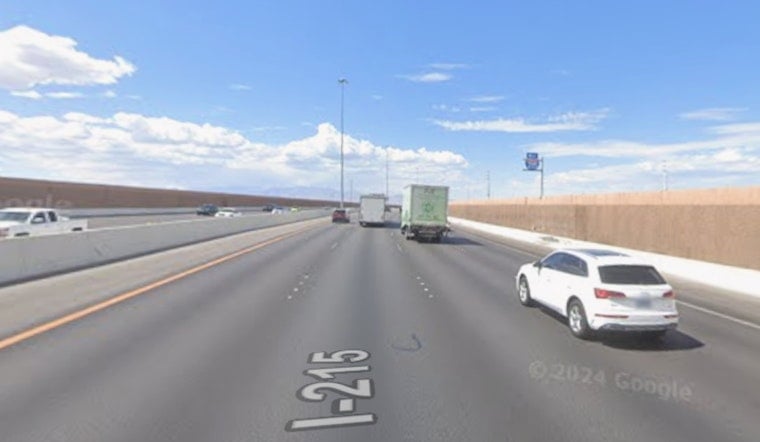
A driver's brakes failed on the 215 Beltway during the Monday afternoon commute on July 6, sending a car speeding up to 90 mph across 14 miles of Las Vegas freeway before Nevada State Police forced it to a stop by sandwiching it between two patrol cars. The driver stayed on the phone with 911 dispatchers the entire time, guiding troopers through a rolling emergency that stretched from near Rainbow Road to Ann Road before it ended safely.
Newly obtained 911 call audio and trooper body and dash camera video, reported by FOX5 Vegas, show troopers attempting what the station described as an untested, high-risk maneuver in moving traffic to bring the runaway vehicle under control. The driver placed the initial 911 call near Rainbow Road, and troopers worked to clear traffic ahead near Ann Road before closing in, according to the station's reporting.
How the Boxing Maneuver Worked
The technique troopers used is known as boxing: one patrol car pulled directly in front of the runaway vehicle while another moved in behind it, applying controlled pressure from both sides to force the car to slow, according to WFSB. The maneuver carried real risk given the vehicle was still traveling near highway speeds when troopers moved into position around it.
The physical contact between the patrol cars and the runaway vehicle triggered its onboard crash sensors, which helped slow and immobilize the car, per reporting from Autoevolution. Modern electric vehicles are built with automated systems that respond to collision-level impacts, and in this case that safety feature worked in troopers' favor rather than against them, according to the outlet's account of the incident.
What to Do If Your Brakes Fail
Nevada State Police advise drivers facing a runaway vehicle to call 911 or dial star-NHP, try shifting into neutral, apply the brakes firmly, attempt to turn off the ignition, and steer toward the right lane or shoulder if it is safe to do so, the same FOX5 Vegas report notes. Troopers emphasize staying calm and following dispatcher instructions throughout a freeway emergency like this one.
The 215 Beltway carries heavy volumes of commuter traffic through the Las Vegas valley, and Clark County consistently accounts for the vast majority of the state's traffic collisions, with the metro area logging more than 20,000 crashes a year, according to data cited by Ace Law Group. High-speed freeway corridors like the Beltway contribute heavily to that volume, the firm's analysis found.
A Broader Shift In Roadway Tactics
The incident arrives amid a broader regional shift toward more active vehicle interventions on Southern Nevada roads. In April, the Las Vegas Metropolitan Police Department expanded its pursuit policy to allow officers to chase drivers in a wider range of circumstances, including DUIs, stolen vehicles, and major crime series, according to KSNV NBC News 3 Las Vegas. Clark County Sheriff Kevin McMahill cited rising criminal awareness of the department's previous non-pursuit rules as a factor behind the change, the station reported.
Highway coverage across the valley has been a persistent challenge for the Nevada Highway Patrol. During a prior 215 Beltway emergency in June 2024, a Nevada State Police spokesperson disclosed that the nearest available trooper was stationed 20 miles away near the Las Vegas Strip, KSNV NBC News 3 Las Vegas reported at the time, illustrating the deployment gaps troopers can face across the sprawling freeway network. Nevada State Police operate under Nevada Revised Statute 480.360, which grants troopers statutory authority to police public highways and respond to emergencies statewide.
What Caused the Brake Failure
The exact mechanical or electronic cause behind this specific vehicle's brake and throttle failure has not been determined and remains a subject for follow-up reporting. Nationally, federal regulators have found that most reported cases of sudden unintended acceleration in electric vehicles stem from driver pedal misapplication rather than software or mechanical defects. In March, the National Highway Traffic Safety Administration closed a defect investigation into sudden acceleration claims in electric vehicles on those grounds, according to Autoevolution. Whether that pattern applies to the July 6 incident on the 215 Beltway has not been established.





