

























































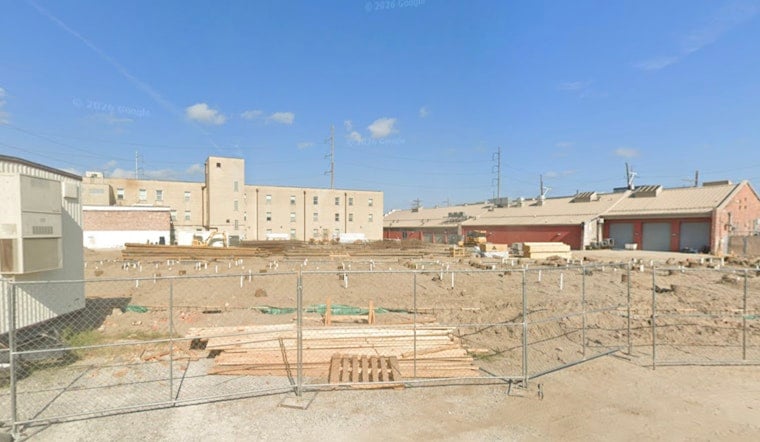
A four-story, $31 million apartment complex rising on Celeste and Tchoupitoulas streets in New Orleans' Lower Garden District is betting it can house the city's overlooked middle class — the nurses, teachers and police officers who earn too much for subsidized housing but too little to comfortably afford market rents. Millennium Place, an 80-unit development from Renaissance Neighborhood Development Corporation, is expected to wrap up construction in November and open to tenants by December.
The project targets what housing advocates call the missing middle: renters earning between 80% and 120% of the area median income, or roughly $49,650 to $74,450 a year in New Orleans, according to NOLA.com. These renters routinely pay as much as $2,000 for a one-bedroom apartment in the city, but Millennium Place's rents will run $300 to $400 lower than that for most of its units, the outlet reports.
Renaissance Neighborhood Development Corporation, the nonprofit developer behind the project, acquired the property in 2007 and demolished a storage warehouse that once stood on the site. The complex, spanning roughly 59,000 square feet, will include 65 one-bedroom apartments, 15 two-bedroom apartments, a rooftop terrace and a two-level fitness center with river views. Nearly half the units will be set aside for renters earning less than $49,680 a year, four apartments will go to people earning $18,650 or less, and 20% will be designated for households earning about $55,850 to $62,050 annually. The remaining roughly two dozen units will rent at New Orleans market rates, with that revenue helping offset the reduced rents elsewhere in the building, the report notes.
A For-Profit Arm Built to Bridge a Financing Gap
Millennium Place is owned by Millennium Properties, Inc., a for-profit subsidiary of Renaissance Neighborhood Development Corporation formed in 2014. The project is partially funded through state and federal grants, including just over $13 million from Louisiana's Middle Market Loan Program — a $56.1 million initiative funded through Community Development Block Grant Disaster Recovery dollars, according to the Louisiana Housing Corporation. The program was launched specifically to finance housing in areas affected by hurricanes Laura, Delta and Ida, and it lets developers build moderate-income housing without relying on federal Low-Income Housing Tax Credits, which typically serve only the lowest earners.
That financing structure matters because larger multi-family developments in New Orleans face an average financing gap of $12 million due to elevated construction costs and interest rates, RNDC leadership reported during October 2025 municipal housing deliberations, as covered by NORA. Vanessa Levine, executive director of Renaissance Neighborhood Development Corporation, said there is a gap between high-rent housing and low-income housing that projects like Millennium Place are meant to fill.
Housing Shortage Keeps Widening
HousingNOLA reported that New Orleans needs 55,000 new affordable housing units, up from an estimated 47,000 the previous year, per the housing nonprofit's study. Yet the city generated only 435 new housing opportunities between September 2024 and August 2025, according to HousingNOLA's 2025 Annual Report Card, underscoring how far local production is falling behind demand. Millennium Place will help only a fraction of the thousands of workers in Orleans Parish who earn just above affordable-housing eligibility levels, the NOLA.com report notes.
Andreanecia Morris, president of HousingLouisiana, said Millennium Place will help the working poor but not the most vulnerable residents. The project sits near the Tchoupitoulas neighborhood, which has evolved from a mostly lower-income area into one attracting some of New Orleans' highest earners — residents there now make roughly $93,000 a year, representing 150% of the area median income. Neighborhood changes have driven up rents, contributing to the displacement of longtime residents. Millennium Place and RNDC's related Cotton Press development aim to bring displaced longtime residents back and help them stay, per the report.
Part of a Broader Riverfront Push
Millennium Place sits near the planned River District neighborhood, where the Rivana Apartments project has not yet begun construction but recently cleared a major hurdle. In July, the New Orleans City Council approved a 40-year Payment-In-Lieu-Of-Taxes agreement securing tax breaks for Rivana's 220 planned affordable and mixed-income units, according to Providence Community Housing. Across town in Bywater, developers broke ground in January on a $300 million redevelopment of the former Naval Support Activity East Bank site that will add 294 apartments alongside a green-tech incubator, according to the same NOLA.com report — one of several major public-private efforts aimed at turning long-vacant city land into workforce housing.
RNDC's portfolio beyond Millennium Place reflects a similar pattern of adaptive reuse and expansion. The nonprofit completed renovations on the Lykes Steamship Building in 2013 after it sat vacant for more than 20 years, converting it into Centennial Place, a 52-unit mixed-income complex. Its Centennial Cotton Press building now houses a Congregation Coffee location and a commercial kitchen space available for lease, having previously been home to an indoor rock climbing facility and a fresh food program that provided meals to local charter schools. The organization also completed the Denham Townhomes in Livingston Parish last year, a 102-unit development that is now fully leased, and it has continued expanding regionally with The Oaks by the Bayou, a 120-unit FORTIFIED-standard community that broke ground in Houma in November 2025 in partnership with the Louisiana Housing Corporation.
City Policy Aims to Scale Up Funding
New Orleans officials have acknowledged the scale of the challenge at the policy level. In July 2024, the city's Mayor's Office published a Housing Ecosystem Plan recommending a standalone Department of Housing and the use of a voter-approved local Housing Trust Fund, with dedicated tax revenue set to begin flowing this year. Other examples of RNDC's mission extend beyond apartment construction: in September 2024, the nonprofit and Volunteers of America Southeast Louisiana closed $6.3 million in blended financing to open New Orleans' first family-focused residential substance recovery center near University Medical Center, allowing children to live with their mothers during treatment.
Elsewhere in the city, a former Holiday Inn in New Orleans East was converted into HighRise NOLA, an affordable and middle-class apartment complex, in 2022 — another example of the adaptive-reuse strategy now being applied at Millennium Place. Whether these scattered projects can meaningfully close a 55,000-unit gap remains an open question, but for the nurses, teachers and police officers who have watched rents climb out of reach, the 80 units on Celeste and Tchoupitoulas offer at least one concrete answer when leasing begins in December.





