

























































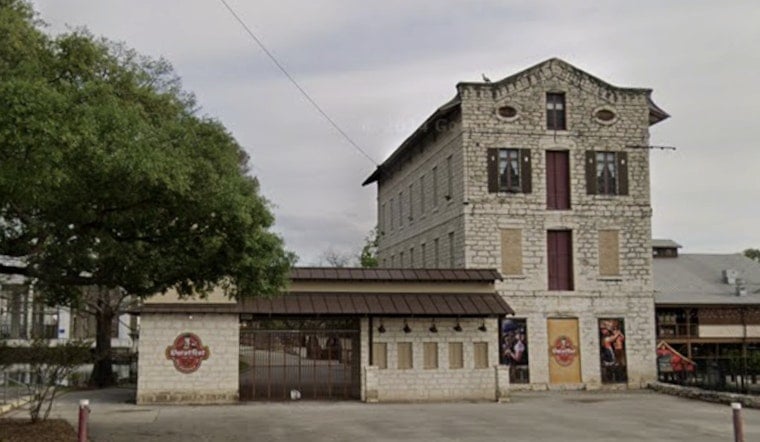
Wurstfest is coming back to New Braunfels, and organizers have already penciled in the next two years of Texas' biggest sausage party. The 2026 festival will run from November 6 through November 15, opening with the traditional biting of the sausage and tapping of the keg during a ceremony set for 5:30 p.m. to 6 p.m. on opening night at the Wurstfest grounds.
According to MySA, the opening ceremony will feature community leaders, festival royalty and guests, carrying on a tradition organizers describe as one of New Braunfels' most anticipated fall traditions. The festival has a long-standing habit of kicking off on the first Friday in November, and that pattern holds again in 2026. Organizers have also announced that Wurstfest 2027 will run November 5 through November 14, giving planners and vendors a head start on the following year.
From One-Day Sausage Promotion to 10-Day Institution
Wurstfest didn't start as the sprawling event it is today. City meat inspector and veterinarian Ed A. Grist created a one-day sausage festival in 1961, at a time when New Braunfels was home to 19 commercial sausage-making businesses carrying on generations of German culinary tradition, according to the Texas Historical Commission. The city itself traces its German roots to its 1845 founding, when immigrants established the meat-curing and sausage-making traditions that still shape the festival's identity.
The event grew well beyond its origins, expanding into its current 10-day format in 1968 and reaching 75,000 attendees by the end of that decade, per the Texas Historical Commission. Wurstfest now includes 10 days of German and Bavarian-inspired food, music, carnival rides, dancing and beer, having expanded over the decades to include multiple entertainment venues, food and drink offerings, shopping and traditional music. The festival's cultural staying power was formally recognized in November 2017, when the Texas Historical Commission and Comal County Historical Commission dedicated a Recorded Texas Historic Landmark marker on the Wurstfest grounds at 120 Landa Street, as Community Impact reported at the time.
A Quarter-Million Visitors and a Post-Fire Rebuild
Today's Wurstfest grew into a 10-day festival drawing hundreds of thousands of visitors, regularly pulling between 200,000 and 240,000 people to New Braunfels each year, according to reporting by the San Antonio Express-News. The festival recorded peak attendance of more than 233,000 in 2019, the same year a fire destroyed the vendor Marktplatz and damaged the main Wursthalle. The Wurstfest Association responded with a $12 million reconstruction project, reopening updated facilities in 2021 after the 2020 festival became the first full cancellation in the event's history, as detailed by Texas Highways.
The festival grounds themselves carry their own layered history along the Comal River, on a site first developed in 1850 by William H. Meriwether for grain milling and expanded in 1860 by Joseph Landa as Dittlinger Mills, with several 19th-century industrial structures still integrated into the event space today.
Volunteers, Nonprofits and the Local Economy
None of it runs without the roughly 300 volunteer members known as “Opas,” who wear traditional red vests and German felt hats and contribute around 3,000 volunteer hours each festival, per the Express-News. Leadership appoints a grand leader called “Grosse Opa” each year to serve as the event's official ambassador. More than 20 local civic and nonprofit organizations also operate food, drink and craft booths during the 10-day run, relying on festival sales as their primary annual fundraising vehicle to hit operating and scholarship goals.
The economic stakes extend well beyond the festival grounds. New Braunfels' tourism and hospitality sector generated roughly $802 million in direct economic impact in 2023, with autumn events like Wurstfest serving as a major driver for local hotels, restaurants and retail shops during the fall run, according to the Express-News. For visitors planning ahead, general admission is free Monday through Thursday, while weekend gate admission ranges from $20 to $30, with children 12 and under getting in free every day, per MySA's earlier reporting.
With last year's road closures and transit tips still fresh for locals, the newly announced 2026 and 2027 dates give residents and out-of-town visitors alike a head start on planning around New Braunfels' biggest annual draw.





