

























































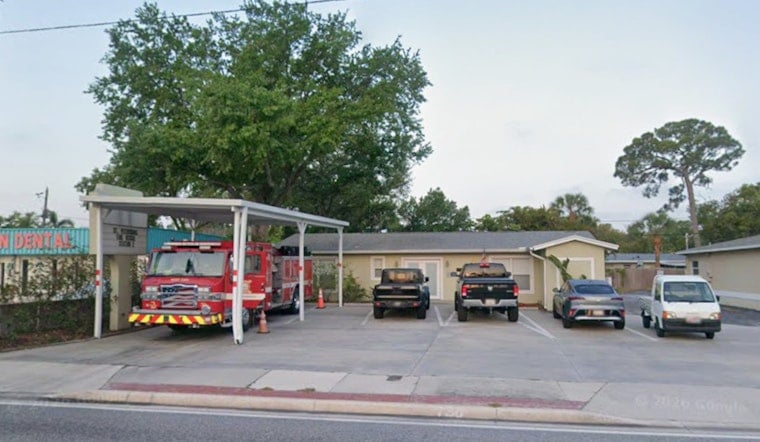
Firefighters and paramedics working out of St. Petersburg's Fire Station No. 2 have spent nearly a decade responding to emergencies from a 1,500-square-foot building built in the 1950s, one so cramped that crews converted a porch into a rest area and kept engines exposed to the weather because there was no covered storage. That is about to change. Construction is now moving forward on a permanent $8 million replacement station at 6560 26th Avenue N., with an opening targeted for spring 2027.
The temporary facility at 3100 66th Street N. lacked built-in hot water and proper showers on top of its missing covered engine bays, according to St. Pete Catalyst. The new site sits on land the city acquired in 2024 from the Pinellas County School Board, land that was formerly part of the Tyrone Middle School campus, the outlet reports. St. Petersburg Mayor Kenneth T. Welch and Fire Rescue Chief Keith Watts led an official community groundbreaking ceremony there on March 25, 2026.
The project has been a long time coming. St. Petersburg Fire Rescue officials first formally identified the need for expanded coverage and a permanent station in west St. Petersburg more than 15 years ago, but the effort stalled for years amid resource and site availability constraints, per Florida Construction News. Rapid suburban and commercial growth in west St. Petersburg increased call volume over the past two decades, the outlet notes, adding pressure on a department already stretched thin.
What the New Station Will Include
Designed by City Architect Raul Quintana and built by Biltmore Construction Co., the new 8,700-square-foot station will include two vehicle bays, individual sleeping quarters for each firefighter, a fitness room, a decontamination area, bunker gear storage, and covered engine parking, the same report states. In a video posted to Facebook, St. Petersburg Fire Rescue said the improved living and operational spaces are meant to prioritize the health, safety, and well-being of first responders and to support the 24-hour schedules that firefighters and paramedics work.
The department described the project as an investment in both the community and its first responders, saying the finished station will provide firefighters and paramedics with a modern, safe, and healthy work environment while strengthening the community's service capacity. Construction is funded in part through Pinellas County's voter-approved Penny for Pinellas 1-cent sales tax, following St. Petersburg City Council approval of project construction funding in 2021, according to the same Florida Construction News report.
Part of a Larger Public Safety Push
St. Petersburg Fire Rescue operates 13 fire stations across the city with more than 350 personnel who respond to more than 58,000 emergency calls annually, according to St. Pete Catalyst. For Fiscal Year 2026, the City Council approved a municipal budget allocating $49.5 million to the Fire Rescue Department's general fund and $25 million to its Emergency Medical Services fund, per the City of St. Petersburg, which also funded eight additional firefighter and paramedic positions that year.
Equipment safety within the department has drawn scrutiny recently. In October 2025, a city fire hydrant suffered a complete structural failure during an emergency response near 75th Street and 9th Avenue, launching into the air and severely injuring a firefighter engineer, as Hoodline previously reported. That incident triggered an internal review of hydrant safety protocols across St. Petersburg.
The new Station No. 2 also fits a broader regional pattern of Pinellas County municipalities upgrading vulnerable emergency infrastructure. In neighboring St. Pete Beach, city commissioners approved a $10.48 million contract in July to rebuild Fire Station 22 after severe hurricane damage from Helene and Milton destroyed the previous facility, according to The Gabber Newspaper. Coastal and inland communities alike across the county are moving to replace aging or storm-vulnerable stations with modern facilities built to withstand decades of continued growth and severe weather.





