

























































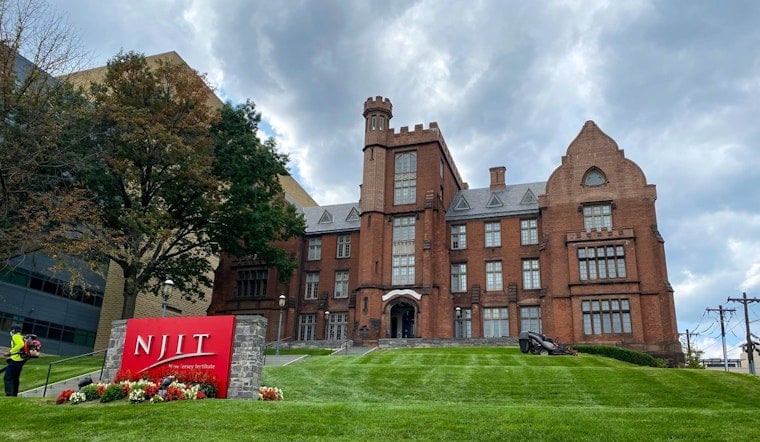
Graduate students at New Jersey Institute of Technology say their tuition bills are set to jump as much as 73% this fall after the Newark public university scrapped its flat-rate billing system for full-time graduate students. Students in NJIT's graduate programs say the change came months after most students had already registered for fall classes, and they are now pushing back against the new pricing.
Under the previous policy, graduate students paid roughly $12,491 in tuition for 9 to 18 credits per semester, according to figures reported by NJ.com. Under the new per-credit system, a student taking 15 credits will now be billed $21,630 — a 73% increase for that course load. NJIT now charges graduate students $1,442 per credit for the standard in-state graduate rate, a rate that applies broadly across its master's programs.
The shift hits students in some graduate programs especially hard because their degree structure leaves little room to spread out coursework. NJIT's Master of Architecture curriculum requires 90 total credits over three years, with standard semester loads of 15 credits or more, according to the university's bursar office. Under the old flat-rate system, taking 15 credits cost the same as the nine-credit full-time minimum; under the new per-credit model, there is no such cushion.
Students Say They Had No Warning
Graduate students had enrolled before the new cost structure took effect. The new pricing has focused attention on how currently enrolled master's students will be treated. Tuition information is available to prospective students.
NJIT's governing board approved the tuition increases and related changes on July 16, 2026 — three months after most students had already registered for fall classes. Interim President John A. Pelesko, who also serves as NJIT's provost and executive vice president for academic affairs, told the campus in an email that keeping tuition increases modest in prior years had left the university without financial flexibility once it collided with a nationwide drop in international student enrollment and reduced government funding, according to WDHA FM. Pelesko succeeded Teik C. Lim as interim president after Lim announced in June 2026 that he would step down.
Overall, NJIT raised tuition by approximately 6% for the 2026–2027 academic year. The university enrolls more than 12,000 students overall. NJIT also reports economic impact and research activity in its FY27 State Budget Submission Book.
University Points to New Transition Grants
NJIT has announced financial assistance for some graduate students to soften the blow. Susan W. Gross, NJIT's senior vice provost for enrollment management, said the university will help cover some higher graduate tuition bills during the 2026–27 academic year. The university will provide transition grants to graduate students taking more than nine credits, which will bring tuition and fees down to the nine-credit rate for anyone taking 10 credits or more. Gross said the grants are meant to support access and impact while the university builds a longer-term tuition model, per the same NJ.com report.
Not every graduate track faces the same math. Doctoral students remain under a full-time flat tuition rate even as master's students are billed strictly per credit, according to NJIT's official 2026–2027 fee schedule. The university also runs a separate, lower per-credit rate of $1,284 for its 100% online graduate e-Tuition track, compared with the standard $1,442 in-state graduate rate — a distinction that underscores how differently NJIT prices its various graduate pathways.
Undergraduates Feel the Squeeze Too
Graduate students are not the only ones absorbing new costs. NJIT also lowered its full-time undergraduate flat-rate credit cap from 19 to 17 credits per semester, meaning undergraduates who previously could take up to 19 credits under the flat rate must now pay $699 per credit for anything above 17 — up from $600 previously, per WDHA FM's reporting. Full-time undergraduates started a petition drive opposing the credit cap, and it had collected nearly 1,500 signatures by early August, with signers warning that students relying on 18 to 19 credit semesters to graduate on time now face unexpected additional fees.
In-state undergraduate tuition and mandatory fees at NJIT rose 5.97% to $22,426 for 2026–2027, up from $21,162 the prior year, the station reported. On-campus housing costs are also climbing between 4% and 5% depending on the residence hall, adding further pressure to students' overall cost of attendance as the fall semester approaches on September 1.
State Law and a Nearby Contrast
New Jersey law requires a public hearing before public university governing boards set tuition and fee rates. NJIT held its public hearing on the proposed 2026–2027 budget before finalizing the changes.
The situation looks different at Rutgers University, New Jersey's largest public university, which approved a $6.2 billion budget with a 3% tuition increase for 2026–2027 — its lowest rate hike in four years — while also instituting a university-wide hiring freeze to manage rising costs, according to News 12 New Jersey. Rutgers raised in-state undergraduate tuition by $448 to $15,381.





