

























































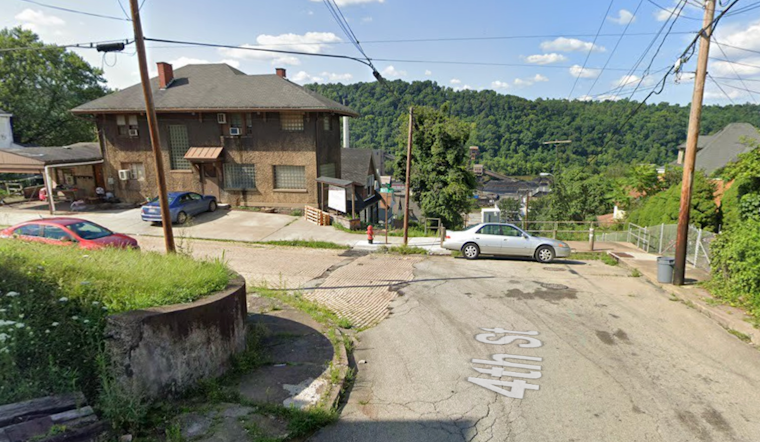
A North Charleroi man is facing 18 felony counts of aggravated cruelty to animals after Washington County police say they found 18 dead cats, several stuffed inside black trash bags crawling with maggots and flies, along with 20 more cats running loose through a home in deplorable condition. Joseph B. McKenna Jr. was taken into custody following the discovery at a house on Fourth Street, and he told investigators he had been struggling to care for the animals amid personal issues he was going through.
According to WPXI, the case began when neighbors reported seeing at least two dead cats inside garbage bags on the property. A police sergeant contacted a humane officer, who advised officers to obtain a search warrant before entering. Investigators knocked and announced themselves multiple times but could not make contact with anyone inside, and they eventually entered through the basement and side doors.
Bags of Decomposing Cats, a Body on the Kitchen Floor
Once inside, officers reported a strong odor throughout the house and described rooms coated in heavy dust and cat hair, with dirty dishes piled up amid the mess. A cat was visible lying on the kitchen floor with dark liquid coming from its mouth and throat area, the outlet reported. Investigators eventually located 18 dead cats in various states of decomposition, several of them inside two black trash bags covered in maggots, flies and other insects, while 20 living cats were found running around the property and inside the house.
When police contacted McKenna, he said he was the sole occupant of the house and that he lived on the upper floors. He told officers he had not been downstairs in the kitchen area for four to five days. McKenna said he was aware of the cats inside the garbage bags and estimated there were about four animals per bag, according to the report.
Frozen Pipes, Fighting Cats, and a Plan to Clean Up
McKenna told investigators the house's water had been shut off because the pipes cracked after freezing over the winter. He said the cats would often fight among themselves, and that he believed some of the dead animals had died from wounds sustained in those fights. He also said he planned to clean the house, but told police he had not reached out to the Washington County Humane Society, the police department, or any nonprofit organization for help.
Investigators said they remained unsure whether all of the cats on the property had been accounted for, and they told the outlet they were considering the possibility that more animals could be inside the home's walls or crawl spaces. The unsanitary conditions inside the house created challenges for investigators trying to get a complete count, per the same report. McKenna was charged with 18 felony counts of aggravated cruelty to animals causing serious bodily injury or death, along with 20 counts of cruelty to animals, and he is being held at the Washington County Jail.
Felony Charges Carry Steep Penalties Under Libre's Law
Pennsylvania toughened its animal cruelty statutes in 2017 with the passage of what's commonly known as Libre's Law, which allows prosecutors to file felony charges for a first offense when abuse or neglect results in death or serious injury, according to the Pennsylvania SPCA. Before that overhaul, animal abuse cases in the state were often treated more like summary traffic citations than serious crimes. Under the current Crimes Code, a conviction for third-degree felony aggravated animal cruelty carries a maximum of up to seven years in prison and up to $15,000 in fines per count, according to Humane PA — a maximum exposure that, multiplied across 18 felony counts, underscores the severity of what McKenna is facing.
The Washington Area Humane Society, which employs full-time Humane Society Police Officers under Pennsylvania Title 22 Chapter 37, is empowered to investigate abuse cases, execute search warrants and file criminal charges throughout Washington County, per the organization's own description of its humane services. State lawmakers have taken note of how often that authority gets used: since Libre's Law took effect in 2017, more than 6,000 animal cruelty cases have been filed statewide, prompting the Pennsylvania House Democratic Caucus in October 2025 to advance bills that would expand the state Attorney General's authority to help local prosecutors handle complex cruelty cases.
Another Severe Case in Washington County Just Two Months Ago
This is not the first time this year that Washington County authorities have confronted mass animal suffering. In June, WPXI reported that police charged a Hanover Township resident with one count of aggravated cruelty, 19 counts of cruelty and 36 counts of neglect after 19 dogs were found in severe neglect, with one found frozen to death; that defendant also cited personal health and maintenance struggles. Around the same time, Hoodline reported on a separate Washington County woman charged after humane officers inspecting an unlicensed kennel described a severe odor of decomposition.
The county has also seen far larger hoarding interventions in the past. In 2019, humane officers and national rescue groups pulled 206 animals, including 182 cats, from properties in Donora and Monessen, a case that later produced a $1.1 million care-reimbursement judgment upheld by the Pennsylvania Superior Court in 2022, according to the Pennsylvania Record. Under state law, shelters caring for seized animals during a pending prosecution can petition courts to require owners to pay $20 per day per animal to cover boarding and medical costs, the Observer-Reporter reported, a mechanism that illustrates the financial strain such seizures place on nonprofit shelters.
North Charleroi, where the Fourth Street property sits, is a small Monongahela River borough of about 1,302 residents packed into just 0.3 square miles, per the U.S. Census Bureau. Cases like McKenna's also fit a broader national pattern: the Animal Legal Defense Fund estimates roughly 250,000 animals become victims of hoarding every year across the country, a phenomenon experts describe as a complex mental health condition in which people accumulate pets without the resources to care for them. Investigators have not said whether additional cat remains might still be found inside the home, or whether the property will ultimately be declared uninhabitable.



