

























































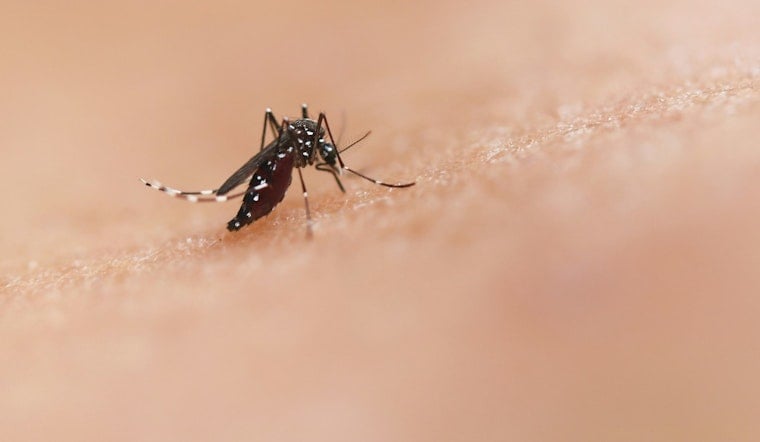
New York City has confirmed its first human case of West Nile virus of 2026, health officials said, after an unidentified New Yorker fell ill following time spent outdoors around the city and in several locations outside it. The diagnosis lands amid a mosquito season that has already produced nearly twice as many virus-positive mosquito samples as last summer.
The New York City Health Department confirmed the case this week, according to the New York Post, which reported that West Nile virus is transmitted by mosquitoes and that infected mosquitoes had already turned up in all five boroughs by June. The paper, whose report was authored by Matt Troutman, said the current season's positive mosquito samples number nearly twice as many as last summer's tally. That surge tracks with separate surveillance data showing more than 1,000 mosquito pools across the city have tested positive for the virus so far this year, with the season's first positive sample detected back on June 16, according to Patch. Each tested pool can include up to 50 mosquitoes trapped across more than 90 surveillance sites citywide.
A Sustained Climb in Severe Cases
The single confirmed infection sits atop a longer trend line the city's own health data has been tracking for years. Annual severe West Nile neuroinvasive disease cases among city residents have nearly doubled recently, averaging 31 cases per year from 2022 through 2025 compared with 16 cases per year over the previous decade from 2012 to 2021, per the NYC Health Department. Neuroinvasive cases involve serious central nervous system infections such as encephalitis or meningitis, while milder fever cases frequently go undiagnosed and unreported.
A decade-long clinical review by the city's health department, examining 166 patients treated for neuroinvasive infections between 1999 and 2009, found that 38 percent of those patients required intensive care unit admission, 21 percent required intubation, and the median hospital stay stretched to 11 days. Statewide, New York recorded 569 human cases and 30 deaths from West Nile virus over the ten years preceding 2026, according to the New York State Department of Health, which estimates that roughly 80 percent of infected people show no symptoms at all — meaning the true number of exposures is likely far higher than confirmed diagnoses suggest.
Spraying Trucks Rolled Through Brooklyn Just Before the Diagnosis
City health officials had already run eight targeted neighborhood mosquito-control spraying operations since July before this case was confirmed, interventions that officials say typically cut adult mosquito populations by roughly 70 percent and knock down positive virus pools by more than 85 percent, per the same Patch account. Trucks deployed EPA-approved adulticide treatments in South Brooklyn on August 17 and again on Wednesday, targeting 60 positive mosquito pools in the first treatment zone and 40 in the second, according to the Brooklyn Paper. Spraying decisions rely on mosquito density, infection rates, weather conditions and proximity to green spaces, city guidance notes.
That South Brooklyn effort followed an earlier round of citywide prevention work Hoodline covered aerial mosquito drops in June, when helicopters dropped larvicide over wetlands in Queens, Brooklyn, the Bronx and Staten Island to blunt breeding ahead of peak summer mosquito activity.
The Virus Is Spreading Beyond the City, Too
New York City is not alone in seeing its first case of the season this week. Suffolk County on Long Island confirmed its own first human West Nile case of 2026 on Tuesday, in a Town of Brookhaven resident over age 50 who developed symptoms in late July, according to The South Shore Press. Suffolk County recorded five human cases in 2025 and 21 in 2024, with no fatal cases reported there since 2017.
Nationally, the Centers for Disease Control and Prevention reported 222 human West Nile virus cases as of August 18, with cases concentrated in Arizona, California and Texas, per the CDC. Of those national cases, 156 — or 70 percent — involved severe neuroinvasive disease across 32 states, underscoring how heavily this year's national reporting skews toward serious illness, since milder fever cases rarely prompt testing. Federal officials said in July that the country experienced its earliest start to West Nile season in 22 years, driven by early viral activity across 23 states; a typical season produces only about 10 human cases nationwide by late June, compared with nearly 50 recorded by June 30 this year, according to Outbreak News Today.
Health Officials Urge Precautions as Peak Season Continues
New York City health officials are encouraging New Yorkers to take extra precautions to minimize mosquito-bite risk as the peak late-summer transmission window continues. Recommendations include covering up during dawn and dusk hours, wearing insect repellent, and removing standing water around homes where mosquitoes can breed. Dr. Alister Martin has said West Nile virus is preventable, reinforcing the message that these routine precautions can meaningfully cut individual risk.
West Nile virus first arrived in North America in August 1999, when an outbreak of human encephalitis cases and wild bird deaths surfaced in Queens, according to the U.S. Geological Survey. That original outbreak caused 62 human cases and seven deaths before the virus became permanently established across the country. More than a quarter-century later, health officials say it remains unclear exactly where within the region this year's confirmed New York City patient was exposed, and whether the rest of 2026 will follow the higher multi-year trend in severe neuroinvasive hospitalizations the city has recorded since 2022.





