

























































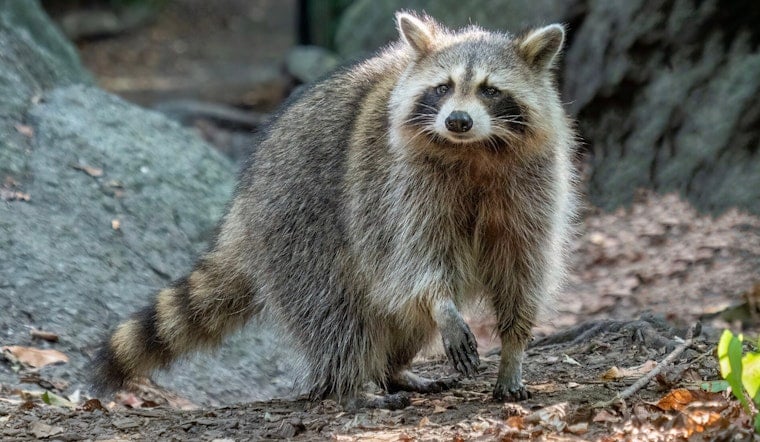
New York City has recorded 20 rabies cases among raccoons across Brooklyn, Queens and Staten Island so far in 2026, a pace that already matches the total for all of 2025 and is running 57% faster than last year according to city data. Staten Island leads the borough count with nine cases logged by Aug. 20, followed by Queens with six and Brooklyn with five. Meanwhile, at a bench near the American Museum of Natural History in Central Park, a family of raccoons has become an unlikely tourist attraction, drawing visitors who film, feed and try to touch them.
The surge is documented in exact laboratory-confirmed capture sites logged by the NYC Health Department, including rabid raccoons recovered at Hale Avenue and Highland Boulevard in Brooklyn, 132nd Avenue and 20th Avenue in Queens, and Victory Boulevard and Forest Hill Road on Staten Island. As reported by the New York Post, Manhattan has reported no rabies cases in 2026, following a single bat-related case in 2025. Over the last five years, Brooklyn has logged seven cases and the Bronx 17, while Queens has reported 39 cases and Staten Island 26 since 2022, according to the Post's reporting.
A Bench-Side Ritual Officials Say Is Dangerous
Israel Ortiz has fed raccoons from the same Central Park bench for nearly 20 years, per the Post, and insists the animals he feeds do not have rabies. But Gregg McQueen warned that people should not approach or pet raccoons or allow children to approach them, urging visitors instead to observe and enjoy the animals from a distance. Frank Maida, who was bitten by a rabid raccoon while gardening in Westchester County in 2019 and required a series of shots after the animal tested positive, said people who approach the Central Park raccoon family are crazy, calling the animals wild and capable of killing.
The NYC Health Department does not advise New Yorkers to approach raccoons or any wild animal, and it has said that feeding raccoons can make them aggressive and sometimes dangerous. NYC Parks has issued a similar warning, telling New Yorkers not to feed raccoons or approach them. Feeding wildlife on city parkland is also illegal: under Section 1-04(g)(2) of Title 56 of the Rules of the City of New York, the practice carries a civil fine of $50 to $75 and potential criminal violation fines up to $200, according to the New York City Bar Association.
What Rabies Does to the Body
Rabies is 100% fatal without treatment, according to the World Health Organization as cited in the Post's reporting. The disease begins with flu-like symptoms before a rapid neurological decline that can include hallucinations, thrashing, paralysis and foaming at the mouth. Raccoons can also carry distemper, bacterial infections, raccoon roundworm and other parasites beyond rabies itself.
The stakes of an actual bite are not abstract. One rabid raccoon bit a neighborhood woman before biting a man fixing his car, and another was killed with a shovel, according to the Post. CDC guidance lays out what happens next for anyone bitten or scratched: immediate wound cleansing, one dose of human rabies immune globulin, and a four-dose vaccine series given over 14 days, with typical out-of-pocket costs for uninsured patients ranging from $3,000 to more than $8,000, per the CDC. Officials recommend that anyone bitten or scratched wash the wound and seek medical attention immediately, and they say animals seen appearing dizzy or stumbling should be reported to 911. If a raccoon approaches, officials recommend hazing it by making loud noises, holding arms high and stomping feet.
Staten Island Says It's Being Left Out
New York City has distributed fish-scented bait packets containing rabies vaccine in select parks and green spaces across Brooklyn and Queens, but Staten Island has been excluded from that city-led oral rabies vaccination effort targeting wildlife. Vito Fossella said the exclusion amounts to “playing with people's well being,” given that Staten Island has recorded the most cases of any borough this year. The vaccination boundaries trace back to October 2025, when the health department expanded its bait distribution beyond Brooklyn and Queens into northern Manhattan specifically to block transmission from neighboring Nassau County, per the health department's own account.
Staten Island's absence from the current bait rollout is notable given its history: the borough was once the epicenter of the city's wildlife rabies fight, recording 62 terrestrial rabies cases between 2012 and 2014 that required low-altitude helicopter vaccine drops over its wooded areas, according to Nassau County government records. Central Park itself has been through this before. During a major outbreak from 2009 to 2011, 133 raccoons in the park tested positive for the virus before officials contained it with a trap-vaccinate-release program that immunized roughly 500 raccoons, according to research published in PMC.
A Regional Problem, Not Just a City One
New York City's spike is not happening in isolation. Long Island has seen a parallel surge, with Suffolk County confirming 39 rabid raccoons between February 2025 and this August after going 16 years without a single terrestrial rabies case, as Hoodline previously reported. New York State also requires that all domestic dogs, cats and ferrets receive rabies vaccinations by four months of age with regular boosters, a legal backstop meant to keep the disease from crossing into households, per the New York State Department of Health.
Cats remain the domestic animal most frequently diagnosed with rabies in the city due to their run-ins with infected raccoons, while no rabid dog has been reported in New York City since 1954 thanks to mandatory canine vaccination, according to the Animal Medical Center. The state's Wadsworth Center Rabies Laboratory processes roughly 6,500 animal specimens a year as the central hub for diagnosing suspected wildlife rabies cases statewide. For now, city officials are sticking to a simple message for anyone who encounters a raccoon in a park: keep your distance, do not feed it and do not let your kids get close, no matter how used to people it seems.





.jpg)