

























































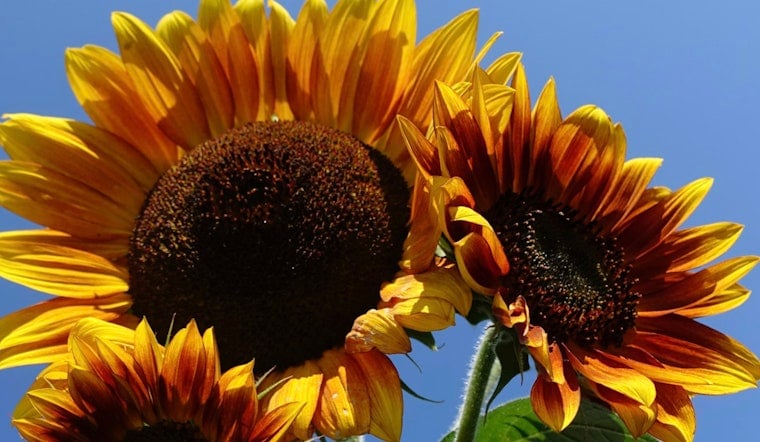
An 11-foot sunflower is towering over a sidewalk on Classon Avenue in Crown Heights, Brooklyn. In Mott Haven, groundskeepers are running weed whackers through grass that seems to double back within days of being cut. And in Upper Manhattan, toxic nightshades and pokeweed have sprouted in tree pits within sight of a daycare. Across New York City this summer, plants are climbing out of every available crack, crevice, and patch of dirt — and the people who track the city's greenery say they have never seen anything quite like it.
The scale of the bloom has stunned even longtime city officials. As reported by Gothamist, former city parks commissioner Adrian Benepe described uncontrolled plant growth as frightening, noting it is happening in parks across the five boroughs and that unmanaged soil in the city is simply being overtaken by nature. Benepe also shared photographs of the toxic nightshades and pokeweed growing near the Upper Manhattan daycare, underscoring how quickly wild vegetation can take root in places where children play.
Pokeweed, a native perennial that can shoot up to 10 feet tall in tree pits and sidewalk cracks, is a striking example of the tension between beauty and hazard. According to the Brooklyn Botanic Garden, the plant's taproots, leaves, and raw berries carry severe toxins that pose ingestion risks to both children and pets, even as its berries serve as an important food source for songbirds.
A Record-Wet August Supercharges the Bloom
August 2026 has been the rainiest August in at least five years, and that extra moisture, paired with sustained heat, has created what parks officials describe as ideal conditions for rapid plant growth. Young trees in particular have shown especially fast growth this season, the report notes, and experts quoted in the piece say aggressive plant growth is becoming the new normal for the city rather than a passing anomaly.
Bram Gunther, another voice cited in the reporting, said the unusually wet and warm weather has accelerated plant growth across the city. Vincent Gragnani, speaking about the sanitation department's response, said the agency is shopping for new equipment and expects the growth trend to continue as the climate changes. In the meantime, the department has redeployed street cleaning crews to weed-whacking duty just to keep pace, while parks and sanitation workers more broadly have stepped up efforts to manage the increased greenery.
From a Backyard Sapling to a Sidewalk Giant
Some of the growth has become a neighborhood spectacle rather than a nuisance. On Classon Avenue, Conal Darcy planted what he thought was an ordinary sunflower seed a year ago; instead, a leftover wild seed kept growing until it became gigantic, he said. Gothamist's transportation and infrastructure editor, Clayton Guse, measured the plant and confirmed it now stands 11 feet tall.
In Queens, Clara Pregitzer has watched a princess tree climb past 10 feet in her own backyard. The species, Paulownia tomentosa, is recognized by Cornell Cooperative Extension researchers as one of the fastest-growing trees in the Northeastern United States, capable of adding 10 to 20 feet in a single year in disturbed urban soil while scattering tens of thousands of wind-borne seeds from each pod — which helps explain why saplings keep popping up in concrete crevices across the city.
Mott Haven Residents See Beauty Amid the Overgrowth
Not everyone views the wild growth as a problem. In Mott Haven, Bronx, resident Ramona Ferreyra said nature is emerging from every available space and that it is beautiful, welcoming the vegetation taking hold in her neighborhood even as NYCHA groundskeepers there have had to run weed whackers multiple times a week just to keep the lush grass in check. Meanwhile, mugwort and other invasive weeds have grown more rapidly this season, according to the report, adding another layer to the maintenance challenge facing both public agencies and private landlords.
A Warming City Meets an Old Legal Obligation
New York City was reclassified as having a humid subtropical climate in 2020, and the federal government has since moved the goalposts further: in November 2023, the U.S. Department of Agriculture placed all five boroughs into Plant Hardiness Zone 7b, citing warmer average winter lows and longer growing seasons, according to the NYC Street Design Manual. That shifting baseline helps explain why heat and moisture are fostering such rapid growth this year, and why aggressive species can thrive so quickly in unmaintained concrete crevices.
The stakes are not just aesthetic. Under Section 16-118(2)(a) of the New York City Administrative Code, property owners and occupants are legally required to keep adjacent sidewalks and gutters free of weeds and litter, with the Department of Sanitation authorized to issue fines starting at $100, per the Business Resource Center. Separately, Section 7-210 of the code holds private property owners civilly liable for injuries caused by poorly maintained, weed-choked sidewalks, adding financial exposure to what might otherwise look like a purely seasonal inconvenience.
Those obligations fall mostly on private owners, but public land has its own upkeep problems. Legislation introduced in the City Council as Int. No. 650-2024 sought to require city agencies to systematically clean and remove weeds from city-owned roadways, step streets, and other public property, according to New York City Council records — an acknowledgment that the city itself has struggled to keep pace with its own greenery even as it presses private owners to do the same.
Bigger Trees, Bigger Bins, Same Old Sidewalks
The overgrowth story is unfolding alongside other city greening and cleanup pushes. City officials unveiled an Urban Forest Plan in April aiming to grow the tree canopy from 23.4 percent to 30 percent coverage by 2040, with funding and upkeep questions already surfacing around the plan. That same month, the city expanded its Empire Bin trash containerization program to six more sanitation districts, an effort aimed partly at eliminating uncontained trash bags that can harbor the kind of moisture and organic matter that helps weeds germinate.
Whether any of that municipal machinery can keep up with a warming, wetter city remains an open question. For now, the mugwort keeps spreading, the princess trees keep climbing, and in at least one corner of Crown Heights, an accidental sunflower has become the unlikely mascot of a summer when New York simply could not stop growing.



