

























































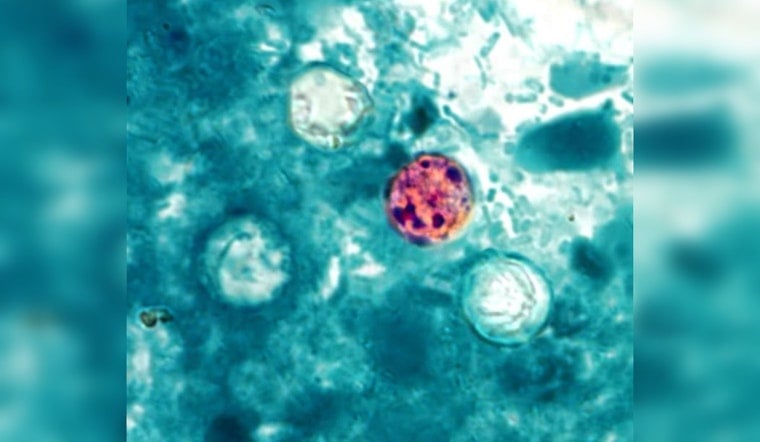
An Oahu resident who fell ill in late July has become the first person in at least a decade to contract cyclosporiasis without ever leaving Hawaii, state health officials say. The case marks a troubling first for a state that has spent the last ten years logging every single Cyclospora infection as something travelers brought home with them.
The Hawaii Department of Health reported the diagnosis as the sixth confirmed cyclosporiasis case in the islands this year, according to Island News. The Oahu resident had no recent travel outside Hawaii during the likely exposure window, a detail that sets this case apart from every prior one the state has recorded. For context, the department's own historical tracking shows zero locally acquired cases anywhere in Hawaii over the preceding ten years, with every prior infection tied to travel outside the state.
Hawaii's five previously reported 2026 cases all involved people who had traveled outside the state during their likely exposure periods, the department noted. That group included a nonresident visitor, two residents who had traveled abroad together, and two Hawaii-based military service members with recent out-of-state travel, one of whom was confirmed as the state's fifth case earlier this month in Hoodline's coverage of that diagnosis. Four of the five earlier cases were confirmed and one remained probable.
Investigators Still Hunting for a Source
State investigators have not identified a suspected contaminated food source behind the Oahu case, and the department says it continues to evaluate potential local food and exposure sources. Officials have confirmed that no recalled iceberg lettuce was distributed to or sold in Hawaii, ruling out the most obvious national link even as they keep looking. The Hawaii Department of Health says it continues to monitor for additional cyclosporiasis cases statewide.
The search comes as officials weigh an environmental clue detected earlier in August: a low-level signal of Cyclospora genetic material in wastewater at the Hilo Wastewater Treatment Plant, which serves roughly 32,500 residents. The finding, confirmed through metagenomic sequencing at the University of Missouri, was reported alongside the fifth case, though health officials cautioned that a wastewater hit alone does not establish active community transmission. That plant is separately in the middle of a $337 million rehabilitation project that broke ground in July 2025 following an EPA consent order over Clean Water Act compliance, an unrelated infrastructure effort that nonetheless reflects the county's broader focus on water safety.
A National Surge Sets the Backdrop
Hawaii's cluster is unfolding against a nationwide explosion in cyclosporiasis cases. As of August 24, the CDC had recorded 17,180 laboratory-confirmed domestic cases since May 1, compared with just 1,180 cases over the same stretch in 2025 — more than a fourteenfold increase year-over-year. Much of that national surge has been linked to a multistate outbreak tied to iceberg lettuce processed by Taylor Farms de Mexico, which included approximately 10,930 illnesses reported across 17 states as of August 20, with most of those illnesses beginning before the company issued its recall.
Taylor Farms de Mexico voluntarily recalled all iceberg lettuce sourced from central Mexico on July 17 and temporarily suspended operations at its central processing facility while federal regulators conducted onsite inspections, as Hoodline previously reported on a lawsuit tied to that recall. FDA testing had not turned up positive samples at the facility as of late August. Even so, Hawaii health officials have confirmed that none of that recalled lettuce made it into the state's supply chain, leaving the Oahu case's origin an open question.
Why Testing Often Misses the Parasite
Part of the difficulty in tracking cyclosporiasis is that standard stool cultures and routine ova-and-parasite exams routinely miss the organism. The CDC advises healthcare providers to specifically request Cyclospora testing, using specialized acid-fast staining or multiplex PCR panels, because the parasite can otherwise slip past conventional lab work entirely. That gap helps explain why official case counts often lag behind actual infections and why residents with persistent symptoms need to ask their doctors for targeted testing.
Cyclosporiasis is an intestinal infection caused by the Cyclospora cayetanensis parasite and is classified as a reportable communicable disease under Hawaii regulations, meaning healthcare providers and labs must notify the state's Disease Outbreak Control Division upon identifying suspected or confirmed cases. That mandatory reporting is what allows epidemiologists to start contact tracing and spot the kind of pattern now emerging in Hawaii. Cyclosporiasis can also occur sporadically in tropical climates, adding another layer of complexity to the investigation.
The American Medical Association notes that person-to-person transmission of Cyclospora is extremely unlikely, because oocysts shed in human stool must mature in the environment for one to two weeks before they become infectious. That biological quirk is why investigators are focused almost entirely on contaminated produce or water rather than casual contact between people. It also means the Oahu case likely traces back to something the patient ate or drank rather than exposure to another sick person.
Treatment and Precautions for Residents
Despite the unsettling first, the Hawaii Department of Health says the overall risk of cyclosporiasis to the general public remains low, and that a single locally acquired case does not change that risk assessment. Cyclosporiasis is treatable with prescription antibiotics, with the CDC recommending a seven-to-ten-day course of trimethoprim-sulfamethoxazole, sold under brand names like Bactrim or Septra, as the first-line treatment. No highly effective alternative currently exists for patients with sulfa allergies, and untreated symptoms can come and go or persist for several weeks or longer.
Health officials are urging residents to take basic precautions: washing fresh fruits and vegetables under running water before eating, cutting, or cooking them, and washing hands with soap and water before preparing or eating food and after using the restroom. Anyone experiencing severe or prolonged diarrhea should seek medical care, officials said. The Hawaii Department of Health says it will continue investigating potential sources of the infection as it works to determine how the Oahu resident was exposed.





