

























































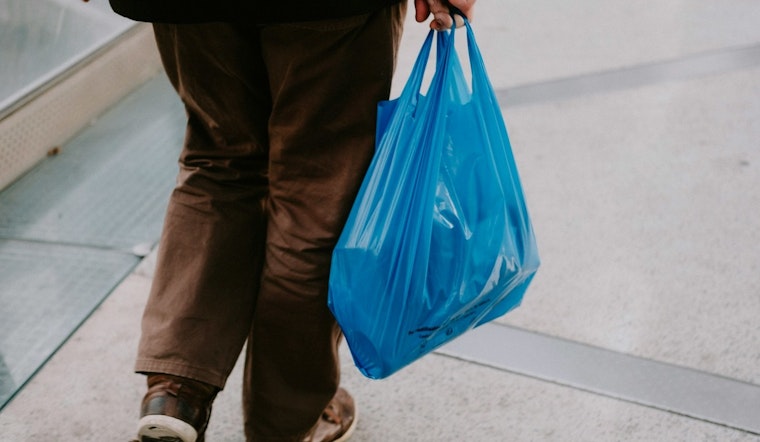
Shoppers at Oak Park's larger grocery and retail stores will pay more for single-use bags starting next year, after the village board voted to raise fees by 5 cents annually through 2029 as a bridge to an outright ban on single-use plastic bags in 2030. Single-use plastic shopping bags will cost 15 cents each starting January 1, climbing further each year until paper bags reach 25 cents apiece in 2030.
The board approved the bag-fee measure by a 6-1 vote on August 25, according to the Chicago Tribune. Oak Park first imposed a 10-cent bag fee in 2018, and under the village's existing ordinance the charge applies only to retail establishments of 5,000 square feet or larger, with retailers keeping half the fee and the other half funneled to the village to fund sustainability initiatives, according to the Village of Oak Park.
Village officials say the higher fees are meant to decrease plastic and paper bag use and cut down on the waste and environmental impact that comes with them, per the Tribune's reporting. But the current fee, per the same account, has not actually decreased bag use at Oak Park retail establishments — a gap officials are hoping the escalating cost will finally close before the 2030 ban takes hold.
A Contentious Vote Over Cost of Living
Not everyone on the board was on board. Trustee Cory Wesley voted against the measure, arguing the fee increase signals indifference to people who are already struggling with the cost of living and rising grocery prices. Sustainability staffer Lindsey Roland Nieratka countered that the gradual increases were designed specifically to shift habits over time, giving the village three years for education, outreach, communication and behavior change before the ban takes effect.
Trustee Derek Eder, meanwhile, raised concerns about potential backlash once the plastic-bag ban actually arrives in 2030, per the Tribune. He said residents should have an easy path to switch to reusable bags, and floated biodegradable or compostable plastic bags as a possible alternative the village could still consider during the three-year runway. Officials say they may weigh other alternatives to an outright ban during that period, and are separately considering a 24-hour tote bag giveaway location as part of a broader marketing campaign to promote reusable bags. Village Hall, which currently provides bags on-site, closes at 5 p.m. most days.
Shoppers using SNAP, Link, WIC or other food-assistance programs remain exempt from the fee under the existing ordinance, the Tribune reports.
Following Chicago and Evanston's Lead
Oak Park's move tracks a broader shift among Chicago-area suburbs. The city of Chicago replaced an ineffective 2015 plastic bag ban with a 7-cent bag tax in 2017, then raised it to 10 cents in 2025 and 15 cents in January, according to City Bureau. Chicago's original ban failed, the outlet notes, because retailers simply switched to thicker plastic bags that were exempt under the law — a cautionary tale for suburbs weighing similar policies.
Nearby Evanston went further, becoming the first Illinois municipality to enact a complete ban on single-use plastic bags in May 2023, with enforcement starting that August alongside a 10-cent tax on remaining single-use carryout bags, CBS Chicago reported. Evanston exempted non-chain stores under 10,000 square feet and restaurants from that tax. Other suburbs have taken their own approaches: Batavia enacted a 10-cent fee on large retailers in 2023, while Elgin has approved a plastic bag ban set to take effect in June 2027, according to the City of Batavia.
State lawmakers may soon complicate the patchwork of local rules. Illinois legislators introduced House Bill 5112 in February, proposing a statewide carryout bag fee starting at 10 cents in 2027 and rising by 5 cents annually until 2030 — a timeline that closely mirrors Oak Park's own escalation schedule, per the Illinois General Assembly.
Funding Sustainability, Testing Habits
Oak Park's bag-fee ordinance has generated more than $1.16 million since 2018, and the current fee brings in roughly $170,000 annually, according to Nieratka. That revenue has become increasingly important to the village's Sustainability Fund: trustees voted in November 2024 to transfer $500,000 from general reserves into the fund for fiscal year 2025 to cover ongoing shortfalls for environmental programs, according to the Wednesday Journal.
The fee escalation also lines up with Oak Park's broader climate commitments. The village adopted its Climate Ready Oak Park plan in August 2022, setting targets to cut community-wide greenhouse gas emissions by 60% by 2030 and reach net-zero by 2050 — a timeline that puts the plastic bag ban on the same clock as the village's emissions deadline. The bag fee is also just one piece of a wider phase-out of disposable plastics in Oak Park: since June 2023, restaurants and food establishments have only been required to provide single-use plastic utensils and foodware upon customer request.
Research on Chicago's own bag tax offers some evidence for why officials are betting on price increases over education alone. A study by New York University and the University of Chicago Energy & Environment Lab on Chicago's initial 7-cent checkout bag tax found that disposable bag usage dropped 42 percent per trip and reusable bag use doubled within the first month, with researchers noting that fees at checkout proved far more effective at changing shopper habits than small discounts for bringing reusable bags.





