

























































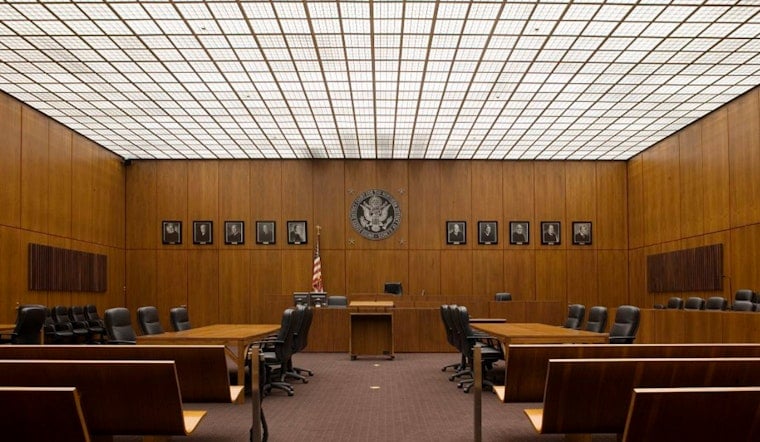
A federal judge has upheld Oak Park's rule requiring new buildings and residences to run entirely on electricity rather than fossil fuels, rejecting a legal challenge from a coalition of home builders, a labor union, and apartment industry groups. U.S. District Judge Franklin U. Valderrama ruled on July 30 that the village's ordinance, in effect since January 1, 2024, is not preempted by federal law.
The ordinance requires new buildings and residences in the village to be all-electric rather than powered by fossil fuels, according to the Chicago Tribune. Judge Valderrama determined that the rule regulates which fuel sources are allowed in new structures rather than setting energy-efficiency performance standards for appliances, which is why it escapes preemption under the federal Energy Policy and Conservation Act, according to the Public Health Law Center. That federal law generally prohibits state and local regulations concerning the energy-efficient or regular use of select products, per the Tribune's reporting.
Village Manager Kevin Jackson said the ruling affirms that Oak Park has the authority to make its own decisions about reducing greenhouse gas emissions and protecting residents' health, according to the Tribune's report. Village President Vicki Scaman said the decision supports moving away from reliance on petroleum and will lead to a stronger future for the community.
A Legal Fight Rooted in a 2025 Lawsuit
The case traces back to a lawsuit filed in 2025 by the Clean Energy Choice Coalition, NFP, an energy advocacy group that was incorporated that same month by local home builder Pat Cardoni and PR consultant Lissa Druss. Co-plaintiffs in the suit included IUOE Local 150, the National Association of Home Builders, and the Chicagoland Apartment Association, the Tribune reported. The coalition claimed Oak Park's ordinance conflicted with the federal Energy Policy and Conservation Act, arguing in its complaint that banning natural gas hookups usurps federal authority over national energy policy, threatens electric grid reliability, and inflates energy costs for local taxpayers, according to the Wednesday Journal. Opponents also contended that local fuel prohibitions create a confusing patchwork of municipal regulations, per Legal Newsline.
Earthjustice, a nonprofit environmental law organization, represented the village of Oak Park on a pro-bono basis in the case, according to the Tribune. Timothy Oberleiton of Earthjustice said the organization supports local and federal efforts to electrify and shares Oak Park's vision, adding that local authority is under attack through challenges to ordinances protecting residents' health and safety.
Oak Park's Place in a National Split
When Oak Park adopted its all-electric building code in June 2023, it became the first municipality in Illinois and the entire Midwest to pass a mandatory building electrification code for new construction, according to Engage Oak Park. That milestone made the village a natural target once building-industry and gas groups began challenging similar codes elsewhere in the country. In 2023, Berkeley, California, passed a ban on natural gas pipes in new buildings, but the U.S. 9th Circuit Court of Appeals found that Berkeley's ban violated the Energy Policy and Conservation Act and federal authority after the California Restaurant Association challenged it in federal court, claiming the ban preempted the law's rules on gas-appliance energy use, per the Tribune.
Judge Valderrama's ruling instead aligned with a growing legal consensus that has emerged since the Berkeley decision. The Second Circuit Court of Appeals reinforced that consensus in June 2026 when it upheld New York City's fossil-fuel appliance ban in a separate case, according to ArentFox Schiff. That decision deepened a federal circuit split between the Ninth Circuit and courts that have upheld local clean building codes, a divide legal observers say could eventually draw U.S. Supreme Court review.
Illinois' Heavy Reliance on Natural Gas
The ruling lands in a state where natural gas remains the dominant heating fuel. Nearly eight in 10 Illinois households rely on natural gas for home heating, according to U.S. Energy Information Administration data cited by the Illinois Policy Institute. That dependence has kept building electrification a contentious economic and political debate across Illinois, even as Oak Park's ordinance clears its first major legal hurdle.
Local environmental advocates rallied behind the village during the litigation. In October 2025, the grassroots Oak Park Climate Action Network joined the Sierra Club, Chicago Environmental Justice Network, and Respiratory Health Association in filing an amicus brief defending the ordinance in federal court, according to the Sierra Club.
Part of a Broader Climate Framework
The all-electric mandate is one piece of a larger municipal strategy. Oak Park adopted the Climate Ready Oak Park framework in 2022, setting long-term plans to protect residents' health, safety and welfare while updating building codes, per the Tribune. The framework commits the village to decrease communitywide greenhouse gas emissions by 30% by 2030 and to achieve net-zero emissions by 2050.
That broader portfolio also includes an Energy and Water Benchmarking Ordinance passed in 2023, which requires commercial and municipal buildings of 10,000 square feet or larger to track and publicly report annual energy and water usage, according to Green Econome. Scaman's own regional profile on sustainability issues has grown alongside the village's legal win: she was appointed to the Board of Directors of ICLEI USA, an organization representing local governments advancing climate resilience and clean energy policies, in March 2026, according to the Village of Oak Park.





