

























































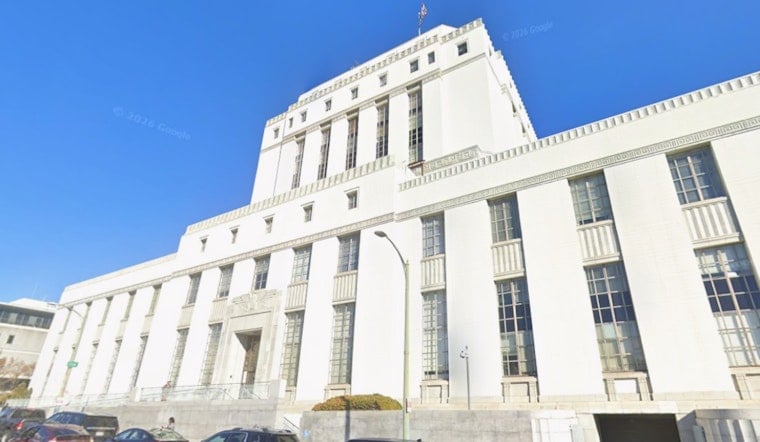
Anthony Alonzo spent almost two years in jail, insisting he did not shoot Deandre Irvin, the 43-year-old father of two, killed on the 300 block of Peralta Street in Oakland in December 2022. On Monday, the Alameda County District Attorney's Office moved to dismiss the murder case against him, saying evidence problems had eroded prosecutors' confidence that they could prove the charge.
Alonzo, now 38, was first arrested on suspicion of murder on December 17, 2022, but was released without charges that same month, according to The Press Democrat. Police had identified him as a suspect based on a tentative identification from surveillance footage and said he had been caught with the suspected murder weapon, but investigators struggled to pin down who fired the fatal shots inside the crowded tiny home community, which was frequented by hundreds of people. It would be two more years before prosecutors under then-District Attorney Pamela Price formally charged Alonzo with murder, in December 2024, placing him on a no-bail hold that kept him behind bars until the case was dismissed.
Jail Calls and a Case Built on Fragile Evidence
Court records show Alonzo maintained throughout that he had not shot Irvin, describing himself as being booked for a murder he did not commit. Police, however, found his denials suspicious, particularly after he described details of the shooting during a jail phone call and discussed the incident with his girlfriend over the line. Those recorded conversations became a central piece of the case police built against him, even as the physical evidence tying him to the shooting remained thin.
Defense attorney Pinaki Chakravorty, who represented Alonzo, said ballistics testing on the firearm ultimately vindicated his client, undercutting the prosecution's theory that Alonzo had wielded the murder weapon. The dismissal came under current District Attorney Ursula Jones Dickson, who took office in February 2025 after voters recalled Price with 63% support, according to The Oaklandside. Jones Dickson inherited a backlog of pending homicide prosecutions filed under her predecessor, and her office has repeatedly cited insufficient evidence in dismissing other high-profile cases this year, including felony charges against three Alameda County sheriff's deputies dropped in July.
A Shelter Site That No Longer Exists
Irvin lived in the Peralta Street community cabin site at the time he was killed, a low-barrier tiny home program the city launched in December 2017 to move residents out of the sprawling Wood Street encampment, which once stretched nearly 25 city blocks and housed roughly 300 people under West Oakland freeway overpasses, per Operation Dignity. The Peralta Street site itself was permanently closed by the city in March 2026 amid budget cuts and concerns over housing placement outcomes, ending a four-year run on Caltrans land that Hoodline detailed in its earlier coverage of the tense shelter shutdown standoff.
Irvin was memorialized by family and community members at Star Bethel Missionary Baptist Church following his death, according to the National Gun Violence Memorial. He was remembered as a father of two whose killing, more than three years later, remains formally unsolved now that the case against Alonzo has collapsed.
Evidence Gaps Reflect a Statewide Pattern
Under California Penal Code Section 995, courts must dismiss charges when prosecutors fail to establish probable cause or when forensic evidence undercuts the core theory of guilt, a mechanism explained by Davis Vanguard. The Alonzo case unfolded against a backdrop of shifting local crime statistics: Oakland recorded 67 homicides in 2025, a 22% drop from 86 the year before and the city's largest single-year decline in decades, a trend Mayor Barbara Lee attributed to the city's Ceasefire strategy. Homicides fell further in the first quarter of 2026, down 39% from the same period a year earlier, even as the police department's homicide clearance rate held above 60%, roughly in line with the national average.
Statewide, clearance rates for homicides have fluctuated sharply in recent years, falling from 64.7% in 2019 to 54.6% in 2021 before recovering, according to the Public Policy Institute of California as reported by CalMatters. That broader pattern of evidentiary difficulty in violent crime cases mirrors what unfolded in Alonzo's case, where a tentative video identification and recorded jail calls carried a prosecution for nearly two years before ballistics testing on the actual weapon pulled the case apart.



