

























































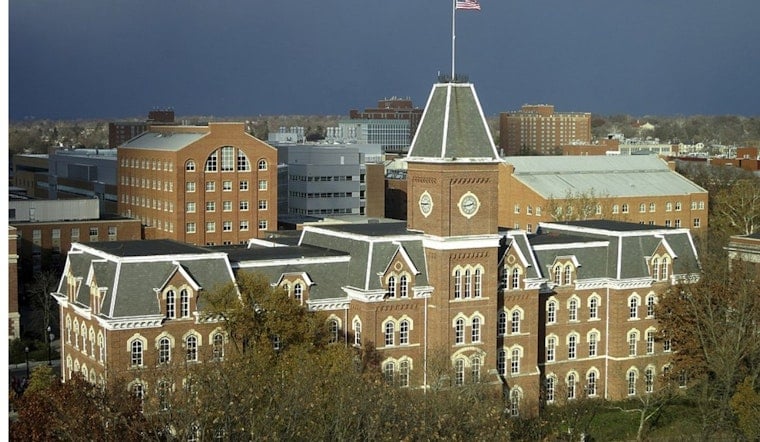
Ohio State University and 13 other Ohio colleges and universities have been handed a cautionary “yellow light” rating for their free speech policies, according to a new national report that reviewed nearly 500 public and private schools across the country. Cleveland State University stood alone among Ohio institutions with the report's top “green light” rating, while no Ohio school landed in the most restrictive “red light” category.
What the Ratings Actually Mean
The ratings come from the Foundation for Individual Rights and Expression, or FIRE, whose 20th annual State of Free Speech on College Campuses report rated Ohio State, Kent State, the University of Akron, the University of Toledo, the University of Cincinnati, Bowling Green State, Miami University, Ohio University, Wright State, Shawnee State, Youngstown State, Case Western Reserve, and Kenyon College all as yellow light schools, as reported by Columbus Underground. A yellow light rating means an institution's policies could too easily be applied to suppress protected speech, according to the outlet's report, which was authored by Megan Henry and republished by the Ohio Capital Journal. A red light rating, by contrast, signals that a school has at least one policy that clearly and substantially restricts freedom of speech or bars public access to its speech-related policies, per the same report.
Cleveland State's green light status made it the exception statewide. FIRE defines a green light rating as a written policy that does not seriously threaten student expression, and Cleveland State earned that distinction by establishing an Expressive Activity Policy built around First Amendment protections and Ohio's ban on designated free speech zones, according to Cleveland State University. That state prohibition on free speech zones traces back to Ohio's FORUM Act, Senate Bill 40, passed in 2020, which codified sections of the Ohio Revised Code and required public universities to publicly report speech disruption incidents, according to the Foundation for Individual Rights and Expression.
Where Ohio State and Wright State Landed Nationally
Ohio State ranked 124th out of 257 colleges nationwide in FIRE's 2026 College Free Speech Rankings, with a score of 57.7 out of 100 that still amounted to an overall F speech climate grade, even though the university climbed 50 spots from the previous year, per The Lantern. Wright State, despite carrying the same yellow light policy rating as Ohio State in the Columbus Underground report, was actually the highest-ranked Ohio institution in FIRE's broader College Free Speech Rankings, placing 49th nationally with a D grade. Ten of the 13 ranked Ohio institutions have formally adopted the pro-free speech Chicago Statement, yet none in the state have adopted an official stance of institutional neutrality modeled on the Kalven Report, according to FIRE's state breakdown.
Nationally, the picture has shifted considerably since FIRE began tracking these ratings two decades ago. In 2006, 68.6% of institutions received a red light rating; this year that figure fell to an all-time low of 13.2%, according to the FIRE report. Yellow light institutions still make up the largest share nationally, at 69.4%, or roughly 340 schools, while 76 institutions earned green light ratings — up from just eight schools in 2006 and now outnumbering red light schools for a second consecutive year, per the Williamsport Sun-Gazette. Of those green light schools, 68 are public institutions, while private schools tend to carry more restrictive speech codes overall, with 37 private schools earning red light ratings.
Senate Bill 1's Role in the Backdrop
The ratings arrive against the backdrop of Ohio Senate Bill 1, sponsored by state Sen. Jerry Cirino of Kirtland, which Gov. Mike DeWine signed into law on March 28, 2025. The law took effect on June 27, 2025, after a statewide petition drive failed to gather enough signatures to force a repeal referendum, according to the Statehouse News Bureau. The law bans diversity efforts, puts diversity scholarships at risk, prohibits faculty strikes, regulates classroom discussion, and creates a retrenchment provision blocking unions from negotiating on tenure, alongside new post-tenure review requirements.
Faculty groups have already reported fallout. Following the law's enactment, leadership at the Ohio Conference of the American Association of University Professors said academic job candidates began withdrawing their applications from Ohio public universities, specifically citing the new law, according to WOUB Public Media. That reported chilling effect on hiring sits alongside separate survey findings on student attitudes: a 2026 survey of Ohio university students found that 72% believed shouting down a speaker to prevent them from speaking is acceptable at least in rare cases, 33% believed violence could be justified to stop speech, and 44% reported self-censoring on a monthly basis, according to FIRE's Ohio data.
Together, the numbers paint a state where formal legal protections and campus culture do not always line up. Ohio has statutory bans on free speech zones and a mandate for institutional intellectual diversity under Senate Bill 1, yet only one of its 14 ranked schools has policies FIRE considers free of serious threats to student expression, and none have adopted the kind of institutional political neutrality that some free speech advocates argue would further insulate campus debate from controversy.



.jpg)