

























































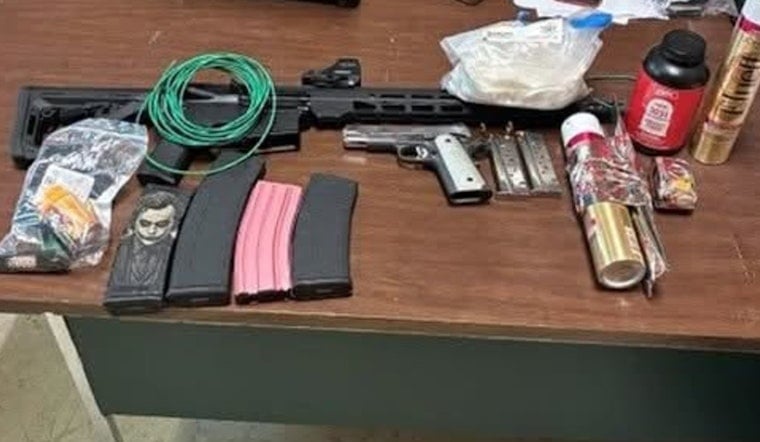
What started as a traffic stop for following another vehicle too closely ended with an Oklahoma Highway Patrol trooper staring down an active pipe bomb. Officials say the trooper also found a pistol, a rifle with multiple loaded magazines, detonator cord, smokeless powder and a bag of potassium nitrate inside the car. The driver was arrested on explosives and firearms charges, and the case remains under investigation.
According to KFOR, the trooper pulled the vehicle over after observing it driving too close to another car on the road. That stop escalated once the trooper established probable cause to search the vehicle, according to the outlet, and the search turned up the pipe bomb along with the pistol, rifle, ammunition magazines, detonator cord, smokeless powder and potassium nitrate. The driver was arrested on charges of possessing an explosive device and possessing a firearm in the commission of a felony, per the same report.
The Oklahoma Highway Patrol said the trooper's attentiveness and professionalism helped remove potentially dangerous items from the road, the station notes. The agency also said troopers are trained and prepared to recognize and safely handle these types of situations, per the outlet's reporting.
Why the Chemicals Matter
The materials found in the vehicle are not random junk — smokeless powder and potassium nitrate are recognized precursor materials for building low-explosive improvised devices, according to a research report from the National Academies of Sciences, Engineering, and Medicine. Smokeless powder acts as the primary energetic propellant in such devices, while potassium nitrate serves as an oxidizer, the report explains. Both are commercially available for legitimate uses like sport shooting and agriculture, but together with a detonator cord they represent the raw components needed to build additional explosives beyond the one already found.
Rendering an active pipe bomb safe requires specialized personnel. The Oklahoma Highway Patrol operates Troop BT, a statewide Bomb Squad unit equipped with explosive-detection K9s and bomb-response robots that responds to and investigates improvised explosive devices across all 77 Oklahoma counties, according to agency background. Oklahoma also has five other state-accredited bomb squads, including one run by the Oklahoma City Police Department, alongside units in Edmond, Tulsa, Norman and the Oklahoma County Sheriff's Office, according to OKCPD. Accredited bomb technicians in the state complete specialized training at the FBI's Hazardous Devices School.
Charges Carry Steep Penalties
Placing or possessing an explosive device such as a pipe bomb in or near a motor vehicle is a felony under Oklahoma Statute Title 21 § 1767.1, carrying a prison term of three to 10 years if no one is injured, rising to seven years to life if an injury results, according to the Law Firm of Oklahoma. The separate firearm charge the driver faces is also serious on its own: possessing a firearm while committing a felony is an independent offense under Title 21 § 1287, punishable by up to 10 years in state prison for a first offense, according to court records reviewed by Docket Alarm.
Details about the driver's identity, exact location of the stop and any prior criminal history have not been released. Officials cited by 102.3 KRMG say that information is being intentionally limited while the case remains active, with the station noting that OHP emphasized how routine traffic enforcement can rapidly escalate into high-risk encounters. It remains unresolved whether the driver's criminal history could trigger additional enhanced penalties, such as those outlined under Title 21 § 1368 for felons found possessing explosives with unlawful intent.
A Long History of Roadside Discoveries
Oklahoma troopers have a well-documented history of uncovering major threats during otherwise mundane stops. The agency's Special Operations section, Troop SO, conducts dedicated criminal interdiction across the state's more than 111,000 miles of highways, using traffic stops to uncover illegal weapons, drugs and hazardous materials. The most famous example dates back three decades: a routine OHP stop on Interstate 35 in April 1995 led Trooper Charles Hanger to arrest Oklahoma City bomber Timothy McVeigh, who had initially been pulled over for driving without a license plate, according to a 1995 report from the LA Times.
The agency continues to lean on that legacy of vigilance as it builds out its ranks. The Oklahoma Highway Patrol is currently accepting applications for its 77th Patrol Academy class through September 14, with cadet training set to begin in April 2027. Investigators have not said when the current explosives case might move to formal charges or trial.





