

























































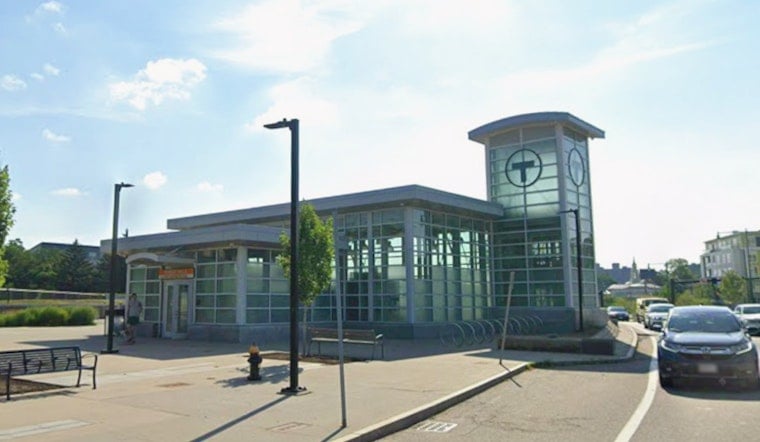
A person died and another remains in critical condition after an electrocution at the MBTA's Forest Hills station in Boston on Saturday afternoon. The victim who died has not been publicly identified, and investigators have not detailed how either person came into contact with the electrified track.
The Suffolk District Attorney's Office said no foul play is suspected in the incident, according to WHDH 7News. Beyond that determination, key details remain unclear, including whether the two individuals fell from the platform, tried to cross the tracks, or otherwise entered a restricted area of the right-of-way.
Forest Hills sits at the southern terminus of the Orange Line, an 11-mile subway corridor that in 2023 carried an average of 105,000 riders a day between the station and Oak Grove in Malden, per Wikipedia. The electrocution happened as the MBTA was in the middle of an 11-day shutdown of the Orange Line's northern half between Oak Grove and Back Bay for track and signal work, a closure that ran from August 20 through Sunday, as detailed by Boston Patch. That meant trains were running exclusively on the southern segment through Forest Hills at the time of the incident.
How the Third Rail Turns Deadly in an Instant
The MBTA's rapid transit lines, including the Orange Line, are powered by an electrified third rail carrying direct current typically energized at 600 volts, according to MAC Products. Contact with an active third rail is almost always catastrophic, and past MBTA incidents show why rescues are so difficult: firefighters and transit police generally must de-energize a wide section of track before anyone can be pulled free.
This is not the first fatal contact with an MBTA third rail. In August 2024, an adult man died after falling onto the electrified rail at Park Street Station in downtown Boston, and MBTA Transit Police determined at the time that no foul play was involved, WCVB reported. Hoodline covered that case in a piece on the fatal Park Street rail fall.
Trespassing Laws and Federal Oversight of Track Access
Massachusetts law treats unauthorized entry onto transit rights-of-way as a criminal matter. Under Massachusetts General Law Chapter 266, Section 120, anyone who illegally enters or remains on restricted MBTA tracks or rail equipment can face a fine of up to $100, up to 30 days in jail, or both, a framework Hoodline outlined in its report on a 12-year-old boy who fell into a Red Line tunnel earlier this month.
Federal oversight also shapes how the MBTA manages track safety more broadly. Federal Transit Administration directives require the agency to report any right-of-way near-miss incident within two hours and to enforce strict verification protocols between track workers and central dispatchers, Hoodline reported in March 2024. Those requirements sit alongside a history of track-power disruptions on the Orange Line, including a February 2025 fire involving a third-rail insulator at Tufts Medical Center station that forced crews to cut power and halted service for more than 30 minutes.
Forest Hills' Recent History of Safety Incidents
Saturday's electrocution adds to a string of safety concerns at the busy Jamaica Plain transit hub. In March 2026, Boston Police and MBTA Transit Police swarmed the station's upper busway after a knife altercation left three people hospitalized and temporarily closed the bus terminal, a response Hoodline detailed at the time. A year earlier, seven people, including an 18-year-old and several juveniles, were charged following an assault investigation tied to another altercation at the station.
Forest Hills has also led the MBTA system in a different category of passenger risk. According to a May 2026 MBTA safety oversight presentation, the station recorded 12 escalator injury incidents between 2019 and 2026, the highest total of any station in the system. Separately, the agency has been working to limit expansion of high-voltage infrastructure elsewhere in its network, advancing a $765 million lease for 28 battery-electric train sets on the Fairmount Commuter Rail Line by 2030 rather than extending third rails or overhead wires, CommonWealth Beacon reported.





