

























































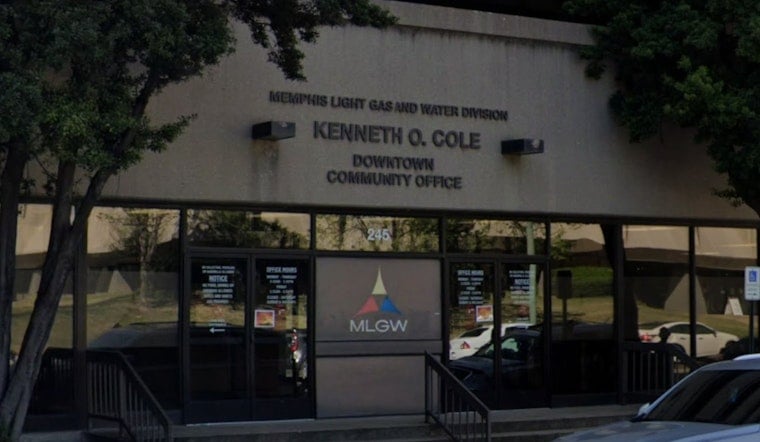
More than 120,000 Memphis Light, Gas and Water customers lost power Saturday as severe thunderstorms packing wind gusts up to 70 mph tore through Shelby County, flooding roads and leaving neighborhoods across the city in the dark. The storm system moved through the Mid-South during the afternoon and evening, prompting severe thunderstorm warnings and a flood advisory that stretched into the night.
According to FOX13 Memphis, one storm cell was tracked near Collierville moving east at 35 mph, while another was located near Eads moving at the same speed, both feeding into a severe thunderstorm warning that remained in effect until 6 pm CDT for northeastern DeSoto, northwestern Marshall, southwestern Fayette and southeastern Shelby counties. A separate warning covering southern Fayette and east central Shelby counties was set to expire at 6:15 pm CDT. The National Weather Service warned that 60 mph gusts could damage roofs, siding and trees, while gusts reaching 70 mph carried the potential for considerable tree damage and harm to mobile homes, roofs and outbuildings.
Cooper-Young and Binghampton Hit Hardest
The MLGW outage map showed Cooper-Young and Binghampton as the most heavily impacted areas of the city as the storm rolled through Saturday. Doppler radar indicated heavy rain accompanying the thunderstorms, and a broader severe thunderstorm watch covering 7 Arkansas counties, 19 Mississippi counties and 10 Tennessee counties remained valid until 10 pm CDT, per the same FOX13 Memphis report.
A flood advisory was also in effect until 7:45 pm CDT for northeastern DeSoto County, northwestern Marshall County, southwestern Fayette County and Shelby County, with excessive rainfall expected to cause urban and small stream flooding across the advisory area. Officials warned residents not to drive on flooded roads and to turn around rather than attempt to cross high water, noting that most flood deaths occur in vehicles. Forecasters also advised residents under the severe thunderstorm warnings to move to an interior room on the lowest floor of their homes.
Even Bigger Numbers, Smaller Scale Than 2003
Local coverage from LocalMemphis put Saturday's peak outage count at roughly 74,000 customers, with heavy concentrations reported in southern Shelby County — a somewhat lower figure than the 120,000-plus cited by FOX13, reflecting the fluid nature of outage counts as crews assessed damage in real time. Either way, the storm ranked as a significant, if not historic, event for a utility that serves more than 428,000 electric customers across Memphis and Shelby County as the nation's largest three-service municipal utility, according to MLGW.
Saturday's storm was nowhere near the scale of the utility's worst outage on record. That title still belongs to the July 2003 windstorm known locally as Hurricane Elvis, which knocked out power to nearly 339,000 customers — more than 80 percent of MLGW's entire customer base at the time — and took over two weeks to fully restore, requiring more than 1,300 replacement utility poles. Memphis' second-worst outage came during Winter Storm Landon in February 2022, when up to half an inch of ice accumulation cut power to 186,000 customers at its peak and required 272 hours of restoration work by MLGW crews and out-of-state mutual aid.
Grid Investments Meet Overhead-Line Reality
Saturday's blackout also lands amid years of MLGW effort to shore up a grid still dominated by exposed wiring. More than 60 percent of the utility's electric distribution network relies on 4,511 miles of overhead circuit lines, with less than 10 percent of Memphis circuits buried underground — a structural reality that leaves the system exposed whenever high winds bring down tree limbs. MLGW has repeatedly pointed to multi-billion-dollar costs as the reason citywide undergrounding remains out of reach.
In 2023, after MLGW leadership disclosed the utility had missed its annual goal of trimming 1,400 miles of tree-lined power lines every year since 1997, the Memphis City Council approved $227 million in five-year tree-trimming contracts, since tree interference has historically accounted for roughly 60 percent of MLGW power disconnections. The council also approved a 12 percent multi-year electricity rate increase, phased through January 2026, to fund substation upgrades and grid modernization — a hike Hoodline previously detailed in its final installment. By April 2025, MLGW and its contractors had completed that year's 1,400-mile trimming goal four months ahead of schedule, ultimately clearing more than 4,220 miles of lines across Shelby County by early 2026.
Those investments appear to be paying off in some measures. A reliability analysis released in July 2026 found that citywide average outage durations have dropped thanks to automated grid rerouting, though roughly 17 percent of MLGW customers still experience three or more outages every year, according to MLK50. That uneven reliability tends to concentrate in older Memphis neighborhoods, where infrastructure often predates central air conditioning and overhead lines still dominate the landscape.
The federal government has also stepped in to help MLGW recover from past storm damage. In July 2026, the federal government approved a $1.85 million FEMA reimbursement to the utility covering 75 percent of repair costs for poles, transformers and lines damaged during severe storms in April 2025, per the office of Congressman Steve Cohen. Saturday's storm marks the latest test of a grid that has seen real upgrades but remains vulnerable whenever straight-line winds exceed 60 to 70 mph, as they did across Shelby County this weekend.





