

























































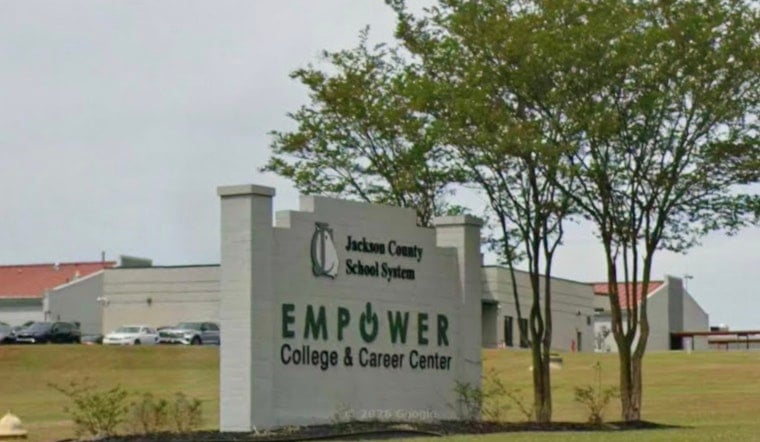
The Jackson County School System delayed the start of classes Friday morning after receiving computer-generated bomb threats that targeted its campuses overnight, forcing local and state law enforcement to sweep every building before students and staff could return. The Jackson County Sheriff's Office urged residents to avoid school zones and expect traffic delays while the searches were underway, asking drivers to keep surrounding roads clear for emergency personnel.
As reported by FOX 5 Atlanta, authorities must investigate each school threat regardless of how it arrived, and false threats can cause schools to be evacuated or closed while law enforcement searches buildings and investigates. The district had not announced a new start time as of Friday morning and said it would notify families once an update is available, directing parents to check the Jackson County School System website for the latest information.
A District Built for Growth, Now Bracing for Disruption
The Jackson County School System serves more than 11,500 students across 12 base schools and the Empower College and Career Center, covering the non-municipal areas of the county outside the independent city school districts of Jefferson and Commerce, according to the Jackson County School System. The district is in the middle of rapid expansion, driven by a 10% increase in the county's population and 20% enrollment growth in West Jackson, and it is currently building three new facilities in Hoschton scheduled to open in August 2027, per reporting from Grady Newsource. That growth means more families than ever were caught up in Friday's delays and uncertainty.
Schools across the country regularly deal with threats that ultimately turn out to be hoaxes, but each one still triggers the same costly response: buildings must be cleared before anyone is allowed back inside. Anonymous emails, social media messages, and other digital tools have made it easier to send threats capable of disrupting an entire school day, and investigators say that dynamic is part of what made Friday's overnight messages so hard to immediately dismiss.
Digital Threats Are Notoriously Hard to Trace
Law enforcement investigators note that computer-generated swatting threats and automated digital messages frequently originate far outside the jurisdictions they target, making it difficult to trace their source while forcing multi-agency emergency responses, according to FOX 5 Atlanta. Regardless of where a threat originates, agencies must evaluate it as genuine, which is why deputies and state law enforcement spent Friday morning working room by room through district buildings rather than issuing a blanket all-clear.
Jackson County has faced this kind of disruption before. A written threat in March 2026 prompted an evacuation at East Jackson High School, and back in 2008 a student pleaded guilty to bringing an explosive device onto the campus of Jackson County Comprehensive High School, according to the Gainesville Times. Those earlier incidents established the same protocol now playing out across the district: full building searches before any student or staff member is allowed back on site.
Part of a Wider Pattern Across North Georgia
Friday's delays add Jackson County to a growing list of North Georgia districts hit by similar disruptions this year. In neighboring Oconee County, an anonymous email bomb threat forced the precautionary evacuation of four public schools in April, following an earlier campus sweep at North Oconee High School that turned up no explosives, as previously reported by Hoodline. Just three days before the Jackson County threats, two Rockdale County high schools east of Atlanta were locked down over unverified bomb threats during the second week of the new academic year. In May, Parkview High School in Lilburn was evacuated after a phoned-in bomb threat required officers to conduct a full building search before issuing an all-clear.
Under Georgia Code § 16-11-37, transmitting a bomb threat that causes a school evacuation or major public disruption is prosecuted as a felony terroristic threat, carrying one to five years in prison and fines up to $1,000, according to FindLaw. Georgia law does not require prosecutors to prove the person had any actual ability to carry out the threat in order to secure a conviction. If a threat or act directly results in serious physical injury to anyone during a response or evacuation, penalties escalate sharply, with sentences reaching up to 40 years in prison and fines as high as $250,000 under the same statute.
Making a false threat can carry serious criminal consequences, and authorities in Jackson County continue to treat the overnight messages as an active investigation. Families were advised to watch for updates from the district rather than assume a return to normal scheduling, as officials worked through Friday to determine when students could safely head back to class.





