

























































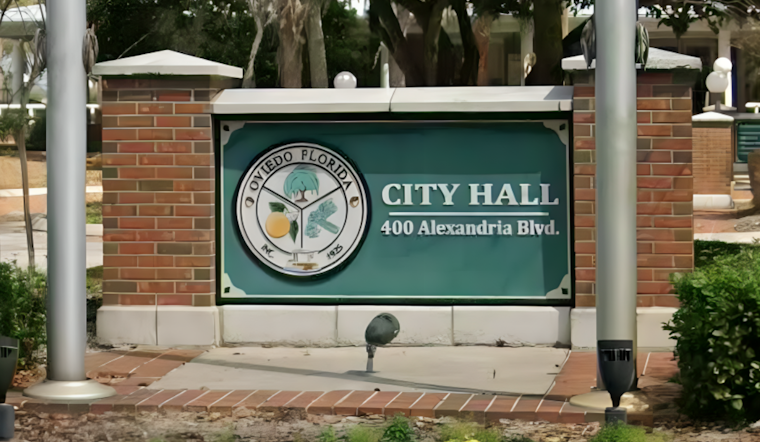
Oviedo City Council members are set to revisit the police department's automatic license plate reader program during a meeting starting at 6:30 p.m. Monday, weighing new policies and safeguards against misuse after residents raised alarms about the surveillance system tracking their daily movements. The discussion follows months of public pushback since the city first leased eight cameras from Flock Group Inc.
The Flock system records the time, date, and location associated with a vehicle, capturing a license plate along with the car's make, model, and color, according to WKMG. The technology is designed to help law enforcement identify vehicles connected to crimes, and the system stores vehicle information for a limited period before it cycles out, per the same report. Oviedo's city council adopted the resolution approving the eight-camera lease in 2025, setting up the surveillance network that has since drawn sustained criticism from residents.
A Resident's Fight Against the Cameras
Oviedo resident John Powers has been among the most vocal opponents of the program, telling WKMG he hopes the city will reconsider its license plate reader policy and remove the cameras altogether. Powers said the technology represents an absolute invasion of privacy that assumes guilt until proven innocent. Another resident, speaking earlier this month, said residents should not have to surrender their privacy for what they described as an unproven surveillance system.
That same resident said on August 3 that the city has a geo-fenced search running at all times, raising concern that license plate reader use may violate citizens' Fourth Amendment rights. Critics more broadly argue that the technology creates a widespread surveillance network capable of tracking where people drive, and they have raised concerns over how the license plate data is accessed and shared once it's collected.
A Contentious Vote From the Start
The camera program was never a unanimous decision. The Oviedo City Council approved its initial Flock Safety contract in September 2025 by a narrow 3-2 vote, with Mayor Megan Sladek and Council Member Alan Ott casting the dissenting votes, according to Oviedo Community News. During that debate, Ott explicitly warned that capturing driver movements creates real Fourth Amendment privacy issues whenever residents run daily errands.
The five-year lease with Flock Group Inc. totals $128,800 for the eight cameras, funded through fiscal year 2024-25 budget funds, future general funds, and approved federal U.S. Department of Justice forfeiture funds, the outlet reported. That contentious history set the stage for renewed scrutiny this month, after resident Gabby Mengele urged council members at an August 4 meeting to suspend or review the Flock contract and requested a public workshop to establish binding policies on data retention, searches, and interagency sharing, according to Citizen Portal.
What Florida Law Actually Protects
Florida law offers residents some protection from public disclosure, even if it doesn't resolve concerns about law enforcement access. Under Florida Statute § 316.0777, enacted in 2014, images and personal identifying information collected through automated license plate recognition systems are confidential and explicitly exempt from public records requests, meaning private citizens can't pull the data themselves.
Separately, Florida Statute § 316.0778 and Florida Department of Law Enforcement guidelines set a statutory maximum retention ceiling of three years for non-evidentiary ALPR data, though systems like Flock default to a rolling 30-day deletion schedule unless flagged for an active investigation. Flock Safety itself announced national policy updates in August, reducing its standard default retention period from 30 days to seven days and requiring AI-driven audit tools to flag abnormal police search behavior by late 2026, Hoodline previously reported on Flock's updated retention rules.
The Interagency Sharing Problem
What state confidentiality law doesn't address is how far Flock's cloud network extends once local police access it. The ACLU of Florida has warned that Flock Safety's cloud infrastructure enables external law enforcement agencies nationwide to query local license plate data, creating mass surveillance risks without prior judicial warrants, according to the organization's advocacy guidance.
Oviedo is far from alone in adopting the technology. All seven municipalities within Seminole County operate license plate reader systems as of late 2025, with neighboring Lake Mary maintaining five Flock cameras and Sanford investing more than $123,000 in ALPR technology, WKMG has reported. A July crowd-sourced mapping project called DeFlock documented hundreds of active Flock cameras placed at traffic intersections and commercial entrances across Central Florida cities including Orlando, Sanford, and Titusville, a trend Hoodline mapped in its own regional camera tracker.
The pattern of pushback echoes what's playing out elsewhere in Florida and beyond. St. Petersburg residents recently demanded oversight of the city's 50 Flock cameras following stalking cases tied to officer data misuse, while other jurisdictions have gone further: one police department scrapped its Flock contract entirely after residents raised fears about data reaching immigration enforcement, and a Texas county suspended several deputies' camera access amid a misuse review. Monday's meeting will show whether Oviedo's council opts for tighter guardrails, such as mandatory case-number logging or restricted interagency sharing, or whether it reconsiders the program altogether, as Powers has urged.





