

























































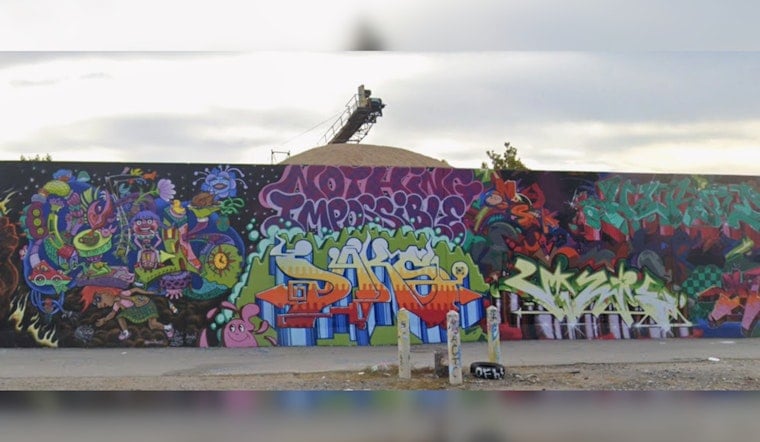
Nearly 400 invited artists from across the United States are set to descend on the St. Louis riverfront next month as Paint Louis returns for its 14th consecutive year at the site, transforming a stretch of the Mississippi River floodwall into what organizers call the world's largest graffiti festival. The free, public event kicks off September 4 and runs through September 6, 2026, bringing live painting, live music, food trucks, and children's activities to the Mural Mile south of the Gateway Arch.
According to FOX 2, Bryan Walsh serves as the artist coordinator for Paint St. Louis, which the outlet describes as an internationally known festival drawing painters to the riverfront each year. The station reports that this year's lineup includes face painting and spray painting activities for kids alongside the main event, plus vendors selling food along the mile-long stretch of wall.
A Two-Mile Canvas With a World Record
The floodwall itself carries a title beyond the festival's own claims: Guinness World Records designated the Mississippi River floodwall south of the Gateway Arch as the longest graffiti mural in the world, spanning roughly two miles along Wharf Street, according to Atlas Obscura. That record was first awarded to the site in 1998, not long after the festival's earliest editions began painting there.
The concrete itself predates the art by decades. Construction on the floodwall began in 1956 and finished in 1964, built to protect downtown St. Louis from Mississippi River overflow, per Unseen St. Louis. Its engineering was tested severely during the Great Flood of 1993, when the 52-foot wall held back river crests reaching nearly 50 feet with just over two feet of clearance, according to the National Weather Service — preventing what could have been catastrophic damage to the city center.
From Backyard Graffiti Jam to Sanctioned Institution
Paint Louis didn't start as a polished civic event. It began informally in 1995 as a graffiti jam organized by hip-hop artist John Harrington before becoming an annual gathering in 1997, according to KSDK. The outlet notes that local writers simply started gathering to paint empty wall space along the riverfront, with no formal city blessing at first.
That informality eventually caught up with the festival. St. Louis officials shut Paint Louis down in 2001 after unregistered taggers caused widespread property damage across the city, the station reports, triggering a decade-long hiatus before organizers worked with city leadership to secure a sanctioned revival in 2013, complete with established boundaries and clean-up crews.
An International Draw That Keeps Growing
Prior editions of the festival have pulled in crowds of up to 24,000 spectators and more than 500 participating artists, with painters traveling from countries including Canada, Mexico, Germany, and Australia, according to Forbes. Those international artists typically cover their own travel costs to take part in the non-paying jam. The festival also leans into hip-hop's full cultural footprint, celebrating graffiti, breakdancing, DJing, and rapping together, and it has hosted free performances over the years from figures like KRS-One, Rakim, and Slum Village, per the same outlet.
Because the murals are repainted annually, nothing on the wall is permanent. Artists spend the festival's opening stretch buffing over the previous year's designs before dedicating roughly two days to fresh painting and finishing touches, according to RaulersonGirlsTravel — meaning the two-mile canvas essentially resets every September.
Passing the Craft to a New Generation
The festival's youth programming, known as Paint Littles and originally called Scrap Cans for Kids, pairs experienced graffiti writers with children who use donated leftover spray cans to learn basic techniques on designated sections of wall, according to St. Louis Public Radio. The idea, per the station, is to pass down street art skills constructively to younger participants rather than leaving them to learn through unsanctioned tagging.
The festival's reach now extends beyond the floodwall itself. Local fine art spaces such as Fifteen Windows Gallery on Cherokee Street host pre-parties and exhibitions tied to Paint Louis, giving participating street artists a chance to sell canvas work in a commercial setting separate from the non-commercial mural wall, according to a Facebook account of the tradition. With this year's edition free and open to the public from September 4 through September 6, organizers are once again betting that the mix of grassroots hip-hop history and riverfront spectacle will keep drawing crowds to St. Louis's stretch of the Mississippi.



