

























































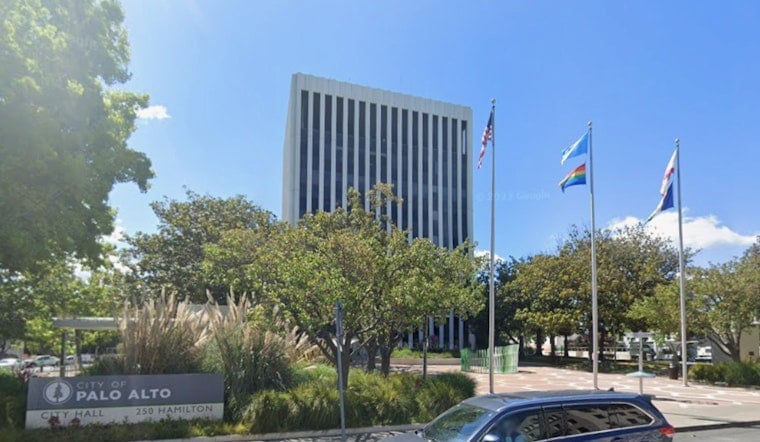
Palo Alto's city council is divided over whether homeowners should be allowed to sell backyard cottages as standalone homes, voting 4-3 this month to send the idea to a city commission for further study rather than acting immediately. The proposal would let residents build accessory dwelling units up to 1,200 square feet and sell them separately from the main house, a move some council members see as a fast track to entry-level homeownership in one of the country's most expensive housing markets.
The council's vote directs the Planning and Transportation Commission to vet the proposal and report back, according to the Palo Alto Daily Post. Council member Pat Burt argued for caution, saying that rushing through substantive changes from the dais without having the commission's more thoughtful input is unnecessary. He was joined in seeking slower action by council members George Lu, Ed Lauing and Keith Reckdahl, per the same report.
Not everyone on the council wanted to wait. Council member Julie Lythcott-Haims, who was ready to allow ADUs to be sold separately, pushed back on the go-slow approach, asking why not be a little bit braver and a little bit bolder when it comes to experimenting with ADUs as a path to home ownership. Lu ultimately conditioned his vote on the commission's recommendation returning to council by the end of 2026, according to the outlet's account of the meeting. Palo Alto Vice Mayor Greer Stone and Mayor Vicki Veenker round out the council weighing the proposal.
Why Backyard Cottages Could Become For-Sale Homes
Accessory dwelling units, also known as backyard cottages, have typically been built as rentals or space for extended family. But California Assembly Bill 1033, signed into law in October 2023 and effective January 1, 2024, opened the door for local governments to pass ordinances allowing homeowners to convert ADUs into condominiums and sell them separately from the primary home, according to Consumer's Title Company. Before that statute, state law banned selling ADUs apart from the main single-family lot.
State rules also set the physical parameters Palo Alto's cottages would follow: detached ADUs can reach up to 1,200 square feet, side and rear setback requirements are capped at four feet, and parking mandates disappear for properties within half a mile of transit, per Steadily Insurance. A separate state law, Assembly Bill 976, made permanent the prohibition on local owner-occupancy requirements for ADUs, meaning owners can rent out or build both a primary home and an accessory unit without living on the property, according to the County of San Diego.
San Jose's $530,000 Cottage Sale Offers a Preview
Palo Alto wouldn't be venturing into uncharted territory. Neighboring San Jose recorded California's first standalone ADU sale in June, when a 749-square-foot detached two-bedroom backyard cottage sold for $530,000 under that city's local AB 1033 ordinance, as Hoodline previously reported. That price is a fraction of Palo Alto's median home sale price, which reached roughly $3.5 million to $3.6 million by mid-2026, with single-family homes averaging over $3.8 million and typical monthly mortgages exceeding $21,000, according to Redfin data cited by real estate site Yvonne Yang Homes.
San Jose isn't alone. Santa Cruz, Oakland and Santa Monica have also enacted local AB 1033 ordinances, while Los Angeles and San Francisco have initiated legislative review of their own backyard condo-sale rules, per 121 Design Build. San Diego County's Board of Supervisors adopted its own version in March, taking effect the following month for unincorporated communities and following the City of San Diego, which had enabled separate ADU condo sales in August 2025 — a move Hoodline covered in its report on San Diego's ADU vote.
The Legal Hurdles Standing in the Way
Turning a backyard cottage into a separately owned condo is not as simple as pouring a foundation and listing it. Converting an ADU into a standalone condominium requires property owners to map the unit under the Subdivision Map Act, establish a homeowners association under the Davis-Stirling Act, complete a life-safety inspection, and obtain written consent from existing mortgage lienholders, according to Good Life Construction. Those steps help explain why some council members want the Planning and Transportation Commission to weigh in before Palo Alto moves forward.
The stakes for the city are considerable. Palo Alto's Regional Housing Needs Allocation quota for the 2023-2031 state planning cycle requires the city to accommodate 6,086 new homes, nearly tripling its previous eight-year allocation of 1,988 units, according to the Palo Alto Daily Post. The city has already shown it can process ADU applications at scale: in 2024, Palo Alto received 136 new ADU applications, issued 124 permits, and granted final inspection approvals for 105 projects, staying on pace with its Housing Element target of averaging 64 ADU completions per year, per city records.
Complications elsewhere in the state suggest the path won't always be smooth even after ordinances pass. In Carlsbad, a homeowners association successfully outmuscled state ADU law in court, a dispute Hoodline detailed in its report on the HOA court fight. For now, Palo Alto's own path forward rests with the Planning and Transportation Commission, which is expected to deliver its recommendation on allowing separate ADU sales by the end of 2026.



