

























































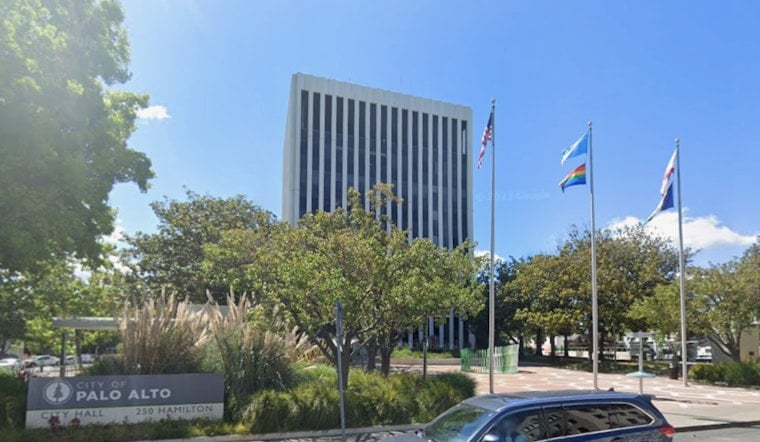
Palo Alto's only emergency weather shelter has just 10 beds, and last December it turned away 45 people because there was no room left. Now City Manager Ed Shikada is pushing to expand the program that lets unhoused residents sleep inside the Downtown Library during storms, adding more city-owned buildings, churches or nonprofit spaces to handle the overflow.
The Palo Alto City Council is scheduled to consider the $47,100 expansion on August 24, according to the Palo Alto Daily Post. Under the plan, the shelter would open roughly 30 nights a year, with 10 additional nights available as needed, and would activate whenever Santa Clara County forecasts a severe storm or cold weather. The expansion would also swap the shelter's on-site security guard for social workers trained to support homeless people, per the same report.
The Downtown Library shelter, located on Forest Avenue, has been used as a storm shelter since 2023 and was formally presented to the public at an open house before the winter of 2024. It is run by the Heart and Home Collaborative, a nonprofit whose board president, Mary Wisnewski, described it as a low-barrier shelter where anybody can come in. The library shelter does not screen residents and serves both men and women, providing a foldable camping pad with two sheets and a blanket, cup noodles for dinner and instant oatmeal for breakfast. Residents must be out by 7 a.m.
A Winter That Overwhelmed a 10-Bed Room
The demand crunch showed up starkly last winter. The shelter was open 16 nights in December 2025 alone, and 33 different people slept there during that stretch — on top of the 45 who were turned away when beds ran out, according to the Daily Post's reporting. Aparna Ananthasubramaniam, founder of Heart and Home Collaborative, said most people who come in simply want to lie down, rest and sleep indoors for as many hours as possible.
Not everyone has embraced how the city rolled out the program. Community member April Fontana criticized the city in March 2024 for creating a community-based shelter solution without involving the community in the process, per the same account.
The Man the Shelter Honors
The shelter was started in honor of Theodore Nelson Clegg Jr., who died sleeping outside near California Avenue in February 2022 as the temperature dipped to 39 degrees. Clegg, a University of Texas graduate, had spent decades unhoused in Palo Alto and was well known in the College Terrace neighborhood for sleeping outdoors without a tent, according to the Palo Alto Daily Post's earlier reporting. In a strange twist noted in that same coverage, Clegg had been legally declared dead by a judge back in 2003 after an extensive family search — nearly two decades before he actually died on the street.
A Regional Surge Behind the Numbers
The push to widen shelter capacity comes as Palo Alto's unhoused population has spiked sharply. Santa Clara County's 2025 Point-in-Time Count found a 103% increase in Palo Alto's unhoused population between 2023 and 2025, far outpacing the countywide increase of 8.2%, according to CBS News. Regional outreach workers and unhoused residents told the outlet that encampment sweeps in San Jose pushed people northward into smaller Peninsula cities like Palo Alto and Mountain View during 2024 and 2025.
Countywide, the picture is stark: roughly 70% of the 10,711 unhoused individuals counted across Santa Clara County in 2025 were unsheltered — living outdoors, in vehicles or in other places not meant for habitation, per Destination: Home. That backdrop has strained Palo Alto's broader safety net. Hoodline previously reported that the Downtown Streets Team folded in October 2025 after a multi-million-dollar funding loss, leaving city facilities like the library to absorb more of the demand.
Other Shelter Options Face Their Own Strains
Palo Alto's longer-term housing strategy has also hit friction. The city co-developed an 88-unit Homekey interim shelter at 1237 San Antonio Road, funded through $21.7 million in state grants, $4 million from Santa Clara County, $5 million from private donor John Sobrato and $4.5 million from the city, according to the City of Palo Alto. That $37.2 million project, designed to house up to 200 people annually, faced construction delays and cost increases before moving forward.
Meanwhile, permanent supportive housing has run into its own troubles. Hoodline reported in July that Palo Alto inspectors reissued code violations against the 88-unit Opportunity Center for mold, water damage, plumbing failures and pest infestations, in an article headlined Mold, Roaches and $1,000 Fines. The city has also cracked down on informal alternatives, voting in December 2025 to ban vanlording and tighten restrictions on long-term vehicle dwelling, according to Hoodline's earlier coverage of that ordinance.
What Comes Next
With Downtown Streets Team gone, vehicle dwelling restricted and the Opportunity Center undergoing repairs, the Downtown Library shelter has become one of the few remaining low-barrier options during extreme weather. The city council's August 24 vote will determine whether that single 10-bed room gets meaningful backup, or whether Palo Alto's growing unhoused population keeps outpacing the space available to shelter it.



