

























































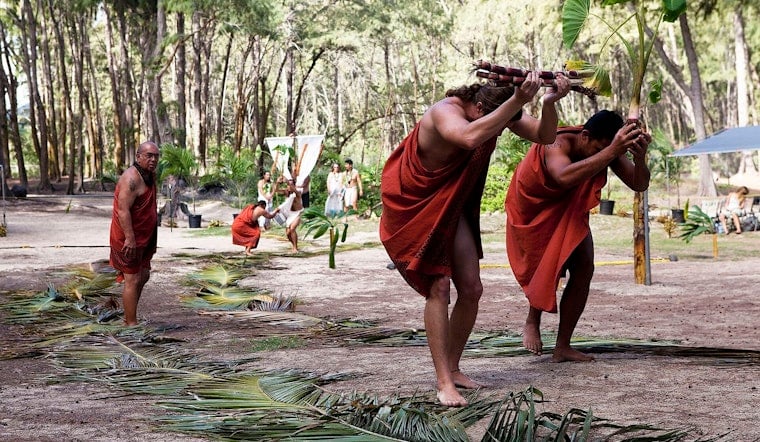
Papahana Kuaola, the Heʻeia nonprofit that has spent two decades restoring streams, wetlands, and native plants across its Windward Oʻahu campus, is throwing open its gates for a free, family-friendly community hoʻolauleʻa on Aug. 30. The celebration marks 20 years of hands-on stewardship, environmental education, and Native Hawaiian knowledge-sharing at the organization's Heʻeia site.
According to KHON2, the event will include food, live entertainment, cultural demonstrations, local vendors, and keiki activities, giving visitors a chance to learn about the organization's work and get involved. Executive Director Tésia Roberts said, "People have come together at Papahana Kuaola to learn, volunteer, restore, and grow for 20 years," adding that the celebration "is about the community."
From Illegal Dump To Living Classroom
Papahana Kuaola was founded in 2006 by Matthew Schirman and Richard Barboza, who also co-founded the native plant nursery Hui Kū Maoli Ola, as a nonprofit sister organization built to teach the public about native Hawaiian plants and cultural stewardship, according to Hawaii Business Magazine. Before restoration work began, the organization's 63-acre Waipao site served as an illegal dumping ground littered with construction debris, abandoned vehicles, and invasive weeds, per The Nature Conservancy.
The organization now operates across 63 acres of Kamehameha Schools land in the ʻili of Waipao, stretching from Haʻikū Valley into ʻIolekaʻa Valley, according to the Institute of Museum and Library Services. The campus includes natural freshwater springs, loʻi kalo, Haʻikū Stream, and 50 acres of native plant gardens that double as an outdoor classroom for environmental and Hawaiian-focused curriculum.
A Ridge-To-Reef Restoration Network
Papahana Kuaola forms the mauka, or upland, piece of a larger community-led ahupuaʻa restoration effort in Heʻeia, coordinating stream work with the wetland group Kākoʻo ʻŌiwi and the fishpond restoration group Paepae o Heʻeia downstream, per ResearchGate. That mountain-to-reef framework earned national recognition in 2017, when the Heʻeia ahupuaʻa, including the upland watershed Papahana Kuaola manages, was designated the 29th National Estuarine Research Reserve in the country, according to the National Oceanic and Atmospheric Administration.
Kaʻiminaʻauao Johnson, Papahana Kuaola's ʻĀina Stewardship Manager, said caring for waterways helps entire ecosystems thrive, according to KHON2. "The stream is a perfect example of what mālama ʻāina looks like," Johnson told the outlet.
Hawaiʻi's Shrinking Taro Fields
The stakes reach beyond a single stream. Statewide taro cultivation in Hawaiʻi has fallen from a historic peak of an estimated 20,000 acres to less than 400 acres harvested annually today, according to the Pulitzer Center, a decline tied to post-contact agricultural shifts and land privatization across the islands. Papahana Kuaola's loʻi kalo restoration work places it squarely within that broader food sovereignty movement.
Community muscle has powered much of that work over the years. Between 2010 and 2014, more than 4,700 volunteers logged over 12,500 hours on the Upper Heʻeia Stream Restoration Project, stabilizing nearly 4,000 feet of stream bank to cut runoff pollution flowing into Kāneʻohe Bay, per Hui o Koʻolaupoko.
Keeping The Doors Open Year-Round
A Papahana Kuaola educator said the organization hopes hoʻolauleʻa attendees walk away understanding that caring for Hawaiʻi starts with each of them individually, the outlet reported. Beyond the anniversary event, the organization keeps its site open to the public year-round through Lā ʻOhana Waipao, monthly community workdays held on the fourth Saturday of each month for loʻi kalo maintenance and native plant cultivation, according to NOHO HOME. No prior agricultural experience is required to join.
The organization's roots run beyond the outdoors, too. Papahana Kuaola established a cultural and educational library at its Walehale facility in 2008, housing roughly 7,000 books, photos, and historical materials on Hawaiian language and natural history, per the Institute of Museum and Library Services. Though centered in Windward Oʻahu, the nonprofit also employs staff on Molokaʻi and Maui to deliver place-based environmental education across Maui County, including Lānaʻi.
Building On Two Decades Of Community Work
Papahana Kuaola works alongside schools, families, volunteers, and community partners, and the nonprofit says it welcomes thousands of students and community members throughout the year, the outlet's report notes. Its work spans propagating native plants, restoring streams, caring for wetlands, and giving people opportunities to build a lasting relationship with the ʻāina.
Hoodline has previously reported on the organization's reach, including a Maui educator's talk on navigation and sustainability tied to her work with Papahana Kuaola. Two decades after clearing trash and invasive weeds from Waipao, the organization is inviting the wider community back to Heʻeia on Aug. 30 to mark how far that stream restoration has come.



