

























































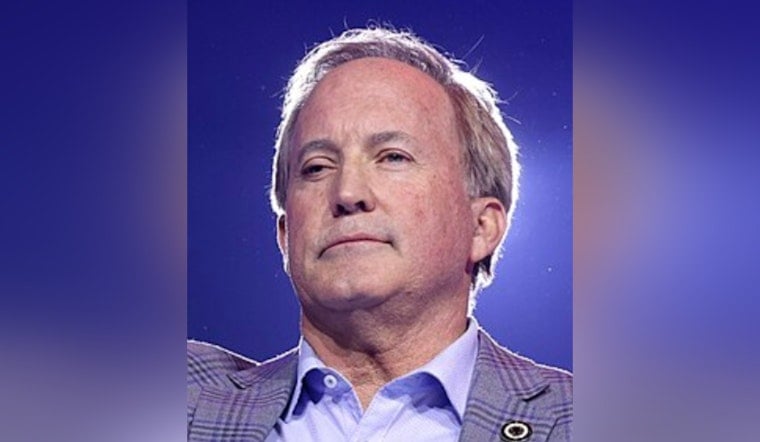
Ken Paxton's U.S. Senate campaign is pushing back hard against claims that it secretly favors privatizing Social Security, after a campaign staffer's social media repost set off a firestorm just weeks before the November election. The Texas attorney general's team says the post does not reflect his views and insists it will fight to protect the program for current and future retirees.
The controversy started when campaign spokeswoman Madison Cercy reposted a message from Ron Rule, a New Hampshire Republican House candidate, that advocated privatizing Social Security, according to the San Antonio Current. Rule's post referenced President George W. Bush's 2001 attempt to pass a bill that would have partially privatized the program. Journalist Aaron Rupar noticed Cercy's interaction with the post and speculated, per the outlet's reporting, that Paxton's campaign might support privatization.
Paxton's campaign quickly clarified its position, saying the repost does not represent the attorney general's views. The campaign pledged to root out waste, fraud and abuse it says is draining Social Security, and said benefits should go to Americans who paid into the system, not to people in the country illegally. The Current's reporting also notes that declining birth rates and mass deportations under the Trump administration's mass-deportation program have reduced the money paid into Social Security that funds baby-boomer benefits.
A Program Facing a 2032 Deadline
The stakes behind the dispute are real. Testimony before the U.S. Senate Finance Committee in August confirmed projections that Social Security's trust fund reserves could be depleted by 2032, which would trigger an automatic 22% reduction in scheduled payouts if Congress fails to pass solvency reforms, according to the Houston Chronicle. Experts from the Committee for a Responsible Federal Budget warned lawmakers that insolvency is now just six years away.
That timeline helps explain why roughly 4.8 million Texans who currently receive Social Security benefits are paying close attention to the race. Texas has one of the largest beneficiary populations in the nation, and any changes to the program's funding structure would ripple across communities statewide.
Democrats Seize on the Repost
The Texas Democratic Party moved fast, issuing a release accusing Paxton's campaign of secretly favoring privatization and warning it would put retirement benefits at risk for the state's seniors. The Texas Alliance for Retired Americans also weighed in, opposing privatization outright and saying Social Security is a promise to workers who pay into the system. The group's parent organization, the Alliance for Retired Americans, demanded clear and immediate answers from Paxton about his position, raising questions about his stance on privatization, benefit cuts and raising the retirement age.
Privatization itself is not a new idea in Republican politics — it has been floated by the party since the early 2000s. The Current's reporting points to Chile as a cautionary example, noting the country privatized its social security system in the 1980s. While that overhaul boosted national capital markets, it also faced severe criticism, and unequal retirement payouts led to mass protests in Chile in 2019.
Two Very Different Fixes on the Ballot
The privatization flap lands squarely inside a broader policy fight between Paxton and Democratic nominee James Talarico. Talarico's platform proposes protecting Social Security's solvency by eliminating the payroll tax cap on individual earnings over $400,000 a year, according to Talarico for Texas. Paxton's campaign, by contrast, says it plans to protect the program's long-term solvency by eliminating waste and barring claims from people in the country illegally.
Polling suggests the issue could matter at the ballot box. A July poll of likely Texas voters by Texas Public Opinion Research found Social Security and Medicare tied as a top priority alongside healthcare access at 21%, while general affordability led at 44%, as reported by FOX 7 Austin. The same survey showed Talarico holding a 5-point lead over Paxton overall, with particular strength among independent and moderate voters.
The American Federation of Government Employees, which represents more than 250,000 federal workers in Texas including Social Security Administration field personnel, endorsed Talarico for Senate in June. Organized labor's involvement underscores how the fight over entitlement policy has drawn in not just candidates and voters but the very workers who process Social Security claims and distribute benefit checks.
Echoes of a Failed 2005 Push
The current debate carries echoes of history. Bush's 2005 effort to let workers divert a portion of FICA payroll taxes into personal investment accounts collapsed after running into intense public and congressional resistance, a reminder that privatization has struggled to gain traction nationally even when championed by a sitting president.
For now, Paxton's campaign maintains that Washington should not cut Social Security benefits and argues seniors earned those benefits through a lifetime of payroll contributions. Whether that message satisfies skeptics inside a race already shaped by tight polling and sharp policy contrasts remains to be seen as Election Day approaches.





