

























































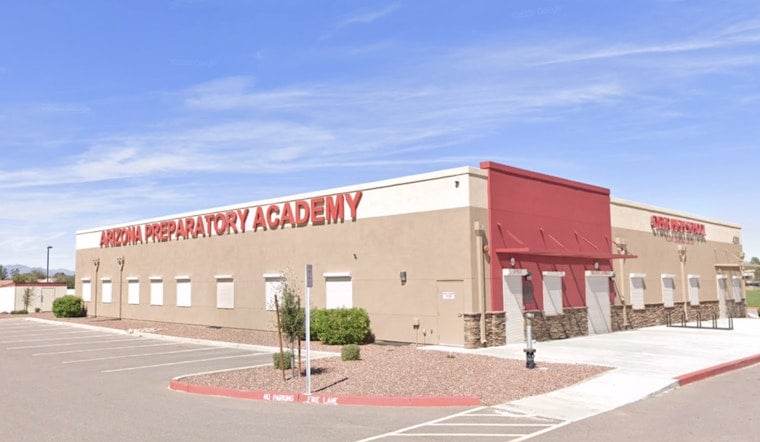
The chief executive of a small Phoenix charter school network took home $520,000 in total compensation during the 2024-25 school year, even though the school he leads enrolls roughly 225 students. Kurt Huzar serves as CEO of North Star Charter School, Inc., which operates Arizona Preparatory Academy near 99th Avenue and Indian School Road, a program designed to help at-risk students earn high school diplomas.
The figure comes from an investigation by ABC15 Arizona, which spent more than a year collecting pay data for 236 charter school administrators statewide, sending hundreds of public-records requests to school districts and charter organizations and pulling IRS Form 990 filings in 86 cases where schools did not provide records directly. Reporter Melissa Blasius found wide disparities in charter administrator pay across the state. According to IRS and state records cited in that reporting, Huzar's compensation includes base salary, bonus, deferred compensation and nontaxable benefits.
Nonprofit tax filings for North Star Charter School Inc. show Huzar reported $524,500 in base compensation plus $72,370 in other compensation, according to ProPublica. The same filings show the school's registrar and site director earned $185,500, while its controller made $182,800 — payroll figures that illustrate an administrative structure extending well beyond the top job. Financial records compiled by Cause IQ show North Star Charter School Inc. posted total revenues of $3,221,253 against total expenses of $3,325,948 for fiscal year 2025, with 20 reported employees on staff.
Governance Ties Raise Questions
Public governance records reviewed for Arizona Preparatory Academy list Huzar as board president, sitting alongside trustee Nancy Huzar, controller David Tierney and registrar Amber Starnes. Charter boards in Arizona hold final authority over executive compensation and charter management, meaning the same small circle of administrators and family members can effectively set the pay that flows to its own members.
State Representative Nancy Gutierrez, the assistant Democratic leader in the Arizona House and a member of the House Education Committee, told ABC15 that Huzar's salary is a questionable use of public funds. Gutierrez said taxpayers should know where public money is going and how it is being spent. Gutierrez sponsored a bill this year requiring charter schools to publicly release employment contracts and salary information for top administrators, but the measure received no hearing.
That legislative history stretches back further. Arizona House Bill 4078, which Gutierrez introduced in February, would have required charter schools to submit top administrator employment contracts to the State Board for Charter Schools for publication in a searchable database. The bill died in committee in June without a hearing, according to BillTrack50, following a pattern in which Democratic lawmakers have repeatedly introduced charter financial accountability bills that fail to advance in the Republican-controlled Legislature. Gutierrez is considering options to increase financial transparency and accountability in charter school salaries and spending ahead of the next legislative session.
How the Numbers Stack Up Statewide
ABC15's data set found 93 of the 236 charter administrators, or 39.4 percent, earned $100,000 or less, while 128, or 54.2 percent, earned between $100,000 and $200,000. Just 15 administrators, or 6.4 percent, earned more than $200,000, and the outlet reported that most of those highest earners worked for large charter organizations such as BASIS and Great Hearts. By comparison, of 107 district superintendents whose data the investigation covered, 55, or 51 percent, earned more than $200,000 a year, 50, or 47 percent, earned between $100,000 and $200,000, and only two earned $100,000 or less. District superintendents typically oversee far more schools and students than charter administrators do, ABC15 noted, which sharpens the contrast with Huzar's pay for a single, 225-student campus, based on Arizona Department of Education enrollment data from October.
Jake Logan, president and CEO of the Arizona Charter Schools Association, said the market drives pay rates for charter school leaders. State law created charter schools with the intent of giving them flexibility in how they organize and spend money, and Arizona Revised Statutes Section 15-183 exempts charter operators from the line-item spending audits the Auditor General applies to traditional districts. That statutory flexibility, in place since Arizona created charter schools 30 years ago, is central to how executives like Huzar can be paid without state-capped salary schedules.
Huzar Defends His Record
Huzar sent a letter responding to ABC15's requests for comment in early August. In it, he said he helped turn a struggling school and a failing corporation into a highly performing and fiscally healthy organization, and he described serving simultaneously as investment manager, teacher, registrar, controller, human resource manager, grants manager and receptionist. Huzar wrote that he worked at least 50 hours a week in most years during his tenure.
Huzar said Arizona Preparatory Academy was rated a D school when he took over and has since earned an AZ LEARNS grade of B in most recent years, along with green dashboards for academic, financial and operational performance. He also said the school's average teacher salaries exceed $97,000 for the 2026-27 school year. Charter schools are held to academic and other standards under their contracts with the state, and failure to fulfill those obligations could ultimately include closure.
A Statewide Pattern of Administrative Spending
The disparity fits a broader pattern documented by outside researchers. A November 2022 analysis by the Grand Canyon Institute found Arizona charter schools spend about 20 percent of operational budgets on administrative costs, or $1,759 per pupil, compared with 11 percent, or $1,098 per pupil, at traditional school districts. Meanwhile, the average Arizona public school teacher salary reached just $64,291 for the 2024-2025 school year, according to 12News, as the state ranked 49th nationally in per-pupil education spending.
Oversight of that spending has drawn scrutiny before. A September 2023 performance audit by the Arizona Auditor General found the State Board for Charter Schools' financial performance framework failed to consistently identify charter holders facing financial distress, and it recommended stricter monitoring. A more recent statewide spending analysis from the Auditor General, published in February, found that public school districts spent 52.1 percent of operational budgets on classroom instruction in fiscal year 2025 — a historical low that has drawn bipartisan scrutiny from state policymakers. Charter school flexibility, as the ABC15 investigation put it, comes with accountability, and questions about how that balance is enforced remain at the center of the debate.



