

























































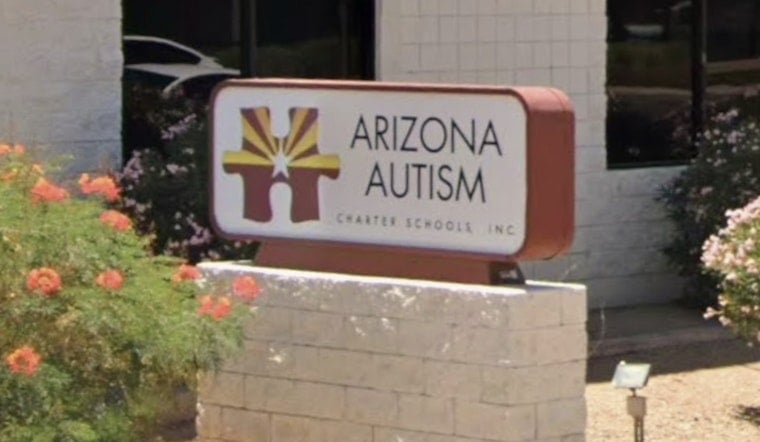
Arizona's first primary care medical clinic built specifically for children and young adults with autism has opened on the Phoenix campus of Arizona Autism Charter Schools, near 16th Street and Indian School Road. The new clinic, called Arizona Autism Family Medicine, gives more than 1,200 AZACS students and their families a dedicated place for physical and behavioral health care, and it's also open to community members beyond the school itself.
The clinic is a partnership between Arizona Autism Charter Schools and Mercy Care, and it's operated by Valle del Sol, a Federally Qualified Health Center and Certified Community Behavioral Health Clinic, according to KTAR News 92.3 FM. Valle del Sol was founded in 1970 by civil rights activists and now serves a Phoenix-area patient population that is over 55% Hispanic and African American, according to Cause IQ, which helps explain why the organization was tapped to run a bilingual clinic serving diverse Valley families. Mercy Care funded the effort with a $355,000 community reinvestment grant distributed in 2025 through its Mercy C.A.R.E.S. program, the station's report notes.
Sensory Rooms and Longer Visits Replace Standard Exam-Room Chaos
Inside, the clinic features a state-of-the-art sensory room, extended appointment times, and bilingual staff trained to support patients across the autism spectrum, per the same KTAR account. Wrap-around services include health education, peer-support groups, and preventive care, alongside support for patients with co-occurring conditions such as seizure disorders, gastrointestinal issues, and anxiety. Valle del Sol says its aim is to remove barriers for families and create healthcare experiences where children with autism and developmental differences feel understood and supported.
Those accommodations directly answer problems documented well beyond Phoenix. A 2024 healthcare accessibility study published in PMC found that autistic individuals frequently face major barriers in standard medical settings, including waiting-room sensory overload, rigid scheduling, and provider communication gaps — exactly the friction points the new Phoenix clinic was designed to eliminate.
Founder's Personal Search for a School Led to a Clinic
Arizona Autism Charter Schools was founded in 2013 by former Univision news anchor Diana Diaz-Harrison, after she struggled to find suitable schooling for her autistic son, Sammy, opening its doors in fall 2014 as the state's first tuition-free public charter network for neurodivergent students, according to Profiles of Success. The school describes its vision for the new clinic as a specialized place where children with autism can attend school and receive informed medical support in one location. That growth has been substantial: Arizona Autism Charter Schools won the national $1 million Yass Prize in 2022, which helped the network scale from 90 students in 2014 to more than 700 students across multiple Arizona campuses, per the Yass Prize organization.
The Phoenix campus has drawn national attention before. U.S. Secretary of Education Linda McMahon visited the school in April 2025 to observe its specialized instructional programs, as Hoodline reported at the time. This month, Arizona State Representative Cesar Aguilar and Phoenix City Councilwoman Laura Pastor attended the clinic's official ribbon-cutting ceremony on campus, signaling municipal and legislative backing for the integrated care model.
Rising Diagnoses Meet Strained Access to Care
The clinic's opening arrives as autism diagnoses continue climbing both nationally and in Arizona. Federal data released by the Centers for Disease Control and Prevention in April 2025 showed autism spectrum disorder diagnoses among 8-year-olds nationwide rose to about 1 in 31 children in 2022, up from 1 in 36 in 2020. In Arizona specifically, CDC surveillance data reported in May 2025 found that 3.13% of 8-year-olds, or roughly 1 in 32, were identified with autism spectrum disorder in 2022, an increase from 2.7% in 2020, according to Step Ahead ABA.
That growth has collided with real strain on Arizona's autism care system. Nearly 100 parents and caregivers protested at the Arizona State Capitol in March after commercial insurance providers canceled contracts for Applied Behavior Analysis therapy, disrupting care statewide, Hoodline reported in its piece on families storming the Capitol over insurance cuts. Against that backdrop, a permanent, grant-funded clinic built specifically around autistic patients' needs represents a rare stable access point for Valley families navigating an otherwise unpredictable system.



