

























































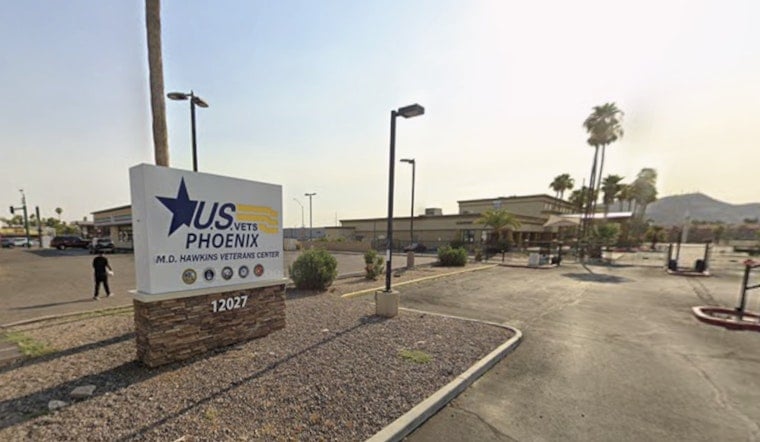
Behind secure-access doors at a converted hotel near Interstate 17 and Cactus Road, about 22 women veterans are rebuilding their lives after eviction, stroke, and military trauma pushed them out of housing. The women-only wing at the U.S. VETS Phoenix site gives them a locked-door refuge, a dedicated lounge, and a separate laundry room shared only among residents who understand what it took to get there.
Kristina Jones, who served nearly a decade in the Navy cooking for crews on ships, said she feels safe in the women’s section after losing her home when she could no longer work and her disability checks were delayed, according to ABC15 Arizona. She was evicted because she could not pay rent, and last October she suffered a stroke. Now she is looking for an ADA-accessible apartment unit and expects, per her own estimate, to be ready to leave in a couple of months.
A Former Holiday Inn Reborn as a Veterans Campus
The wing sits inside a newly remodeled former Holiday Inn, part of the broader U.S. VETS Phoenix facility, the station reports. The City of Phoenix invested $10.5 million in November 2021 to purchase and renovate the property after rising commercial rent forced U.S. VETS out of its previous location, according to KTAR. That purchase was supplemented by $4.5 million in American Rescue Plan funding the Phoenix City Council earmarked for veteran relief and supportive housing.
The full campus, officially named the M.D. Hawkins Veterans Center, has capacity for up to 192 veterans across 142 transitional beds and more than 30 permanent supportive units, per JustServe. Women make up roughly 16% of veterans at the site, according to Michelle Jameson, cited in the station's report. U.S. VETS has operated in Phoenix since 2001 and has assisted more than 10,000 local veterans with housing, career development, and case management over its 25-year presence, the nonprofit says.
From Combat Zones to a Waiting List for a First Apartment
Ariel Gomez served 12 years as an automated logistics specialist and combat engineer, deploying to Iraq and Syria before leaving military service in November. She contacted the VA crisis line, entered a residential program in Prescott, and then transferred to U.S. VETS Phoenix, the station's report notes. Gomez now attends life skills and communication classes, works in private security, and is saving to move into her own place.
A third resident identified only as Sashley experienced military sexual trauma during her service as an Army clerk responsible for records and emergency travel arrangements. She had jobs, a clean record, and good credit, yet still cycled through homelessness, living in her car during multiple periods before learning she was service-connected for disabilities. She was connected to U.S. VETS through the local VA Community Resource and Referral Center, a single walk-in intake point at 1500 E. Thomas Road where unhoused veterans receive housing assessments and program referrals, according to the U.S. Department of Veterans Affairs.
Free Care Without a Report on File
Sashley's path reflects a federal policy that lowers barriers for survivors: VA medical and mental health care for conditions tied to military sexual trauma is provided free of charge regardless of service connection or length of service, and does not require an official military report or disability rating, per the same VA guidance. That matters because clinical screening data show roughly 1 in 3 female veterans receiving VA healthcare report experiencing military sexual trauma during their service, the department has found. Sashley secured a VA identification card, the station's report notes, another step toward stabilizing her case.
Women veterans at the site have experienced military sexual trauma or other life-changing circumstances, and the women-only wing creates a sense of safety and camaraderie among residents, per the station's account. The wing includes secure-access doors, a women-only lounge, and its own laundry room, separate from the rest of the campus.
Classes, Case Management, and a 60- to 90-Day Clock
U.S. VETS Phoenix runs about 60 classes a week across four on-site classrooms, covering relapse prevention, mental health, art therapy, and employment readiness, alongside intensive treatment programs for veterans dealing with substance use. The site also provides filtered water stations for residents. Jameson told the station that the workforce team helped 283 veterans find jobs last year.
The housing itself is designed as short-term bridge housing, typically lasting 60 to 90 days, before U.S. VETS helps veterans move into apartments with assistance covering deposits, household items, and ongoing case management. Jones said veterans should ask for help before reaching the last minute, and she plans to secure an accessible apartment and build savings once she leaves.
Wider Trends Behind the Local Numbers
The Phoenix wing opens amid broader shifts in veteran homelessness data. Maricopa County's January Point-in-Time count identified 429 homeless veterans countywide in 2026, a 9% drop from 462 in 2025, according to Maricopa County data. Nationally, homelessness among female veterans fell 16% between 2023 and 2024, dropping from 3,980 to 3,329 after a 24% surge between 2020 and 2023, per VA News. The department projects women will make up roughly 18% of all U.S. veterans by 2040, making them the fastest-growing segment of the veteran population, according to the same VA reporting.
Hoodline previously reported on Phoenix's housing push for homeless vets, when the broader U.S. VETS facility offered more than 180 rooms of transitional housing. The new women-only wing adds a gender-specific, trauma-informed layer to that campus, giving residents like Jones, Gomez, and Sashley a locked door, a lounge of their own, and a defined runway toward permanent housing.





