

























































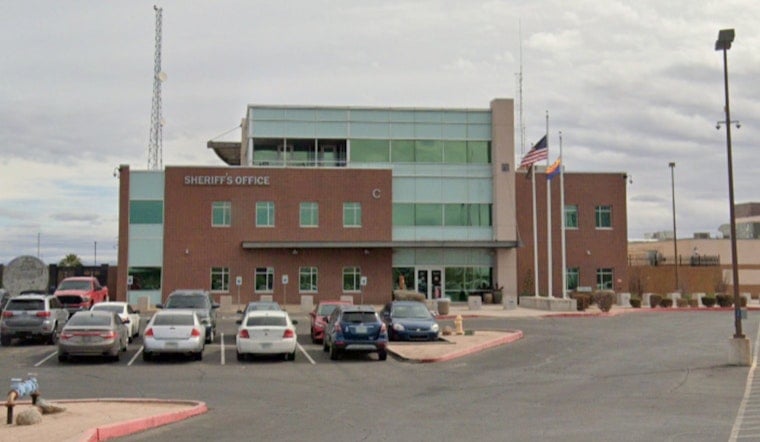
Pinal County Sheriff Ross Teeple has told county supervisors he will not renew his office's contract with Flock Safety, pulling the plug on roughly 200 license plate cameras across the county over what he calls a serious Fourth Amendment problem. It's a striking reversal for a sheriff who once credited the same technology with cracking Amber Alerts, Silver Alerts, and human-smuggling cases.
Teeple made the announcement to the Pinal County Board of Supervisors, according to KTAR News 92.3 FM, which reported that the sheriff's office's contract with Flock Safety expires at the end of September. The cancellation affects Flock cameras in unincorporated areas of Pinal County, while cameras located mostly in cities such as Maricopa and Casa Grande operate under separate municipal contracts and are not touched by the sheriff's decision. Per the Queen Creek Independent, that carve-out means around 45 county-controlled cameras in places like San Tan Valley will go dark, since unincorporated Pinal County relies directly on the sheriff's office for patrol services.
From Champion to Critic
The shift marks a notable about-face. In May 2025, Teeple defended Flock cameras at a Maricopa town hall as vital public-safety tools that had helped resolve multiple Amber Alerts, Silver Alerts, and human-smuggling cases, a pledge documented by the sheriff's own prior remarks. The cameras had also aided the Pinal County anti-smuggling unit, according to facts detailed in KTAR's reporting.
But Teeple now calls the system's capabilities a huge Fourth Amendment violation. The same KTAR report states that his concerns crystallized after he learned that Flock cameras in another jurisdiction had located a vehicle using its color and front-end damage rather than its license plate number — a capability he found troubling given the cameras' ability to build a data set about citizens' day-to-day activities.
Facial Recognition and GPS Comparisons
During an August 5 presentation to the Pinal County Board of Supervisors, Teeple laid out the technical basis for his concerns in more detail, according to the Queen Creek Independent. He pointed to features including facial recognition, live video streaming, and AI-driven pattern recognition that tracks residents' daily movements, comparing the cumulative surveillance to placing a GPS tracking device on someone's vehicle without a warrant. Pinal County voters had also raised concerns about the cameras with Teeple, and he has recommended that the Board of Supervisors commission a scientific poll asking residents whether they want the technology reinstated — meaning Pinal County residents may ultimately determine whether Flock cameras return to the unincorporated county.
Part of a Statewide Retreat
Pinal County is now among the largest Arizona jurisdictions to drop Flock technology, joining a wave of cities and towns that have severed or paused their contracts. The Flagstaff City Council voted unanimously in December to deactivate and physically remove all 32 Flock cameras in that city after sustained public opposition over data privacy and potential federal misuse, according to KNAU. Flagstaff police had previously shortened data retention from 30 to 14 days in an unsuccessful effort to address community concerns before the council moved to remove the cameras entirely.
The Sedona City Council terminated its Flock contract in 2025 after discovering that locally collected vehicle information had been accessed by U.S. Customs and Border Protection without local authorization, per KNAU, though Flock Safety disputed claims that it had misled local officials about data sharing. In South Tucson, the city council voted 5-2 in February to end its two-year contract for 10 Flock cameras a full year early following public pushback over data privacy and potential federal immigration enforcement, as reported by the Arizona Daily Star. That one-square-mile municipality is surrounded entirely by the city of Tucson.
Chandler Cites an 'Anomaly,' East Valley Follows Suit
Pinal County's announcement landed the same day the City of Chandler said it was discontinuing its own Flock Safety program after identifying what it called an anomaly in how the system's data was being accessed and used, according to FOX 10 Phoenix. Chandler city leaders had already delayed a contract vote back in May after facing public opposition, the station noted.
Arizona lawmakers have so far struggled to set statewide rules for the technology. Senate Bill 1111, considered in February, would have regulated police use and storage of license plate reader data, but it drew pushback from both civil liberty advocates and conservative legislators who argued it failed to prevent federal agency access or require warrants, according to Capitol Media Services reporting.
A National Reckoning Over Digital Tracking
The debate in Arizona is unfolding against a shifting national legal backdrop. On June 29, the U.S. Supreme Court ruled 6-3 in Chatrie v. United States that obtaining continuous digital location data constitutes a Fourth Amendment search, a decision that has prompted heightened legal scrutiny of whether interconnected license plate camera networks require warrants, per OPGOV.NEWS. Lower courts have historically treated license plate captures on public roads as non-searches under the third-party doctrine, making the ruling a potential turning point for how these networks are regulated.
Civil liberties organizations report that Flock Safety operates more than 120,000 cameras across 49 states, performing an estimated 20 billion vehicle scans nationwide each month, according to the ACLU. As of this month, at least 47 U.S. municipalities have canceled or declined to renew their Flock contracts over privacy and data-sharing concerns, placing Pinal County's decision squarely within a growing national pattern of local governments pulling back from the surveillance vendor.





