

























































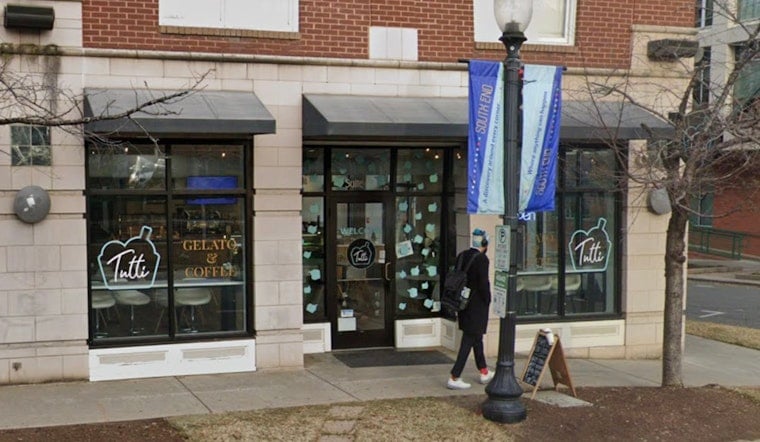
A Texas-born coffee chain known for blending Yemeni coffee traditions with gelato and globally inspired pastries has soft-opened its doors on Camden Road in South End. Port Coffee Co. now occupies the storefront once home to Central Coffee and Tutti Gelato, adding another name to Charlotte's rapidly multiplying roster of Yemeni-inspired cafes.
According to Axios, Port Coffee Co. is a Yemeni-inspired coffee chain based in Irving, Texas, and its South End location at 1700 Camden Road serves up classic espresso drinks alongside Yemeni coffee and tea, breakfast items like an egg muffin croissant, and sweets such as tres leches. The menu also features a brown sugar shaken espresso and gelato, rounding out a lineup the chain markets as a mash-up of Middle Eastern coffee culture and modern cafe design, per the company's own account of its origins.
The Camden Road address carries its own history in South End's coffee story. The storefront was previously home to Central Coffee Co., which operated there from 2016 until closing in May 2022 after facing a reported 40% rent increase, according to WCNC. That closure reflected a broader pattern in South End, where surging commercial rents have squeezed out longtime local tenants as the neighborhood's redevelopment accelerated.
A Neighborhood Already Crowded With Yemeni Cafes
Port Coffee Co. is hardly the first to bet on Charlotte's appetite for Yemeni coffee. The city now counts more than half a dozen Yemeni coffee shops, Axios reports, including Qahwah House, Qamaria Yemeni Coffee Co. and Haraz Coffee House, all of which have staked out territory in Charlotte over the past two years. Haraz was among the earliest to arrive, opening on Central Avenue in Plaza Midwood in January 2024 and expanding to four local outposts — including South End, Ballantyne and University City — by late 2025, as tracked by Axios Charlotte.
Qahwah House followed in December 2024 with a Plaza Midwood location on Pecan Avenue built around late-night, alcohol-free socializing, staying open until midnight or later, the same outlet notes. Qamaria opened its first Charlotte store in August 2025 near UNC Charlotte in University City, with space designed by local architecture firm A.B. Group, according to EIN Presswire. Each new entrant has leaned into the same pitch: coffeehouses that double as gathering spots without the bar scene.
Why Yemeni Coffee Is Suddenly Everywhere
The trend extends well beyond Charlotte. Yemeni-American coffee shops were the fastest-growing coffee sector in the nation in 2025, increasing by 50%, according to Technomic data cited by Axios. Nation's Restaurant News reported similarly striking figures nationally, with Haraz Coffee House posting a 78.5% sales increase and 82.4% unit expansion, while Qahwah House grew sales 56.5% — outperforming much of the broader restaurant sector even as consumer spending contracted elsewhere.
That growth tracks with shifts in how, and how much, Americans are drinking. Gallup found U.S. adult alcohol consumption fell to 54% in 2025, a 90-year low, while the Arab American Institute reported the U.S. Arab American population grew 43% between 2010 and 2024, per reporting in the Los Angeles Times. Falling alcohol consumption has fed demand for late-night, non-alcoholic community spaces, a niche Yemeni cafes have moved to fill.
Centuries of Coffee History Behind the Trend
The style itself traces back centuries. The word mocha derives from Al-Mokha, the Red Sea port city in Yemen that dominated the global coffee trade from the 15th through 17th centuries after Sufi monks commercialized coffee cultivation, according to Britannica. Traditional Yemeni coffee relies on sun-dried whole coffee cherries, natural-processed on highland farms and spiced with cardamom, ginger, cinnamon or hawaij blends, often paired with sweets like Khaliat Nahl, a cheese-filled honeycomb bread served with honey, per Rethink Cafe.
Port Coffee Co.'s arrival also lands on one of South End's busiest emerging corridors. The Camden Road storefront sits along the LYNX Blue Line Rail Trail, where dense light-rail development has pushed the City of Charlotte and CATS to advance plans for a new infill transit station, transforming former industrial land into one of the city's densest retail and residential submarkets.
South End's coffee scene has kept adding new names even as older ones fade. Hoodline previously reported on Finders Coffee's debut in the same neighborhood, and Port Coffee Co.'s soft opening adds yet another entrant to a corridor where foot traffic, rent pressure and cultural coffee trends are all converging at once.





