

























































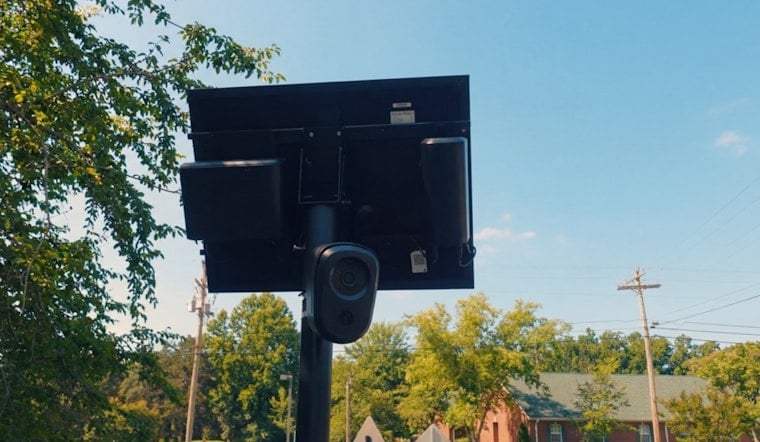
A Porter County Sheriff's Department officer has been demoted, suspended without pay, and permanently barred from using the agency's Flock license plate reader system after an internal affairs investigation found he ran unauthorized searches tied to a personal relationship. The department has not publicly named the officer, citing the ongoing internal affairs process, but records reviewed by the Institute for Justice identify him as Lt. Michael Piazza, and indicate the searches involved a woman he was having an affair with.
According to the Chicago Tribune, the discipline followed a citizen complaint about an improper license plate search, which prompted Sheriff Jeffery Balon to order an internal affairs investigation. That probe confirmed an officer had entered a citizen's plate into the Flock system for a reason that violated department policy in effect at the time. Beyond the demotion and unpaid suspension, the officer was also ordered into remedial ethics training and indefinitely barred from touching the Flock system again. The department has declined to release the officer's rank, tenure, or the date the misuse was discovered, saying that information remains part of the internal affairs file — though the Institute for Justice's separate reporting names Piazza and details the affair at the center of the case.
Balon told the Tribune that officers will be held accountable for inappropriate use of the Flock system, while also defending the underlying technology as a valuable crime-fighting tool that police credit with helping locate missing people and track suspects in violent crimes. He added that the department generally does not comment on internal affairs investigations. In response to the case, the sheriff's office says it strengthened its Flock policy and added safeguards, including a requirement that every search now include a case number and a documented reason, with the department's own audit system — which uses artificial intelligence — flagging potentially suspicious searches for review.
A Surveillance Network Already Blanketing Porter County
The Porter County Sheriff's Office has operated Flock's automated camera network countywide since at least April 2024, when the system ran under a default 30-day cloud data retention policy, according to the Atlas of Surveillance. The sheriff's office is far from the only local agency running the cameras — the Chesterton Police Department maintains 14 readers and the Northern Indiana Commuter Transportation District Police Department runs two more, per the Atlas of Surveillance's September 2025 count, meaning plates captured in Porter County can be logged, searched, and shared across multiple overlapping jurisdictions.
That capacity for cross-agency searching is part of what alarms critics, who characterize Flock's widespread use as unconstitutional warrantless mass surveillance, per the seed reporting. Research published by the ACLU of Indiana in July 2026 found that less than 1% of the billions of plates Flock cameras scan monthly connect to any active crime or warrant, while roughly 10% of in-state plates are misread by the software altogether — numbers civil liberties advocates cite when arguing the dragnet's costs outweigh its narrow hit rate.
A Vendor Update Triggered a Nationwide Reckoning
The Porter County case lands amid a broader nationwide wave of similar discoveries. On August 13, 2026, Atlanta-based vendor Flock Safety updated its platform to make AI-driven audit alerts mandatory for every client department, require case-number logging on every search, and shrink default cloud storage from 30 days down to seven, according to Techish. That change is widely seen as the catalyst behind a sudden surge of internal audits and officer suspensions across the country in the weeks since.
An August 2026 Washington Post investigation documented at least 50 law enforcement officers nationwide who have been accused, charged, or convicted of misusing Flock or similar license plate reader networks to track ex-partners, wives, or romantic interests. Indiana has already produced a second, parallel case: the Indianapolis Metropolitan Police Department suspended an officer and recommended termination this month after an internal review found unauthorized personal searches in its own ALPR database, according to the Indiana Capital Chronicle.
State Lawmakers Eye Rules for a Regulatory Vacuum
Indiana currently has no comprehensive statewide law governing how long police can retain ALPR data or how they share it across agencies — the only existing state restriction is a 2023 law barring homeowners' associations from installing their own plate readers unless police operate them, per the same Indiana Capital Chronicle reporting. That gap is prompting action in the statehouse: Indiana Representative Jim Pressel announced plans this month to introduce legislation requiring mandatory local audit protocols and annual state police reviews of ALPR searches.
Public patience with the cameras appears to be thinning elsewhere in the state as well. The Bloomington Police Department let its Flock vendor contract expire amid the backlash, and residents in rural Lawrence County gathered more than 500 signatures on a petition opposing new camera installations this month, the outlet reports. Nationally, agencies and cities have also begun ending relationships with Flock over concerns about immigration enforcement and unauthorized tracking, according to the seed reporting, as departments in nearly every state — Flock's cameras now span 49 states — confront the same question Porter County just answered the hard way: who is watching the watchers.





