

























































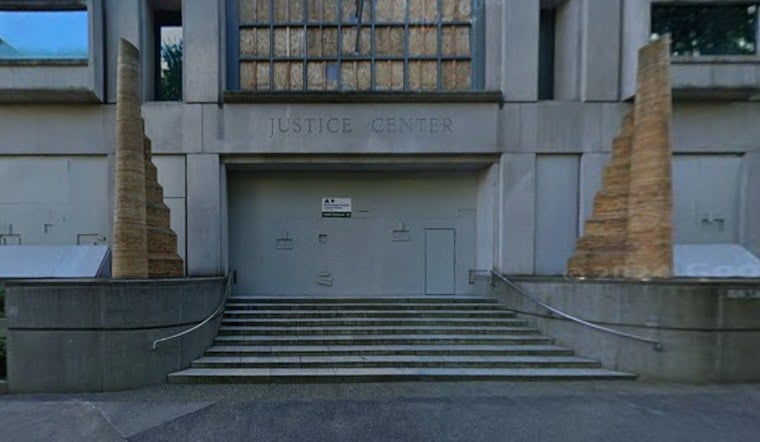
Dominique J. Ware told a jail nurse he had swallowed a bag of fentanyl and was dying. The nurse recorded his vital signs, suspected he was faking, and roughly 50 minutes passed before jail staff got him emergency treatment — a delay newly detailed in records from his February 2025 death at the Multnomah County Detention Center. The 35-year-old Portland man died several days later at OHSU, and prosecutors have now closed the door on criminal charges against the staff involved.
According to The Oregonian/OregonLive, Ware was arrested by U.S. Marshals in Portland on February 12, 2025, the day before he died. Court records reviewed by the outlet do not say why he was arrested, and county officials continue to refuse to provide a reason. Ware had prior convictions, including second-degree assault with sexual motivation and possession with intent to deliver in 2008, when he was 18, and unlawful use of a firearm in Washington in 2017. He was remembered as a Portland-born warehouse worker and a hip-hop and R&B musician.
A Swallowed Bag and a Skeptical Response
Records show Ware had swallowed a red plastic bag containing an eighth of an ounce of cocaine and amphetamines. A jail nurse measured his oxygen saturation at 98%, his pulse at 103 beats per minute, and his heart rate at 118 beats per minute, but did not take his blood pressure at one point because of possible safety concerns; the nurse later recorded his blood pressure as 139 over 78. The nurse observed Ware lying on his side with jerking body motion and possible seizure-like activity, along with small amounts of blood in his mouth, but believed he was faking a medical emergency, per the outlet's report.
That skepticism reflects a broader pattern in Portland-area jails, where suspects frequently use what officers call “dope swallowing” — falsely claiming to have ingested dangerous narcotics — to avoid or delay booking, according to KGW. The false claims force officers into hours of hospital watch duty and strain emergency room resources, which has bred deep skepticism among jail nurses and deputies toward ingestion claims. Multnomah County prosecutors, police, and health officials had actually built a dedicated hospital monitoring protocol and a “Narcotic Ingestion Admonishment” form back in 2018 to manage exactly this kind of situation, but that initiative lapsed during the pandemic and was never revived, KGW reported.
Deputies Move Ware, Then Find Him Not Breathing
Ware told his cellmate to get deputies' attention as his condition worsened inside the detention center. Roughly 12 jail deputies roughly handled him before placing him in a wheelchair, and jail staff transferred him to a disciplinary unit rather than treating the episode as a medical emergency. Jail staff also administratively charged Ware with abuse of the medical process, failure to do as ordered, staff assault, and destruction of county property, according to the report.
Corrections employees eventually noticed Ware was not breathing. Medical staff attempted to resuscitate him with a code cart before emergency responders transported him to OHSU on February 13, 2025. Doctors there determined he had brain swelling and widespread brain damage. His family later agreed to place him on palliative comfort care, and he died several days after admission.
Why No Charges Were Filed
The Multnomah County Sheriff's Office sent evidence to the district attorney's office for review, and prosecutors ultimately declined to prosecute the nurse or other jail staff who interacted with Ware. Prosecutors found insufficient compelling evidence that the nurse or other staff were criminally liable, concluding they had no way to know that the drugs' onset would be delayed by the plastic bag, which later ruptured in Ware's small intestine and sent what the outlet described as a life-threatening bolus of drugs into his bloodstream.
Sean Hurst determined, per the medical examiner's report, that Ware's cause of death was cocaine and amphetamine toxicity — a finding the medical examiner's office formally ruled as acute cocaine and amphetamine toxicity. Hurst said the roughly 50-minute treatment delay had no effect on the outcome, and that Ware likely would have died from the overdose regardless of medical intervention. Marc Stern, quoted in the same report, noted that nurses in correctional institutions carry significantly more responsibility and authority than their counterparts in other health-care settings. Jail staff maintained that Ware had no history of seizures and no acute medical needs on record. Prosecutors did not rule out civil or administrative fault, and county officials confirmed that a tort has been filed in connection with Ware's death.
Part of a Pattern in Multnomah County Jails
Ware's death adds to a troubling record inside Multnomah County's jail system. The county recorded a record seven in-custody deaths in 2023, outpacing the total from the previous seven years combined, according to Willamette Week. That mortality spike prompted public protests and independent oversight reviews. In January, former corrections deputy James Brauckmiller pleaded no contest to misdemeanor official misconduct for failing to perform required cell checks before a June 2023 inmate suicide, one of two deputies indicted following inmate deaths that year.
Fatal in-custody incidents have continued since Ware's death. Two separate men died in Multnomah County jail custody within a three-day span earlier this month — a 71-year-old at the Multnomah County Detention Center and a 48-year-old at Inverness Jail — Hoodline previously reported, with both cases triggering investigations by the East County Major Crimes Team.
Legal Threshold and Systemic Gaps
Under Oregon Revised Statute 163.145, prosecutors pursuing criminally negligent homicide must prove beyond a reasonable doubt that a person failed to be aware of a substantial risk in a way that represents a gross deviation from reasonable care — a much higher bar than civil negligence or administrative misconduct, according to OregonLaws. That threshold helps explain why the jail nurse who treated Ware ultimately faced no criminal exposure despite the missed emergency signs.
Broader gaps in Oregon's jail health system compound the problem. A statewide investigation by Disability Rights Oregon, reported by Street Roots, found that Oregon law sets no baseline mandatory health care standards for county jails, leaving local facilities ill-equipped to manage acute medical emergencies or drug toxicity. Fentanyl was involved in 80% of Multnomah County's 777 overdose deaths in 2023, with stimulants like cocaine or methamphetamine co-involved in roughly 61% of those fatalities, according to Multnomah County Health Department data — underscoring how common polysubstance toxicity has become locally, even as jail staff remain skeptical of ingestion claims. Oregon House Bill 4002, which took effect in September 2024 and reclassified personal drug possession as an unclassified misdemeanor punishable by up to 180 days in jail, has added to the pipeline of drug-related bookings flowing into facilities that still lack uniform medical protocols, Hoodline has reported.



