

























































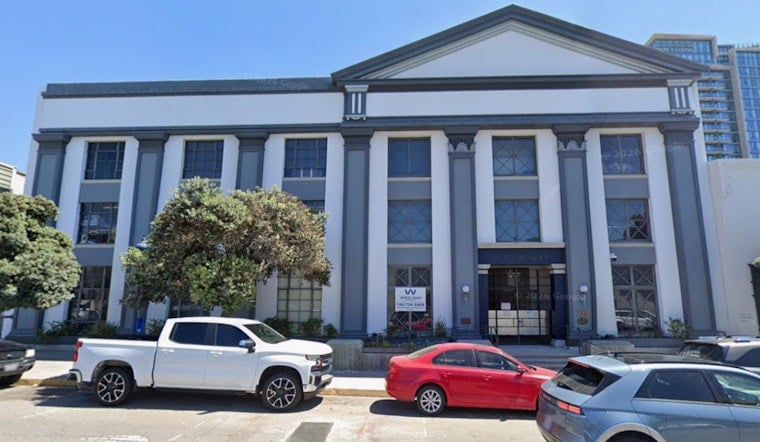
A downtown San Diego shelter for homeless women and children just got a whole lot bigger. Rachel's Promise Center for Women and Children has expanded from 50 beds to 210, adding 160 new beds through a public-private partnership as the city scrambles to keep pace with a surge in families losing housing.
The expansion, reported by NBC 7 San Diego, brings the facility to 110 beds for single women and 100 beds for women with children. The shelter is operated by Catholic Charities, Diocese of San Diego, through a contract with the San Diego Housing Commission, and it is funded by the City of San Diego. According to the city, unhoused women are expected to begin moving into the new space next week, with women and their children following within the next month.
The need is stark. The Coordinated Shelter Intake Program, administered by the San Diego Housing Commission, received 2,864 referrals for families seeking shelter last fiscal year, but only managed to actually place 58 families — a completion rate of just 2%. Citywide, shelter referrals for families have increased 111% since fiscal year 2025, according to the same report.
A Program That Started With 40 Beds
Rachel's Promise began in 2022 with just 40 beds, part of Catholic Charities' broader Rachel's Programs network that also runs Rachel's Women's Center, a drop-in day facility offering showers, meals, laundry and case management. Catholic Charities CEO Appaswamy “Vino” Pajanor said the program has grown from those original 40 beds all the way to 210. Councilmember Stephen Whitburn, who represents downtown San Diego, said the shelter gives vulnerable unhoused residents “a safe place to stay and a path toward greater stability.”
Women and families staying at the shelter receive more than a bed — the program provides meals, clothing, showers, laundry and housing resources, along with access to public benefits and health care. Lisa Jones said the new beds will support both women with children and single women as they work toward stable housing. The physical space itself was designed with intention: donors Dene Oliver and Jim McMillan contributed furniture and office equipment from a former office site and worked with Catholic Charities on site design and tenant improvements meant to create semi-congregate and non-congregate shelter space, enhancing safety, privacy and dignity for women and children.
Part of a Bigger Shift in Who's Homeless
The data behind this expansion points to a demographic shift. Women and girls made up 29.9% of people in city- or SDHC-funded shelter programs in fiscal year 2021; by fiscal year 2026, that figure had climbed to 40.5%. Mayor Todd Gloria said unsheltered homelessness in San Diego declined another 6.6% this year, continuing a trend documented by the Regional Task Force on Homelessness, whose 2026 Point-in-Time Count found unsheltered homelessness dropped 11% countywide even as sheltered homelessness rose 12% year-over-year.
That same count revealed another troubling pattern: one in three unsheltered people counted in San Diego County was 55 or older, and more than half said it was their first time experiencing homelessness, according to KPBS. Rising living costs paired with fixed Social Security incomes have been pushing more older adults into homelessness for the first time.
Filling a Gap Left by Bigger Closures
Rachel's Promise's growth fits into a larger, messier story about San Diego's shelter system. City leaders turned toward expanding smaller, existing facilities after a proposed 1,000-bed mega-shelter at Kettner Boulevard and Vine Street stalled and was ultimately abandoned in late 2024. Once that centralized plan collapsed, the City Council opted to evaluate smaller, scattered sites spread across multiple council districts, according to the City of San Diego.
That pivot came after the city lost significant shelter capacity when major facilities closed in late 2024, including the 1,400-bed Golden Hall shelter downtown and the Paul Mirabile Center, according to Voice of San Diego. The San Diego City Council approved a Fiscal Year 2027 homelessness budget in June funding more than 2,700 total sheltering options, including 1,683 traditional shelter beds across 17 programs, 760 safe sleeping tents and 350 safe parking spaces — a net increase of over 200 beds despite planned cuts to older shelter contracts, per the City of San Diego.
Does More Shelter Mean Less Homelessness?
Downtown San Diego has seen some of the clearest results from this buildout. Monthly counts by the Downtown San Diego Partnership found unsheltered homelessness in Downtown San Diego and East Village fell nearly 65%, from 2,104 people in May 2023 to 756 people in June 2025 — a decline city officials attribute largely to expanded indoor beds and safe sleeping tent sites, according to the City of San Diego. San Diego currently runs two Safe Sleeping Program sites near downtown offering roughly 760 individual tents with meals, restrooms and housing navigation help.
But not everyone agrees the numbers tell a fully positive story. An April performance audit by the San Diego City Auditor found that while the city's Unsafe Camping Ordinance and new safe sleeping sites have reduced visible street encampments, they have not reduced the city's overall unsheltered population. Auditors also flagged that external funding uncertainties limit the city's ability to sustain long-term shelter capacity. The ordinance itself, passed in a 5-4 vote in June 2023, bans tent encampments near schools, parks, transit stops and shelters at all times, and prohibits public sidewalk camping citywide whenever shelter beds are available, using a progressive model of warnings and shelter offers before citations, per KPBS's coverage of the law's signing.
Hoodline previously reported on Rachel's Promise's opening phase last year, when the center launched with its first 50 beds. The tripling of capacity since then reflects both the scale of the need and the limits of what shelter expansion alone can solve, as families continue to be referred for help far faster than the system can place them.


