

























































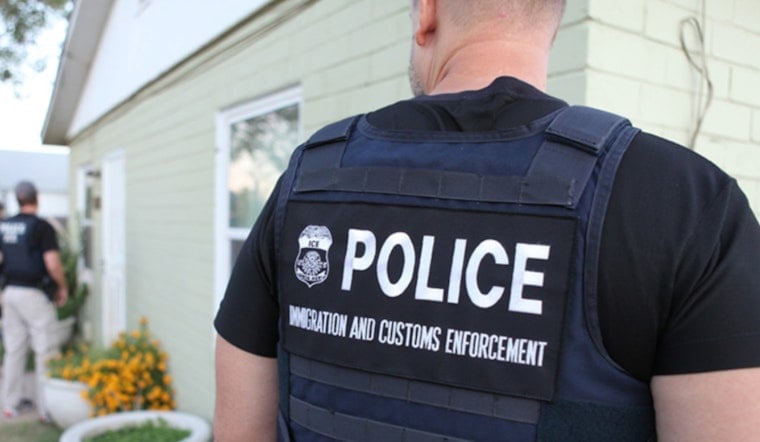
Clergy and faith leaders gathered at Halifax Mall in downtown Raleigh for a prayer vigil, lifting up both law enforcement officers and immigrant communities they say are caught in the fallout of North Carolina's newest immigration law. The gathering came weeks after Senate Bill 153 became law, a measure that forces several state agencies, including the State Highway Patrol, into formal cooperation with U.S. Immigration and Customs Enforcement.
The vigil was reported by WRAL, whose Kirstyn Clark documented the clergy-led event. Rev. Joel Simpson told the outlet that the law increases state troopers' responsibilities and pulls them away from other important work, adding that officers did not sign up for the responsibilities now imposed on them. He also reflected on shared accountability, saying everyone is complicit in what happens but everyone also has a role in changing it.
Becky Showalter, another attendee, voiced concern that immigrants may stop reporting crimes to law enforcement out of fear of being taken away, according to the WRAL report. She said she was worried about the difficult decisions officers may be forced to make and the consequences those decisions could carry for immigrants. Some attendees at the vigil also said, per WRAL's account, that ICE has targeted people who are U.S. citizens and people with no criminal record.
What Senate Bill 153 Actually Requires
Senate Bill 153, now enacted as Session Law 2026-19, requires four state law enforcement entities — the Department of Public Safety, Department of Adult Correction, State Highway Patrol, and State Bureau of Investigation — to enter into 287(g) Memorandums of Agreement with ICE, according to the UNC Legislative Reporting Service. Those agreements allow designated state officers to carry out federal immigration enforcement duties that were previously handled only by ICE agents themselves.
The law goes beyond policing. As WFAE reports, it also bars state public benefit agencies — including the Department of Health and Human Services and the Housing Finance Agency — from providing Medicaid, housing assistance, or childcare subsidies to noncitizens residing without legal status. Separately, the Daily Tar Heel notes that the law bars UNC system institutions from adopting sanctuary campus policies or restricting federal immigration enforcement on their campuses.
The legislation also waives local government tort immunity, per the UNC Legislative Reporting Service, meaning cities and counties that maintain sanctuary ordinances could be sued if an unauthorized immigrant commits a crime against a person or property within their boundaries. Vigil attendees framed this liability exposure, along with the enforcement mandates, as reasons they opposed Senate Bill 153.
A Veto Override Built on Absences
Republican House lawmakers overrode Gov. Josh Stein's veto of Senate Bill 153 in June, clearing the three-fifths supermajority threshold in a 71–47 vote after two non-Republican representatives were absent during the roll call, according to the Carolina Journal. Hoodline previously reported on how two no-shows swung the vote.
Following the override, Stein released a statement criticizing Republican lawmakers for stoking culture wars and diverting state law enforcement officers from local duties to act as federal immigration agents, according to the NC Office of the Governor. Senate leader Phil Berger, who was interviewed by WRAL, offered a starkly different view, saying people who are in the country illegally should be removed for the most part.
North Carolina State Highway Patrol Lt. Christopher Knox said the patrol will work to share information as implementation moves forward, while administrative application details remain under development, according to WUNC News. Agencies covered by the law could face lawsuits for failing to comply with its requirements, per WRAL's reporting.
Part of a Broader Legislative Trend
Senate Bill 153 marks the third major state immigration enforcement measure passed by North Carolina lawmakers in two years, following House Bill 10 in 2024 and House Bill 318 in 2025, which mandated local sheriffs and jail administrators to notify ICE and honor detainers, WUNC News notes. Federal immigration enforcement data cited by the same outlet shows more than 6,300 immigration arrests occurred in North Carolina during the initial months of President Donald Trump's second term leading up to mid-2026.
Opposition to the law predates the veto override. On June 10, 2025, hundreds of demonstrators gathered at the North Carolina General Assembly before marching to the governor's residence to demand a veto of Senate Bill 153 and House Bill 318, according to Enlace Latino NC. That mobilization foreshadowed the prayer vigil at Halifax Mall, where clergy framed their opposition in moral rather than purely political terms.
Vigil attendees who spoke with WRAL described the law as one that puts both troopers and immigrant communities in difficult positions. For Simpson and Showalter, the concern was less about the politics of the override and more about what happens now that the law is in effect, with officers newly tasked with federal immigration duties and immigrant families weighing whether it remains safe to call the police at all.





