

























































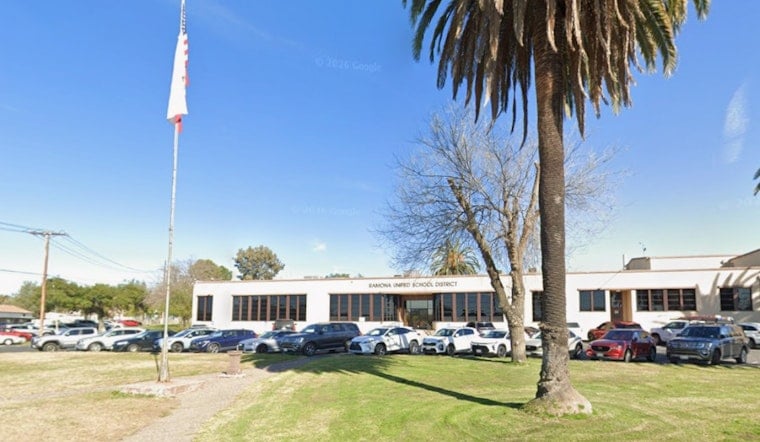
Bud Kaelin's sixth-grade son used to catch the bus at 14th and H Streets in Ramona. Now that the stop is gone, and Kaelin says his son faces a 3.5-mile walk home instead, right as inland San Diego County bakes through a punishing summer heat wave.
Ramona Unified School District has been consolidating bus routes and eliminating stops this year, a shift the district attributes to an ongoing driver shortage, according to the New York Post. Families across the rural district say the changes have left kids walking far longer distances to get home from school, with some parents now scrambling to rearrange work schedules just to keep their children safe.
Kaelin does not want his son walking more than a mile, he said, and the timing could hardly be worse. On Wednesday, temperatures in Ramona hit 102 degrees, tying the daily high temperature record as a regional heat wave gripped the area, according to National Weather Service data cited by CBS LA. Ramona sits inland, in a valley that runs significantly hotter than coastal San Diego, making the newly lengthened walks more than just an inconvenience.
A Rule Measured in a Straight Line
Under district policy, middle and high school students must live more than 2.5 miles from school to qualify for bus transportation, per the New York Post's reporting. But Ramona Unified measures that distance as a straight line rather than by the actual streets students have to walk, meaning a family can fall just outside the cutoff on paper while facing a much longer route in practice.
That is essentially what happened to Mary Emily, whose 15-year-old daughter now faces about a mile-long walk just to reach her next bus stop. Emily has accused the district of applying its safety considerations inconsistently, arguing that some families lost service under circumstances that do not match how the rules are supposed to work. As Emily put it, students walk to school rather than fly there — a blunt way of saying that unrealistic distance math has real consequences on foot.
The district eliminated a route on Hope Street entirely and told families, in a letter, that it was forced to consolidate routes because of the ongoing driver shortage. Ramona Unified also said the old stop at 14th and H Streets was unsafe, and that the route consolidations represented the safest way to keep transportation running for as many students as possible.
A Father's Job on the Line
Kaelin said the bus changes cost him his job. During the first week of classes, he started leaving his construction job three hours early every day so he could pick up his son rather than let him walk. He has asked district officials whether heat exhaustion and impaired vision could put his son at risk while crossing streets on the new route home.
Parents fear that the heat wave could turn those walks into a serious safety hazard, a worry playing out as multiple San Diego County school districts have adopted shortened minimum-day schedules and heat mitigation protocols during the late-August heat wave, according to NBC 7 San Diego. Ramona Unified serves 4,833 students across 10 school sites this school year, per California Department of Education profile data, spread across a district that covers roughly 172 square miles of rural San Diego County, according to Census Reporter. That vast, sparsely populated terrain is exactly why distance-based bus policies land so hard on families here.
The Bigger Problem Behind the Cuts
California law does not actually require districts to bus general education students at all — transportation is guaranteed only for students with Individualized Education Plans or those experiencing homelessness, according to KQED. That leaves eligibility thresholds and route decisions entirely up to local school boards like Ramona Unified's, even when a state reimbursement program exists to help cover the cost.
The state's Home-to-School Transportation Reimbursement program, created under Assembly Bill 181 in 2022, can cover up to 60 percent of a district's qualified transportation expenses, per the California Department of Education. But money alone does not solve Ramona's problem, since the shortage driving these cuts is about finding enough qualified drivers, not just funding routes.
That shortage is not unique to Ramona. A survey by HopSkipDrive found 71 percent of responding school districts nationwide experienced tangible operational fallout from bus driver shortages over the past year, with 46 percent reporting longer ride times and 39 percent reporting missed or late pickups. A separate national study by the Associated Press-NORC Center for Public Affairs Research and HopSkipDrive found that administrators point to low driver wages and recruitment difficulties as the primary causes, compounded by the fact that commercial driver's license requirements and split shifts make the job a hard sell against private-sector pay.
California's Senate Bill 88 added another layer of difficulty last year, requiring all compensated drivers transporting students to meet updated qualification standards, including mandatory first aid certification and specialized safety training, according to risk management firm Keenan. The rules were meant to standardize safety statewide, but they have also raised the bar for districts already struggling to fill driver seats.
The stakes extend beyond sore feet and long afternoons. HopSkipDrive research found that more than half of K-12 parents surveyed said their child missed school at least once in the past year because of a transportation issue — and in California, missed school days translate directly into lost funding, since local educational agencies are paid based on average daily attendance. For a district already navigating a driver shortage and a heat wave, every missed bus is also a missed dollar.





