

























































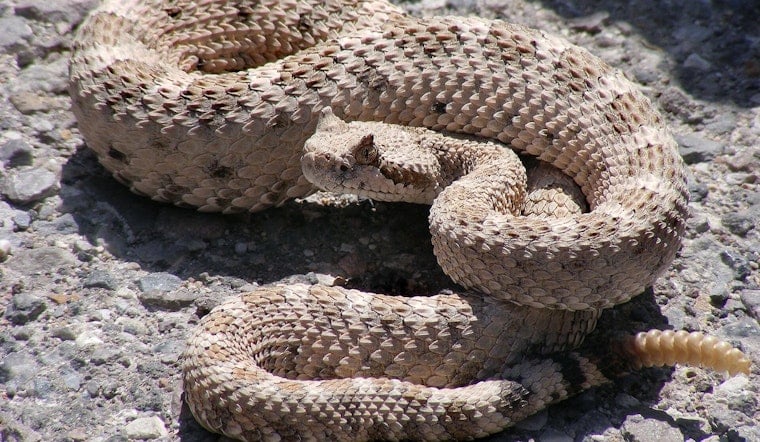
A hiker bitten by a rattlesnake deep in Bear Canyon set off a race against time on Monday, texting a family member for help before rescue crews could even pinpoint where he was. Volunteer search teams and a Los Angeles County Sheriff's Department helicopter crew spent hours combing the Switzer Falls trail and Tom Sloan Saddle area of the Angeles National Forest before locating him and airlifting him to a local hospital for treatment.
According to the New York Post, the hiker's exact location was unknown when he first reached out to his relative, forcing the Los Angeles County Sheriff's Department's Montrose Search and Rescue Team and the Altadena Mountain Rescue Team to begin a coordinated ground search through Bear Canyon while a helicopter crew scanned the terrain from above.
Thick Canopy Slows The Rescue Effort
Dense tree cover over the canyon made it difficult for the helicopter crew to spot the hiker even after they'd narrowed in on the Switzer Falls trail area, the report notes. LASD said knowing exactly where a hiker is can matter just as much as knowing what happened to them once trouble strikes in remote terrain.
The rugged corridor where the search played out has its own history of hazard. Hoodline previously detailed how a rockfall near Switzer Falls sent another hiker to an airlift rescue after wildfire scarring and erosion left the canyon prone to loose terrain, on top of the seasonal wildlife risks that now stalk the same trails.
Why Volunteers Stress Location Over Details
Montrose Search and Rescue is an all-volunteer nonprofit affiliated with the Sheriff's Department, staffed by reserve deputies and civilian specialists who respond to as many as 125 to 195 wilderness emergency calls a year across roughly 250 square miles of the Angeles National Forest, according to the Crescenta Valley Weekly. Team members train for air-hoist operations and steep-terrain evacuations for a nominal $1-a-year salary, the outlet reports.
LASD reminded hikers heading into the San Gabriel foothills to carry a satellite emergency communication device, since canyon routes like the Gabrielino Trail near Switzer Falls and Bear Canyon frequently have no cellular coverage at all. Hoodline covered the same problem in April, when a satellite text saved a Montecito hiker bitten by a rattlesnake on a trail without phone service.
A Statewide Spike In Snakebites
Rattlesnake bites are still considered extremely rare overall, but 2026 has been anything but a normal year. More than 250 rattlesnakes have already been recorded across Southern California this year, per the same New York Post account, and last month a Los Angeles County woman was rushed to the hospital after a rattlesnake bit her and she felt tingling in her fingertips and parts of her face within 30 to 45 seconds.
The California Poison Control System logged 77 rattlesnake bite calls in just the first three months of 2026, well on pace to exceed the typical annual statewide range of 200 to 350 calls, according to the Los Angeles Times. California had already logged three rattlesnake bite fatalities by mid-May, the paper reports, well above the state's usual average of zero to one death per year.
Researchers cited by BEACON have tied the early surge to an unseasonable spring heat wave that pulled snakes out of winter brumation weeks ahead of schedule while also drawing more hikers onto foothill trails at the same time. Nationally, the U.S. sees roughly 7,000 to 8,000 venomous snakebites a year resulting in five to ten deaths, BEACON notes, making California's early death toll this year a sharp departure from the norm.
First Aid Rules And The Cost Of Antivenom
The Southern Pacific Rattlesnake is the primary venomous species found in the Angeles National Forest, and its venom can carry neurotoxic components that trigger localized tingling, facial numbness, and rapid systemic decline within minutes, according to LA County Public Health. The U.S. Department of Agriculture advises bite victims to stay calm, keep the bite area lower than the heart, and call for help immediately.
Public health agencies including the California Poison Control System and the California Department of Fish and Wildlife explicitly warn against tourniquets, ice, cuts, or suction devices, saying those outdated remedies worsen tissue damage without neutralizing venom. Severe envenomations instead require specialized antivenom such as CroFab or Anavip, which runs about $2,500 per vial, according to UC San Diego Health. Some of this year's most severe Southern California cases have required between 34 and 54 vials during extended ICU care, a toll Hoodline previously chronicled in a Claremont pitcher's antivenom ordeal.





