

























































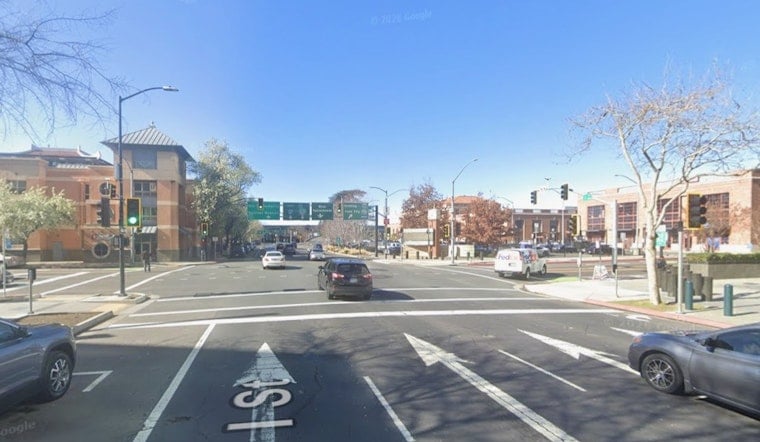
Sacramento is considering installing automated red light cameras at 20 intersections across the city, releasing a draft list of locations that includes 5th Street and I Street, Freeport Boulevard and Florin Road, Truxel Road and Arena Boulevard, Del Paso Boulevard and Evergreen Street/Lampasas Avenue, and 65th Street and Lemon Hill Avenue. The proposal comes as preventable car crashes have killed at least 29 people in Sacramento so far in 2026, and the city is now asking residents to weigh in before any cameras go up.
The city's Public Works Department is seeking feedback on the preliminary list of 20 intersections, according to the Sacramento Bee. City crash data released this week shows that 80% of Sacramento's 22,538 traffic collisions between 2015 and 2024 happened at intersections, with red-light running directly causing or contributing to 160 severe injury or fatal crashes, per Sacramento City Express. Sacramento has also opened an online survey for people who live, work and travel in the city, and plans to hold a citywide public workshop in November.
A New Civil Framework Replaces the Old Photo-Ticket System
The push follows the passage of Senate Bill 720, authored by Sacramento State Senator Angelique Ashby and signed into law by Governor Gavin Newsom in October 2025, which created California's Safer Streets Program authorizing cities to run civil red-light camera systems, according to Walk San Francisco. The law replaces California's 1995 red-light camera statute, which treated citations as criminal moving violations carrying fines up to $500, added points to driver records, and required photographic identification of the driver's face — a rule that made California the last state to require facial photos for automated enforcement, per Streets Are For Everyone.
Under the new civil model, the Sacramento Bee reports that red light camera fines will start at $100 for a first violation and increase for repeat violations within a three-year window. Statewide, Senate Bill 720 sets that escalation at $100 for a first offense, $200 for a second, $250 for a third, and $500 for a fourth or subsequent violation, according to the same law-and-regulation summary published by Streets Are For Everyone. Civil violation notices will be mailed to a vehicle's registered owner, and appeals will require a $25 filing fee. The city says it will also offer payment plans as low as $25 a month, and income-eligible residents could receive fine reductions of up to 80%.
Privacy Rules Keep Police Out of the Program
Sacramento's Public Works and Transportation departments will handle program enforcement, not the Sacramento Police Department, which will not be involved in running the cameras. The cameras are prohibited from continuous recording, from photographing drivers, and from using facial recognition. Violation data will be deleted once a case is resolved, and the system is barred from database integration with law enforcement or federal agencies without a court order, according to reporting from Sacramento City Express.
Sacramento previously operated red-light cameras at 11 intersections under a regional agreement managed by the Sacramento County Sheriff's Office, but that program was dismantled in early 2024 after county officials determined operating costs exceeded ticket revenue, according to Getting Around Sacramento. The city has left Sacramento without automated enforcement in the years since. Nearby, the City of Mountain House became one of the first California communities to deploy an SB 720 program, installing cameras at 14 high-risk intersections in April in partnership with vendor Verra Mobility and instituting a 60-day public warning phase before issuing $100 civil notices.
Officials Say Fines Cannot Fund the General Budget
Fine revenue cannot be used for city general fund expenditures. The Sacramento City Council unanimously passed Resolution 2026-0013 in January, establishing a dedicated Red Light Camera Fund, known as Fund 2040, that requires unspent citation revenue to revert to California's Active Transportation Program after three years. Revenue is instead meant to be reinvested in street safety improvements after covering the program's own operating costs.
At a Thursday meeting, city official Chris Dougherty said the program has no defined budget at this stage, and Sacramento has not finalized a total cost estimate as planning continues. Camera locations will be finalized only after community feedback along with financial and legal review, city officials say. Dan Allison said red-light running has become epidemic in Sacramento, and separately said the program is moving forward.
Cameras Target Sacramento's Deadliest Streets
The draft intersection list is tied to Sacramento's Vision Zero plan, which aims to eliminate traffic deaths by 2027. City traffic safety analyses show that 77% to 80% of all fatal and severe-injury collisions occur on Sacramento's designated High Injury Network, which makes up only 14% of the city's total street mileage, according to Inside Sacramento. Sacramento has also been named one of the top 20 deadliest metro areas for pedestrians, a ranking Hoodline detailed in its report on the city's deadly pedestrian traffic trap ranking.
The stakes extend beyond Sacramento's city limits. Statewide crash data from UC Berkeley's Transportation Injury Mapping System indicates that red-light running and traffic signal violations caused 167 fatalities and nearly 1,000 serious injuries across California in 2023 alone, per the Streets Are For Everyone report. Sacramento is targeting a spring 2027 launch for its camera program, with vendor selection, final intersection approval, and community feedback from public workshops still to be worked out in the months ahead.





