

























































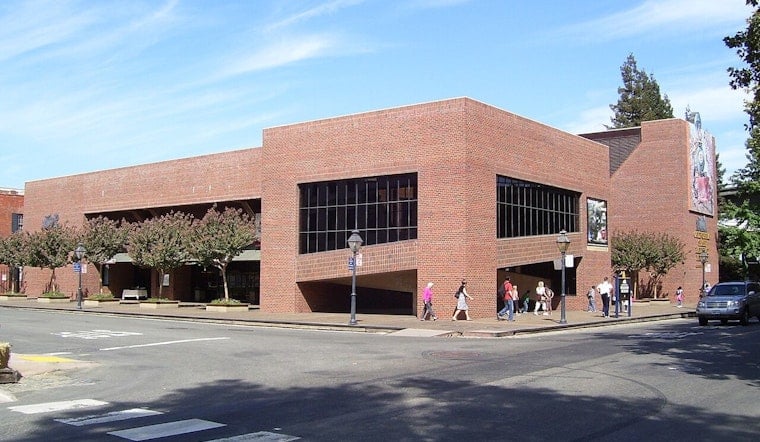
Rainwater has been seeping into Sacramento's Boiler Shop for years, pooling near locomotives that predate the light bulb, and now crews have started an 18-month, $23.7 million project to finally fix the roof. Work began on August 17 at the Boiler and Erecting shops, the westernmost and largest of the historic shop buildings inside the Sacramento Railyards, where sections of the aging structure have let in water during storms and left the building sweltering with heat and mosquitoes come summer.
The scale of the fix reflects the age of what it's protecting. As The Sacramento Bee reports, the current Boiler Shop building dates to 1882, while the Erecting Shop includes a portion dating back to 1869 — the same year Sacramento served as the western terminus while the transcontinental railroad was being completed, when the Boiler Shop's wooden predecessor first went up. Together the two buildings have been in continuous use for more than 150 years, and Roebbelen Construction is handling the roof replacement using in-kind materials chosen specifically to protect the buildings' character-defining features.
The buildings' age is precisely why the repair matters so much to the people who work inside them. Albert Di Paolo, restoration and maintenance lead worker for the California State Railroad Museum, has spent about 25 years with State Parks and previously worked on the Disneyland Railroad and the Skunk Train in Fort Bragg, per the Bee's reporting. He's now among roughly five or six workers who show up each day to tend to historic engines inside the shops, which the California State Railroad Museum Foundation uses for maintenance and storage.
A Working Museum Hiding Inside Old Iron
The collection inside these walls reads like a timeline of American rail technology. It includes a 1929 diesel-electric Ingersoll Rand locomotive, described as one of the earliest surviving diesel locomotives anywhere, along with Southern Pacific's first diesel locomotive dating to 1939 and a 1911 gasoline-powered car built by the Hall-Scott Motor Car Company in Berkeley. The 1948 General Motors F7 locomotive, which runs on diesel and produces 1,500 horsepower, may eventually pull museum excursion trains along the Sacramento River to Sutterville Road — but the same report notes it needs at least $200,000 in additional funding before its engine can run again. Di Paolo has called the F7 basically the locomotive that ended the steam engine.
Robert Smith, a California State Railroad Museum Foundation employee, is currently upgrading electrical connections for the museum's Polar Express holiday train, work he says is meant to make the seasonal attraction more reliable. The shops themselves were built for exactly this kind of hands-on train work: the Erecting Shop originally had room for 10 locomotives and eventually expanded to hold 25, while the Boiler and Erecting shops together were designed as a one-stop operation for building everything a train needed, enabling on-site production of components rather than relying on outside parts.
The Locomotive That Inspired Disneyland
One piece of shop history reaches all the way to Anaheim. Central Pacific 173, a locomotive built inside the Erecting Shop, reportedly inspired Walt Disney after he saw a model of it — and Disneyland Railroad No. 1 was based on that same engine, according to the Bee's account. The Boiler and Erecting shops are listed on the National Register of Historic Places, a designation reflecting their role as some of the only American railroad structures still standing from the era of the First Transcontinental Railroad's completion in May 1869, according to the City of Sacramento.
That historical weight is part of why the roof project has been treated as urgent. The current repair follows structural degradation tied to wind damage during the January 2023 storm system, which prompted California State Parks to file an emergency California Environmental Quality Act exemption that March to install scaffold shoring and stabilize the roof, according to filings reviewed via CEQAnet. Engineering evaluations from Buehler Engineering describe the broader Central Shops complex as spanning 356,000 square feet across eight historic buildings, framed with cast-iron columns from 1869 and heavy-timber roof trusses originally built from repurposed railroad ties.
Funding, Ownership and What Comes Next
State Parks formalized its long-term control of the site back in 2018, acquiring fee ownership of the Boiler Shop and signing a 30-year lease with purchase options for the Erecting Shop, according to California State Parks. The current roof project is funded through Proposition 68 and Proposition 84 bond measures, with Proposition 68 alone representing a $4.1 billion, voter-approved 2018 measure dedicated to state park historic-resource protection, per Ballotpedia.
Museum officials see the repair as a step toward eventually opening the shops to the public. Kim Whitfield has said the goal is to create hands-on activity space focused on engineering, trains and railroading, and one of the two shop buildings might eventually become an educational area addressing both the past and future of railroading — potentially welcoming schoolchildren into the space, the Bee reports. The roof crews, meanwhile, are contending with limited access to both buildings while they work.
Not every historic shop building at the Railyards is headed toward a museum future. LDK Ventures, which is handling redevelopment of the broader 244-acre Sacramento Railyards, controls the smaller historic structures on site and is adapting some of them into event space — including plans for a concert venue inside the former Paint Shop. The Sacramento Bee notes LDK Ventures is separately converting that building into what has been described elsewhere as a $125 million, 3,500-capacity live entertainment venue, a project detailed by the Sacramento Bee's sister coverage of the site.
The roof project unfolds against a backdrop of political friction over how the rest of the Railyards gets built out. Sacramento officials pulled a planned vote to expand the Railyards Enhanced Infrastructure Financing District from 42 acres to 238 acres after filing errors and objections from labor union UNITE HERE Local 49 over affordable housing commitments, as Hoodline previously reported. That financing district was designed to generate more than $200 million for site-wide roads and utilities, underscoring the scale of investment surrounding the historic shops even as their own restoration moves forward on a separate, state-funded track. Just half a mile south, the main California State Railroad Museum already draws more than 500,000 visitors annually to its 225,000 square feet of exhibit space and holds status as an official Smithsonian Affiliate — a reminder of the audience the shop buildings could eventually reach once their roofs, and their history, are secured.





