

























































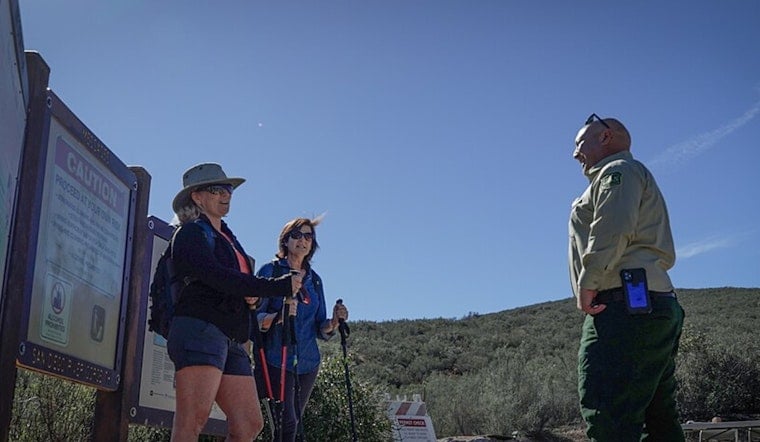
Two of San Diego County's most popular backcountry hikes are now off-limits for the rest of the month after a summer of heat-related emergencies pushed forest officials to act. The San Diego River Gorge trail, which leads to Cedar Creek Falls, and the Three Sisters trail near Descanso are both closed to the public through the end of August, with rescue crews reporting 11 medical rescues and 18 less urgent assists since the start of July alone.
Cleveland National Forest officials announced the closures citing extreme temperatures and above-average humidity that have left some hikers tackling the hardest part of the trail during peak afternoon heat, according to ABC 10News. Both routes are classified as reverse-grade trails, meaning the steepest incline comes on the return leg rather than the way in — a layout that regularly catches hikers off guard after they've already burned through their water supply at the waterfalls below. Hundreds of visitors require medical attention or helicopter rescues each year in the two areas, per the same report, and hundreds more simply experience heat stress without needing evacuation.
Why These Two Canyons Are So Dangerous
The physical layout of both hikes helps explain the danger. The Cedar Creek Falls hike via the San Diego River Gorge covers 6 miles round trip with an 1,800-foot elevation change, while the Three Sisters Falls hike spans 4.5 miles round trip with a 1,000-foot elevation change, according to Recreation.gov. Both descend steeply into canyon terrain with little shade, meaning hikers face direct, unshaded sunlight precisely when they're climbing back out and most fatigued.
The Three Sisters trail is accessed via what the Forest Service now formally calls the Three Sisters-Cha'chaany Hamuk Trailhead, a name that incorporates the Kumeyaay phrase for “Three Waters” in recognition of the San Diego River watershed's Indigenous history, per the U.S. Forest Service. Getting there is not straightforward: a 2025 allocation study by the Forest Service and research partners found the trailhead has no cell coverage or water refill stations, and that third-party GPS apps often route unprepared visitors onto unpaved roads that require four-wheel-drive vehicles.
Permits, Penalties and a Formal Federal Order
The closures are backed by legal force. Forest Orders No. 02-26-19 and No. 02-26-20, issued under 16 U.S.C. § 551 and 36 C.F.R. § 261.50, bar the public from entering the Three Sisters and San Diego River Gorge/Cedar Creek Falls closure areas from August 4 through August 31, with violations carrying fines up to $5,000 for individuals and up to six months in jail, according to the USDA Forest Service. Access to the two trails already differed before the shutdown — Three Sisters requires no advance reservation, while Cedar Creek Falls via the San Diego River Gorge Trail has required a day-use permit through Recreation.gov as part of a Forest Service capacity plan meant to curb overcrowding and safety emergencies.
Forest managers had already tried other fixes before resorting to a full closure. Recreation and fire personnel with Cleveland National Forest built safety shade stops along exposed sections of the San Diego River Gorge Trail earlier this summer to help counter heat-related illness. Even with those measures in place, heat-related incidents continue to put forestry staffers and partner-agency personnel at risk, forcing crews into heat illness and aircraft-operation hazards during rescues.
Rescues Strain Crews and Divert Aviation Resources
The math behind the closure decision reflects a longer-running strain on regional emergency response. Management assessments from Leave No Trace and the Forest Service indicate the San Diego River Gorge and Three Sisters trail systems regularly generate more than 100 search-and-rescue responses per year due to heavy visitor volume and exposed terrain. Heat-related incidents on these trails rely on the local emergency medical system, and hundreds of visitors experience heat stress in the two areas annually even when a rescue isn't required.
Inland San Diego County has seen little relief this summer. National Weather Service extreme heat warnings have routinely projected temperatures between 95 and 105 degrees Fahrenheit in mountain communities like Alpine and Julian, conditions Hoodline detailed in its report on region-wide heat warnings last month. Those numbers escalate heat exhaustion risk sharply on unshaded rock faces like the ones lining both canyon trails.
A Pattern of Seasonal Shutdowns Across the County
The federal closure mirrors a policy San Diego County has followed for years. The County of San Diego Department of Parks and Recreation closes three county-operated hiking preserves — El Capitan Preserve near Lakeside, Hellhole Canyon Preserve in Valley Center, and Mt. Gower Preserve in Ramona — for the entire month of August every year because of severe summer heat hazards. That routine shutdown puts this month's Forest Service action into a broader regional context: San Diego's backcountry land managers have increasingly treated August as a month when the county's most exposed trails simply aren't safe for the public.
The stakes of leaving trails open through peak heat have been made painfully clear in San Diego County before. In August 2023, a 34-year-old hiker died on El Cajon Mountain near Lakeside, marking the third heat- and dehydration-related hiking fatality in the county within a few weeks that summer.
When Might the Trails Reopen?
For now, the closure is framed as temporary rather than permanent. The Cleveland National Forest leadership team plans to revisit the closures as temperatures decrease in the coming weeks, and officials say the hiking areas will reopen once they are found to be safe. Whether that reopening comes on schedule at the end of August or gets extended will depend on whether the current heat pattern breaks in the weeks ahead.





.jpg)