

























































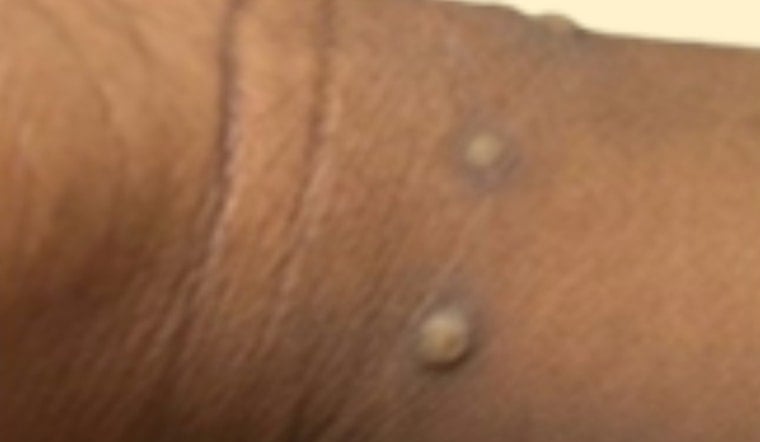
San Diego County has confirmed its first case of Clade I mpox, a more severe strain of the virus, in a resident who health officials believe contracted it while traveling internationally to an area with active Clade I circulation. County health officials say they are actively monitoring all identified close contacts of the patient, and none have reported symptoms so far.
The California Department of Public Health confirmed the case last Wednesday, according to the official San Diego County account, which posted that the patient likely picked up the virus abroad. The county's ongoing contact tracing effort, detailed by the San Diego County News Center, is meant to catch any early signs of spread before they become a bigger problem. Prior to this case, the county had already logged 27 mpox cases in 2026, the vast majority of them the less severe Clade II strain among people who were not fully vaccinated, per the same source.
Clade II mpox has been circulating in San Diego County since 2022, so this new diagnosis marks a notable shift rather than a first brush with the virus. What makes Clade I different, and why it's drawing closer scrutiny from health officials, has as much to do with statewide trends as with this single patient.
The California Department of Public Health confirmed Wednesday that a San Diego County resident has Clade I mpox. County health officials say the patient likely contracted the virus while traveling internationally to an area where Clade I mpox is circulating.…
— SanDiegoCounty (@SanDiegoCounty) August 10, 2026
A Statewide Surge in Travel-Linked Cases
San Diego's case lands amid a sharp uptick in Clade I introductions across California. Between January and June, the state recorded seven travel-related Clade I cases, according to the California Department of Public Health — more than the five total Clade I cases reported statewide across all of 2024 and 2025 combined. That brought California's cumulative Clade I total to 12 confirmed cases even before San Diego's diagnosis was added to the count.
The state health department also reported in June that local Clade II mpox cases have roughly tripled compared to previous years, pointing to a broader resurgence rather than an isolated spike. Both strains spread primarily through close physical contact or shared personal items, not casual encounters.
California's Role as the Nation's Entry Point
California has been at the center of the country's Clade I story from the start. The first confirmed U.S. case occurred in November 2024, when a San Mateo County resident returned from travel to East Africa and later recovered in home isolation without needing specialized antiviral treatment.
Nationally, the Centers for Disease Control and Prevention has identified more than 30 travel-associated Clade I cases between November 2024 and July 2026, with more than half of those detected after March 2026 — a spring-and-summer surge that puts San Diego's case in a wider pattern. The CDC continues to rate overall public risk in the United States as low. Based on contact tracing data from late 2024 and early 2025 that showed minimal risk of in-flight transmission, the agency discontinued routine commercial aircraft contact investigations for mpox in 2025, though it still advises infected individuals to isolate until all skin lesions heal.
Vaccination Remains the Strongest Defense
San Diego County Public Health Officer Dr. Sayone Thihalolipavan said completing the two-dose JYNNEOS vaccine series offers the strongest protection against severe illness, preventing painful skin blisters that can take a month to heal and sometimes require hospitalization, according to Patch. JYNNEOS is available through local health providers and County Sexual Health Clinics.
The stakes behind that guidance trace back to a global emergency declaration. The World Health Organization declared Clade I mpox a Public Health Emergency of International Concern in August 2024 due to rapid transmission across Central and Eastern Africa, particularly involving the emerging Clade Ib strain, according to the American Academy of Ophthalmology. It was the WHO's second such declaration for mpox, following one issued for Clade II during the 2022 global outbreak.
How San Diego Compares to Other California Cities
San Diego is not the first major California population center to confirm a Clade I case. Long Beach reported the state's first non-travel-related Clade I case in October 2025, and San Francisco reported its first travel-linked case last April — both patients were hospitalized, as Hoodline reported in its piece on San Francisco's first potent mpox case. That earlier Long Beach case remains notable because it involved no travel history at all, raising the question of whether San Diego's contact tracing could eventually turn up a similar domestic transmission chain — something county officials have not indicated so far.
Despite Clade I's reputation for greater clinical severity compared to Clade II, public health data from recent travel-associated cases show mostly mild to moderate disease courses among patients with access to modern medical care, per the CDC. Local and state health departments continue to emphasize that public risk remains very low overall, since casual contact rarely spreads the virus. For now, San Diego County says monitoring of the patient's contacts continues, with no symptoms reported among them as of Wednesday's update.




