

























































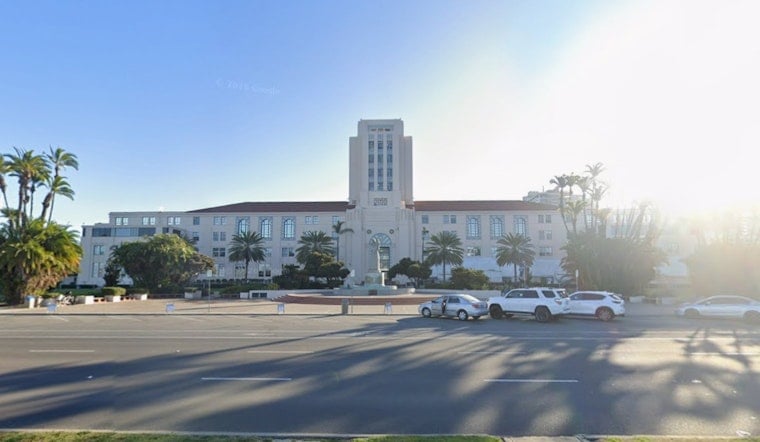
San Diego County supervisors Paloma Aguirre and Terra Lawson-Remer are set to unveil a new proposal today aimed at intercepting raw sewage from the Tijuana River before it reaches South Bay communities and beaches, as up to 50 million gallons of toxic waste and sewage continue flowing daily into the river and Pacific Ocean. The plan will be built in phases, and specifics have not yet been finalized ahead of the Monday press conference.
Aguirre, a county supervisor, and Lawson-Remer, the board chair, will present the details of their proposal at the press conference, according to NBC 7 San Diego. The proposed infrastructure is designed to catch raw sewage on the U.S. side of the border before it reaches San Diego communities and beaches, and county supervisors hope the initiative will protect public health, the environment, and the local economy. Supervisors are also hoping the effort helps remove the Tijuana River from American Rivers' most endangered list, a designation the river has held in 2024, 2025, and 2026, ranking as high as No. 2 nationwide due to severe pollution and public health risks, according to American Rivers.
Long-time South Bay resident Dane Crossby asked what county supervisors are actually doing about the crisis, per the same NBC 7 account. Brandon Garay, a surfer and long-time South Bay resident, said proposed solutions have not fixed the problem, adding that the risk of exposure is possible but nothing has happened to him yet. David Hernandez said any positive assistance from the county would be welcome.
A Pattern of Emergency Fixes
This is not the first time Aguirre and Lawson-Remer have turned to emergency measures rather than waiting on the slower binational infrastructure timeline. In January, the two supervisors introduced a proposal to spend $4.75 million from county emergency reserve funds to build a temporary $2.5 million pipeline extension at a sewage hot spot along Saturn Boulevard in Nestor and expand public health impact tracking, according to KPBS. That effort sought to intercept wastewater near Saturn Boulevard before it could reach residential neighborhoods.
The urgency behind these stopgap measures has grown as Tijuana's aging Parallel Gravity Line pipeline has suffered repeated structural collapses in mid-2026, forcing U.S. International Boundary and Water Commission facilities to absorb sustained wastewater surges exceeding 45 million gallons per day, according to Chula Vista hires DC lobbyist. That volume far exceeds the South Bay treatment plant's 35 million gallon-per-day design capacity, and a single line rupture in Mexico can spill more than 120,000 gallons of raw sewage toward border communities within hours.
Toxic Air, Not Just Fouled Water
The crisis has increasingly become a public health story about what residents breathe, not only what washes ashore. An August 2025 peer-reviewed study led by UC San Diego and San Diego State University researchers found that raw sewage in the Tijuana River aerosolizes into airborne pollutants, driving hydrogen sulfide gas concentrations up to 4,500 times higher than typical urban levels, according to San Diego State University. That research fueled the state legislature's passage of Senate Bill 1046 in August, which directs Cal/OSHA to establish workplace safety standards and protective equipment requirements for lifeguards, park rangers, and other outdoor workers exposed to the hazardous pollution.
Ocean waters along Imperial Beach and the Tijuana Slough shoreline have suffered more than 1,300 to 1,600 consecutive days of beach closures tied to the daily contamination, per San Diego Coastkeeper. Imperial Beach's southern shoreline near the river mouth has remained continuously closed to swimming and water contact since December 2021.
Bigger Fixes Still Years Away
The long-term solution to the crisis rests largely on a $600 million rehabilitation and expansion of the South Bay International Wastewater Treatment Plant, for which the U.S. Section of the International Boundary and Water Commission awarded a progressive design-build contract in August 2024, according to Construction Dive. The project aims to double the plant's average capacity from 25 million to 50 million gallons per day, and federal officials estimate the expanded plant, combined with parallel repairs in Mexico, will eliminate about 90 percent of untreated sewage dumped into the Pacific Ocean. That timeline, spanning years rather than months, is part of why county supervisors keep returning to emergency reserve spending and interim fixes in the meantime.
Governor Gavin Newsom has also allocated $46 million in Proposition 4 grant funding this year specifically to combat cross-border water contamination, reduce bacteria and trash, and support local restoration efforts along the watershed. Meanwhile, a South Bay citizen coalition delivered more than 150,000 petition signatures in May to qualify the San Diego County Health and Safety Act for the November ballot, a half-cent countywide sales tax measure that would generate up to $367 million annually, with more than 20 percent dedicated to border sewage infrastructure, as Hoodline previously reported.
Whether Monday's phased proposal from Aguirre and Lawson-Remer can deliver faster relief than the county's earlier Saturn Boulevard pipeline effort remains to be seen, since specifics have not yet been made public. For residents like Crossby, Garay, and Hernandez, who have lived alongside the sewage flows for years, the test will be whether this latest plan produces results the previous stopgap measures have not.


