

























































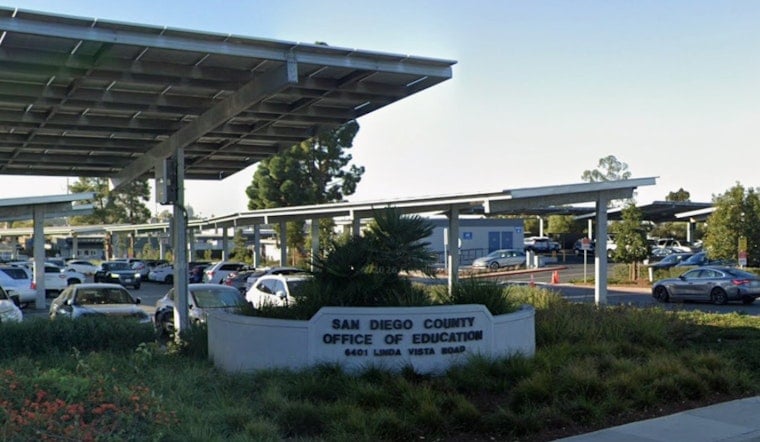
San Diego County educators are being asked to start career-planning conversations much earlier than high school guidance counseling appointments — as early as transitional kindergarten. The San Diego County Office of Education says career readiness can be woven into campus life and curriculum beginning in TK and kindergarten, and it's making that pitch as it promotes its annual Career Pathways Conference set for October 22.
The one-day conference, announced by the San Diego County Office of Education on social media, will connect students to what the agency calls California's high-wage, high-growth jobs. It's designed for educators, counselors, principals, school administrators, community and industry partners, and after-school programming staff, running from 8 AM to 4 PM at the DoubleTree Hotel on Hazard Center Drive in San Diego. Sessions will cover high-quality pathway development, future-ready counseling practices, apprenticeships, work-based learning, and industry partnerships, with each session running about 50 minutes and attendees free to move between any session on the schedule.
Did you know career readiness can be integrated across campuses and curriculum beginning as early as TK and kindergarten? Learn how you can prepare your students for high-wage, high-growth jobs at the Career Pathways Conference Oct. 22. Register: https://t.co/2ugGiLgzTF pic.twitter.com/xbsiFP1pcQ
— San Diego County Office of Education (@SanDiegoCOE) August 21, 2026
Why Educators Are Being Pushed to Start Younger
The push to start career exposure in kindergarten doesn't exist in a vacuum. A July 2026 labor market report from the San Diego & Imperial Center of Excellence, produced in partnership with SDCOE, identified 78 high-wage, high-demand occupations in San Diego County with approved apprenticeship pathways — including 43 classified as resilient to automation and artificial intelligence disruption and 34 facing large numbers of retiring workers, according to the Center of Excellence for Labor Market Research. That data is meant to give local schools a roadmap for where to expand apprenticeship and career technical education tracks.
The urgency also traces back to wage trends that Hoodline previously reported on in July: the share of young adults ages 18 to 24 living independently in San Diego County who earn a self-sufficient wage dropped from 20% in 2008 to just 9% in 2023, according to a regional educational and economic report compiled by the Policy & Innovation Center with support from the San Diego Foundation. That decline underscores why regional leaders are pushing earlier career-technical education and living-wage pathway models rather than waiting until high school.
State Grants and Regional Leadership Behind the Push
SDCOE has been positioning itself as a regional hub for this work. In February 2026, SDCOE and 17 local partner educational agencies received an $838,826 grant from California's K-12 Strong Workforce Program to launch what officials called the Building Professional Capacity for Transformational CTE initiative, according to the agency's own announcement. The grant is aimed at closing equity gaps and smoothing student transitions into local community college programs.
SDCOE also serves as the designated Regional Technical Assistance Center for the Southern Coast region under California's Golden State Pathways Program, helping school districts across San Diego, Imperial, and Orange counties build integrated career-technical and academic coursework, per the California Department of Education. That state program was created under 2022 legislation intended to bridge K-12 education with high-wage local job markets. Separately, the state's Career Technical Education Incentive Grant program offers matching funds to districts that build or maintain CTE programs spanning kindergarten through 12th grade, provided instruction comes from credentialed CTE teachers aligned with 11 state standards.
From Juvenile Detention Facilities to Charter School Classrooms
SDCOE's career-pathway work extends well beyond conference rooms. The agency partners with the San Diego County Probation Department to deliver five hands-on CTE pathways — Culinary Arts, Horticulture, Graphic Arts, Virtual Auto Tech, and Building and Trades — to justice-involved youth at county detention facilities, the probation department reported in July. Those programs are intended to give young people transferable skills and industry certifications that support rehabilitation.
At the other end of the spectrum, some San Diego charter schools have already started embedding career readiness into elementary and middle school grades. Feaster Charter School, for example, has run esports workshops connecting video gaming to STEM and history concepts, an approach that was featured at SDCOE's Learning and Innovation Summit. The efforts fit within SDCOE's overall footprint: the agency provides administrative oversight and support services to roughly 480,000 students and 26,000 educators across 42 public school districts and 126 charter schools countywide, and it directly educates about 1,200 students annually through its own specialized and juvenile court programs.
Leadership Framing and Registration Details
Dr. Gloria E. Ciriza, who took office in July 2024 as the first female and first Latina superintendent of schools in SDCOE's 76-year history, has framed career-technical education and student belonging as core pillars of the agency's North Star mission to decrease poverty. Ciriza previously spent 30 years as a San Diego K-12 teacher and administrator before stepping into the top job.
Registration for the Career Pathways Conference is open to educators from outside San Diego County as well, and closes once participant capacity is met, with a maximum of 400 attendees. Early-bird pricing, which ran through July 31, was $225 for attendees and $175 for presenters; regular pricing after that date rises to $275 for attendees and $225 for presenters. Presenters who attend only their own session pay no fee, while those staying for the full day pay the discounted speaker rate, and up to two presenters per selected session can receive a $50 registration discount. Registration includes a continental breakfast, lunch, and parking, and certificates or proof of attendance are available upon request, though the conference does not provide Wi-Fi and sessions will not be pre-recorded for later release.
Organizations interested in supporting the event can sponsor at several tiers: an Imagine sponsorship costs $1,000 and includes one complimentary registration, a Create sponsorship costs $1,500 with two complimentary registrations, an Amplify sponsorship costs $3,000 with three complimentary registrations, and an Empower sponsorship costs $6,000 with four complimentary registrations. SDCOE says it is seeking support from organizations committed to innovative career education and professional development. The conference is one piece of a broader countywide push — San Diego County separately distributed $4.22 million in federal Workforce Innovation and Opportunity Act funding this July to organizations supporting youth career exploration, a move Hoodline covered in its report on the youth jobs funding. SDCOE is headquartered at 6401 Linda Vista Road in San Diego and can be reached at 858-292-3500.


