

























































Morgan Autism Center is buying a 1.86-acre property directly across the street from its San Jose campus, kicking off a three-year, $5 million expansion the nonprofit is calling Dream Campus 2.0. The project will add a dedicated adult program facility, four new school spaces, and a 31,000-square-foot elevated park designed for people with profound autism, some of whom have been with the center for decades.
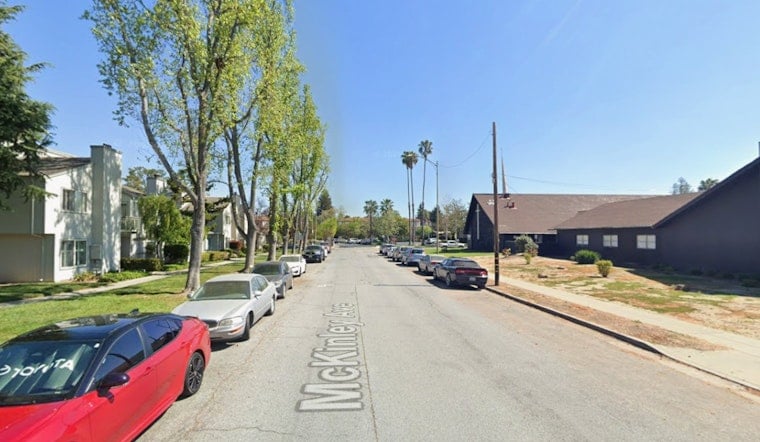
The center formally kicked off the project on July 30 in San Jose, according to The Mercury News, which reports the nonprofit plans to close escrow this month on the 1.86-acre parcel at 1470 McKinley Ave., just across St. Elizabeth Drive from its current site. Morgan Autism Center has occupied the former St. Elizabeth’s Day School building since 2017, and the new property sits close enough that students and adult clients can eventually move between both campuses.
The scale of the need is what's driving the project. Morgan Autism Center currently serves 65 students from 24 different school districts in its K-12 school program, which covers children ages 5 through 21, alongside 56 adults age 22 and older in its adult day program, per the same Mercury News report. The nonprofit's oldest client is 66 years old, a detail that underscores just how long some families have relied on the center's services.
A Regional Surge in Diagnoses
The Mercury News reports that Morgan Autism Center undertook the expansion after regional autism rates doubled in the nine years since it opened its current San Jose facility, with children now being diagnosed with autism at an estimated rate of 1 in 34. That local trend tracks with federal data: the Centers for Disease Control and Prevention updated its national autism prevalence estimate in April 2025 to 1 in 31 eight-year-olds, while identifying California as having the highest rate among all monitored U.S. sites at 1 in 19 children, according to the CDC and Johns Hopkins Bloomberg School of Public Health.
That surge has piled pressure onto non-public schools and adult day programs across Silicon Valley, many of which now face long waiting lists and tight space constraints. Morgan Autism Center's chief executive, Josh Drake, said the expansion will increase capacity, create intentional learning and program spaces, and support future enrollment across both the school and adult programs. Drake added that Dream Campus 2.0 will enable the center to be a model for meeting the needs of individuals with significant autism.
Closing the Gap Between School and Adulthood
The Dream Campus 2.0 expansion is a milestone in Morgan Autism Center's broader Vision 2030 strategic plan, launched in 2025, which introduced an Adaptive Skills Training program meant to bridge the transition between the center's K-12 school program and its adult services, according to Morgan Autism Center. That transition point is a well-documented pressure valve in the disability services system: school districts are required to fund special education through age 21 under federal law, but once clients turn 22, they must shift to state Lanterman Act funding coordinated through regional centers, where adult program slots are often far scarcer.
In Santa Clara, San Mateo, San Benito, and Monterey counties, state-entitlement funding for adult clients is vendorized and managed through the San Andreas Regional Center. The Lanterman Developmental Disabilities Services Act guarantees state-funded services for life to eligible Californians with developmental disabilities, though physical program capacity remains a persistent constraint on how many people can actually be served.
Design Team and Playground Partner
Development records for the project list design firm e2 Architecture and Planning, general contractor Swenson Construction, and landscape architecture firm HMH as the primary execution team, according to the Magical Bridge Foundation. Morgan Autism Center has partnered with the Palo Alto-based nonprofit to build its first inclusive playground on the Morgan Autism Center grounds, and the installation is being customized specifically for people living with profound autism — the first time Magical Bridge has designed a custom project directly for an autism nonprofit rather than a public park.
Magical Bridge was founded in Palo Alto in 2016 by CEO Olenka Villarreal, a year after she helped create the nation's first universally accessible playground at Mitchell Park. The foundation's designs typically include sensory-sensitive play zones, pentatonic laser harps, and quiet hideaway huts, an approach that avoids the high-stimulation layouts and physical barriers that traditional playgrounds can create for neurodivergent visitors and wheelchair users.
Political Backing and Regional Momentum
The expansion has drawn support from local and state officials. San Jose District 6 Councilmember Michael Mulcahy presented an official proclamation in April designating April as Autism Awareness Month in San Jose, publicly highlighting Morgan Autism Center as a vital community institution in his district, which encompasses the Willow Glen area and the St. Elizabeth Drive corridor, where both the current and future campuses sit. Following the July 30 launch, California State Senator Dave Cortese commended the center, stating that Dream Campus 2.0 will expand vital access and open doors for families with developmental disabilities across Senate District 15.
The expansion also fits into a broader pattern of San Jose institutions building sensory-regulated spaces for neurodivergent residents. San Jose Mineta International Airport announced in June that it is constructing The Nest by Nutanix, an 800-square-foot sensory-friendly room designed by the Children's Discovery Museum of San Jose, featuring enclosed doors and soothing textures for autistic travelers — a door that finally closes for kids who need one.
A Program With Roots Going Back to 1969
Morgan Autism Center has served the Bay Area's profoundly autistic community since 1969, when it was founded as The Morgan Center in Palo Alto under program director Louise Emerson. The organization originally served up to 14 children under age 13 with severe mental and developmental challenges, according to a 1971 U.S. Department of Health, Education, and Welfare record, before eventually relocating to San Jose in 2017. More than five decades later, the nonprofit is betting that its next chapter, set to take three years to complete, will let it keep pace with a client base that now spans from early childhood through the client's 60s.




