

























































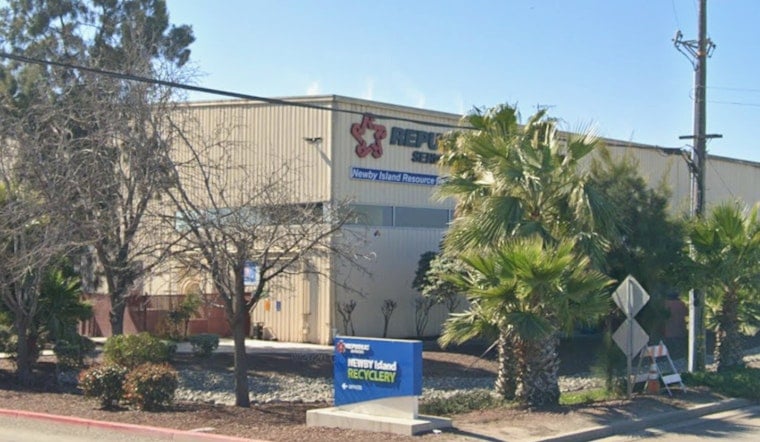
The Bay Area Air District Hearing Board has ordered Newby Island Landfill to significantly increase air monitoring, reduce emissions and take major steps to cut the odors that have plagued Milpitas and northern San Jose for years. The order comes after regulators found the 342-acre facility was improperly measuring its hydrogen sulfide emissions, a lapse that caused years of underreporting on one of the gases most responsible for the landfill's rotten-egg stench.
Milpitas resident Malgorzata Sorys described the smell as sour and like rotten eggs or spoiled food, adding that it is worst on hot days and when the wind is blowing, according to The Press Democrat. Milpitas residents have filed 9,635 odor complaints about the landfill since 2015, per the Bay Area Air District, with pungent smells reported wafting through suburbs, parks, businesses and schools. The landfill received its highest number of odor complaints in 2016, though complaints had trended lower in more recent years, the outlet reports.
Under the order, Newby Island Landfill must build fence-line monitors to measure air emissions and install a continuous emissions monitoring system that will provide real-time hydrogen sulfide data, replacing a system that measured emissions just four times a year. The facility must also automate its landfill gas collection system to monitor and adjust gas wells for compliance with health standards, and regularly survey the property with drones to detect methane emissions. The air district has set deadlines over the next two years for installation of the required systems.
A Decade of Violations and Underreporting
The abatement order draws on a long record of documented problems at the site. Air-quality violations occurred between 2014 and 2020, including landfill gas surface leaks from composting operations in 2014 and 2015 and shutdowns of the gas collection system in 2019. Regulators also cited public nuisance violations tied to odor complaints between 2014 and 2016. In 2022, Newby Island Landfill agreed to pay $210,000 to settle 30 air-quality regulation violations, and the air district's enforcement division is now investigating additional violations that have occurred since that settlement, according to the same report.
Bay Area Air Quality Management District Executive Officer Philip Fine said the order establishes enforceable deadlines, stronger monitoring and clear consequences for noncompliance. Omonigho Oiyemhonlan of the air district said the landfill's owners could face other financial penalties for later violations. Milpitas city officials said they are pleased with the order, and Milpitas Councilmember Willie Hopkins called it an important step forward for residents of the city.
Who Runs the Landfill and Why It Matters
Newby Island Landfill is owned by International Disposal Corp. of California, a subsidiary of Phoenix-based Republic Services, America's second-largest waste management company, which reported $16.5 billion in revenue last year. Republic Services spokeswoman Yessica del Rincon said the company will continue working with regulators, residents and local stakeholders to meet the order's requirements, and confirmed Republic Services has agreed to implement the abatement order. Eileen McLaughlin said the new emissions-monitoring technology could improve conditions for the community.
The site's history stretches back nearly a century. Newby Island, which became a garbage dump in 1938 on what was once a marsh separated from San Francisco Bay by an earthen levee, was converted into a landfill run by San Jose Scavenger Company in the 1950s, and was annexed into San Jose in 1968. Browning-Ferris Industries took over Newby Island operations in 1973 and later opened a major high-tech recycling facility at the site in 2012. The Newby Island Resource Recovery Park now processes approximately 2.1 million tons of municipal solid waste, organic waste and recyclables annually, according to the Bay Area Air Quality Management District, encompassing an active landfill, a materials recovery facility and a composting operation on the 352-acre site.
The Chemistry Behind the Complaints
Gas compounds released from the landfill and its composting activities include hydrogen sulfide, ammonia, benzene and dichloromethane, which can trigger eye, nose and lung irritation, headaches and nausea during severe odor events, the air district notes. Hydrogen sulfide produces the characteristic rotten-egg smell residents describe, while ammonia causes a sharp, acidic odor. BAAQMD Regulation Rule 8-34-301 requires landfill gas collection systems to operate continuously under vacuum, a standard regulators alleged Newby Island routinely breached through collection shutdowns and wellhead pressure violations.
A March 2024 South Bay Odor Attribution Study by the air district examined Newby Island alongside two nearby facilities, the San Jose-Santa Clara Regional Wastewater Facility and Zero Waste Energy Development, and concluded Newby Island was responsible to a large extent for persistent regional odors in the area. The finding helped regulators cut through years of confusion over which of the closely clustered industrial sites downwind of Milpitas was the primary source of the smell.
Long-Stalled Expansion Remains on Hold
The abatement order carries consequences beyond odor control. Newby Island's operators have sought approval since 2012 to expand the landfill by 7.9 million cubic yards, a project that requires sign-off from San Jose, the Bay Area Air District, CalRecycle and other state and local agencies. But air district legal counsel has noted in a 2026 filing that state Rule 2-1-304 prohibits issuing air permits to facilities operating out of compliance with emission regulations, effectively freezing the expansion until Newby Island demonstrates full compliance.
The Citizens Committee to Complete the Refuge praised the abatement order, and environmental groups are likely to oppose Republic Services' efforts to expand the landfill in the coming years, according to the Press Democrat's reporting. The fight over Newby Island's footprint is not new: Milpitas declared the landfill a public nuisance by city council resolution in May 2015 after thousands of odor complaints, and the California Sixth District Court of Appeal rejected a Milpitas lawsuit challenging San Jose's environmental review of the expansion in December 2015, in a case covered by CEQA Chronicles. Operators International Disposal Corp. of California and Browning-Ferris Industries of California also settled a class-action lawsuit filed by Milpitas homeowners over odor and dust nuisance in August 2016, a case originally filed in July 2012.
South Bay residents are also contending with overlapping air quality pressures beyond the landfill itself. In August 2026, the air district issued regional Air Quality Advisories for the South Bay due to drifting wildfire smoke from the Timber Fire near Big Sur, adding to the atmospheric stress facing communities already dealing with the landfill's emissions. For now, the new abatement order gives Milpitas residents something they have sought for years: enforceable deadlines and real-time data on the gases behind the smell.





