

























































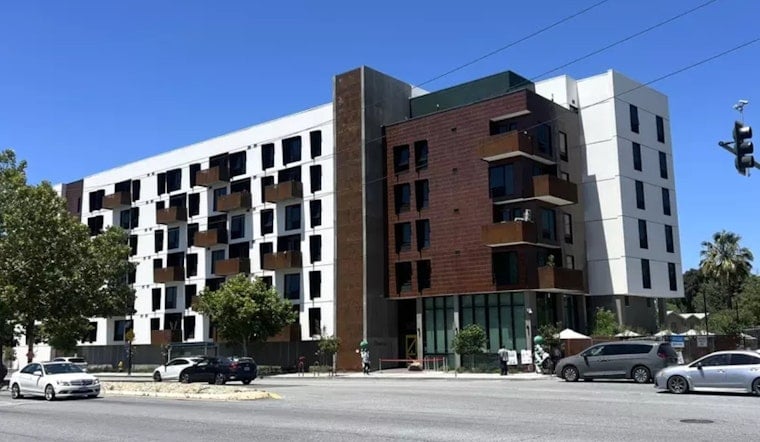
Tyree McCary spent time in a crowded San Jose homeless shelter before moving into a sixth-floor studio in January at The Charles, a 99-unit apartment complex near Happy Hollow Park & Zoo. The 36-year-old, who moved to the Bay Area from Fresno two years before, now pays nothing toward rent — not a dollar — and won't until early 2028.
His arrangement is possible because of a wave of bond-funded affordable housing construction reshaping parts of San Jose and Oakland, according to The Mercury News. The Charles cost $87.5 million to build, with the expense shared between service providers and local governments, and Santa Clara County's Measure A bond contributed $12.5 million toward it, per the same report. The development, built by Blach Construction and designed by David Baker Architects, includes 49 Rapid Rehousing units set aside for people exiting homelessness and 48 units reserved for households earning between 30% and 50% of the area's median income, according to the County of Santa Clara.
The building is named for Charles Preston, an advocate for unhoused people who died in 2017. Preston served as director of psychology services for the Valley Homeless Healthcare Program at Santa Clara Valley Healthcare and frequently provided medical and mental health care to unhoused residents at The Jungle, a large homeless encampment on Coyote Creek near the site where The Charles now stands, according to the county. Charities Housing built and operates the complex, which serves low-income and formerly homeless people and offers counseling, resume workshops and credit repair, the article notes.
Bond Money Behind the Building Boom
Santa Clara County voters approved the $950 million Measure A bond in 2016, and the county has since awarded about $402 million of it to 39 affordable developments in San Jose, which together total more than 4,000 units, per the same account. Those 39 Measure A developments already include nearly 1,000 supportive housing units in operation, and county officials say the county has built or has in development more than 5,700 affordable homes overall, with roughly 2,420 units completed and plans for 4,800 new affordable homes. James Williams said Measure A-supported construction is creating lasting affordability and pathways out of homelessness, the report states.
But the pipeline is not moving smoothly for everyone. Despite that progress, roughly 600 planned Measure A apartments remain stalled as of August, stuck in a funding bottleneck tied to delays securing matching state and federal grants, along with rising insurance and material costs, according to San José Spotlight. San Jose has issued permits for nearly 1,270 low-income housing units and built about 950 of them in 2025 alone — a nearly fourfold increase in production from 2023 to 2025, and a dramatic leap from just 30 units completed in 2018, per the same outlet.
Fruitvale Clinic Draws Overwhelming Demand
Across the bay, Oakland's Flicker Bird Homes tells a similar story. The 76-unit affordable development in the Fruitvale neighborhood includes a health clinic geared toward Native American residents and subsidizes rent for people earning no more than 60% of area median income — about $71,000 annually for a single person in Oakland, where the upper end of the low-income bracket is defined as earning less than 80% of area median income, or about $95,000 a year for one person. Oakland contributed about $22 million in Measure U funds to the project, one piece of the nearly $250 million in Measure U dollars the city had disbursed by May, according to Mercury News reporting.
Oakland voters approved the $850 million Measure U bond for streets and affordable housing in 2022, and the city more than doubled its low-income housing production between 2023 and 2025, completing nearly 700 low-income units last year and putting itself on track to break its own affordable housing production record in 2026. Oakland also plans hundreds of new units specifically for homeless residents, per the same report. In the East Bay, extremely low income is defined as earning less than $36,000 annually.
Falling Short of State Targets
Even with the surge, San Jose and Oakland remain far behind what state regulators expect. San Jose has reached just 22% of its low-income housing target, and Oakland has reached only 16% of its own, well short of the roughly 38% of decade-long housing production goals the Regional Housing Needs Allocation expects cities to have completed by this point in the cycle, the Mercury News reports. Available solutions extend beyond new construction to include market-rate housing, rental assistance and preservation of existing affordable units, according to the same account.
San Jose Mayor Matt Mahan said the city is making progress but faces a foundational housing-market challenge, per the report. Louis Mirante said progress is exciting in many key jurisdictions but insufficient, and Ryan Finnigan said more affordable housing production is needed, according to the same reporting. The tension is stark: San Jose recorded roughly 6,500 homeless people in 2024, and countywide chronic homelessness has continued climbing even as new buildings like The Charles open their doors.
For McCary, the numbers matter less than the studio itself — a stable place to live while he rebuilds, free of rent for now, inside a building that carries the name of a man who spent his career trying to help people just like him.





