

























































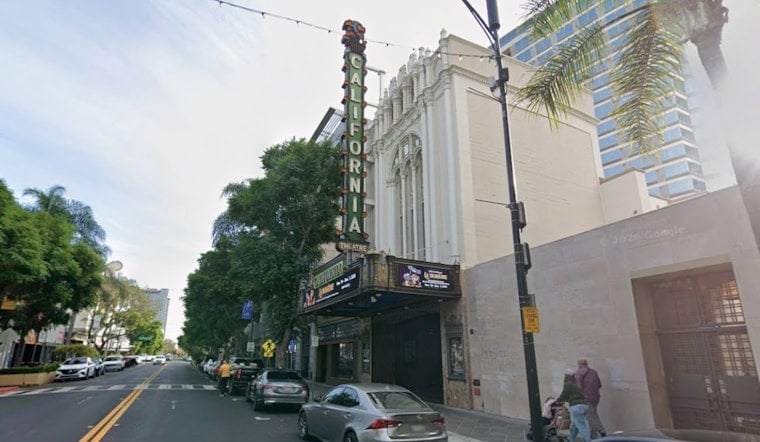
Filmmakers, actors, students and cinema fans from across the globe converged on downtown San Jose's California Theatre from Aug. 7 to Aug. 9 for the third annual NAFA Film Festival, a three-day celebration of Marathi cinema that has quickly turned Silicon Valley into an unlikely stage for one of India's most historic film industries.
The festival, organized by the North American Film Association, brought together filmmakers, actors, students and cinema enthusiasts from around the world to celebrate Marathi film, according to NBC Bay Area. NAFA was founded by Abhijit Gholap, a Bay Area tech leader who serves as the organization's founder and president, and the outlet reported that both NAFA and the Government of Maharashtra were associated with the event. Gholap said the festival aims to elevate high-concept regional storytelling on the international stage, a mission that has helped establish Silicon Valley as a growing hub for global South Asian cinema, per the same report.
This year's edition organized its programming around the theme “Honoring Her Canvas,” a tribute to women filmmakers and artists whose work shapes global cinema, culture and community, according to San Jose Theaters. That theme anchored three days of red-carpet screenings and awards inside the historic venue, which has become a recurring host for major local film festivals, as Hoodline has previously reported.
A Lifetime Achievement Milestone for a Marathi Icon
Veteran Hindi and Marathi actress Rohini Hattangadi received the NAFA Lifetime Achievement Award during the festival, according to footage cited by ThenewsLahar. Hattangadi noted on stage that the honor marked her first career lifetime achievement award received outside of India, the outlet reported.
The 2026 lineup also featured world premieres of feature films including “Na Aavadti Gosht” and “Dwidha,” alongside student short films exploring local diaspora themes, ThenewsLahar reported. One of those student works, titled “H1B or Not Be,” was screened as part of NAFA's School Spotlight section, addressing immigrant visa status through the lens of young local filmmakers.
Industry masterclasses and panel discussions during the festival were led by prominent Indian cinema figures, including National Award-winning director Nagraj Manjule and actor-producer Atul Kulkarni, according to ThenewsLahar. Sessions covered acting, micro-drama and directing, giving aspiring local filmmakers direct access to established names in the industry.
From Biotech Entrepreneur to National Award-Winning Producer
Gholap's path to founding NAFA runs through both Silicon Valley boardrooms and Indian film sets. He is a Stanford Graduate School of Business alumnus who previously won India's National Film Award, the Swarna Kamal, for Best Feature Film as producer of the 2011 Marathi movie “Deool,” according to the Press Information Bureau. That dual background in tech and cinema shaped his goal of bridging Marathi filmmakers with global audiences when he launched NAFA.
Founded in 2024, NAFA grew to more than 1,000 members within its first year and built a monthly distribution network that releases at least one Marathi feature film across North American theaters, according to the organization's official website. The infrastructure has given the festival year-round relevance beyond its annual three-day run in San Jose.
That growth has not gone unnoticed in Washington. During its second annual festival in July 2025, NAFA received a Certificate of Special Congressional Recognition, presented on stage by U.S. Representative Shri Thanedar, according to Pune Pulse. The certificate recognized NAFA's role in promoting Marathi arts in the United States. That same 2025 edition drew more than 2,500 ticketed attendees across three days, with visitors traveling from across the United States and Canada, the outlet reported.
Why the Historic California Theatre Fits the Story
The venue itself carries its own century-long history. Downtown San Jose's California Theatre originally opened in 1927 as a 1,122-seat movie palace and reopened in September 2004 following a $75 million restoration, according to Pollstar. The landmark regularly hosts Opera San José and Symphony San Jose alongside international film festivals, and Hoodline has ranked it among the city's top arts spots.
Santa Clara County's demographics help explain why a Marathi-language festival can fill that historic theater. Asian residents make up the county's largest demographic group at 39.3%, or more than 748,000 residents, while foreign-born residents account for 41.5% of the total population, according to 2024 U.S. Census estimates cited by Data USA. That concentration of South Asian technology professionals has provided a built-in audience for regional-language cinema that sits outside mainstream Bollywood, giving festivals like NAFA a natural home in the South Bay.



