

























































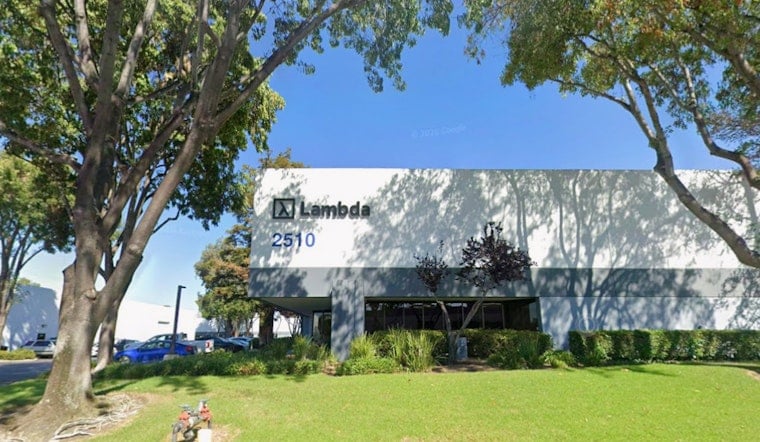
San Jose-based Lambda has raised approximately $1 billion in short-term private debt to buy more Nvidia GPUs for a massive computing deal with Microsoft, according to people familiar with the transaction. JPMorgan Chase marketed the deal to private placement investors, and Lambda expects lease revenue from its corporate customers to cover the loan through operational cash flow.
The financing, which closed this week, is the latest in a string of debt deals the San Jose neocloud provider has used to fund its rapid expansion, as reported by BiGGO Finance. Lambda operates as a neocloud provider, renting computing chips and AI infrastructure to corporate customers, and it plans to use the new debt specifically to purchase Nvidia GPUs it will then lease to Microsoft. The company has maintained a vendor relationship with Microsoft since 2018, but significantly expanded that partnership with a multibillion-dollar, multi-year agreement announced in November to deploy tens of thousands of Nvidia GPUs, including liquid-cooled GB300 NVL72 supercomputing clusters, according to Lambda.
Lambda expects to deploy the newly purchased chips quickly, and the loan arrangements are tied to designated customer deployments, meaning the debt is directly linked to specific hardware destined for specific customer contracts. The purchased chips themselves serve as collateral for the loans, per the BiGGO Finance report. Neither Microsoft nor Nvidia spokespeople responded to requests for comment on the arrangement, and Lambda spokespeople also did not respond to requests for comment.
A Company Built On San Jose's AWS Bill Problem
Lambda's roots go back to 2012, when twin brothers Stephen and Michael Balaban founded the company in San Jose as a facial-recognition software developer. According to Forbes, the founders originally built an internal GPU cloud simply to lower their own Amazon Web Services bills, then pivoted in 2017 to sell that GPU infrastructure to outside AI developers. That pivot has since made Lambda one of North America's primary neocloud providers, a niche business model built around acquiring cutting-edge Nvidia chips and leasing out the compute capacity to major enterprises.
The company has also been expanding its physical footprint around the Bay Area. Lambda signed a lease last August for a 20,000-square-foot office building in downtown San Francisco, part of a wave of AI-driven office leasing that Hoodline covered in its report on AI firms snapping up Bay Area office space. In September 2025, Lambda also deployed zero-emissions, hydrogen-powered Nvidia GB300 NVL72 supercomputing systems at ECL's data center facility in Mountain View, an effort to sidestep power-grid constraints using off-grid hydrogen fuel cells.
Stacking Loans On Top Of Loans
This week's roughly $1 billion raise is not Lambda's first big debt move of the year, nor even its largest. Earlier this month, on August 27, the company closed a $926 million senior secured Term Loan B facility led by Morgan Stanley and MUFG, designated for acquiring and installing Nvidia GB300 GPUs. That facility earned a Baa2 investment-grade rating from Moody's and was priced at SOFR plus 3.00%, maturing in December 2030 — reportedly the first broadly syndicated investment-grade Term Loan B ever completed by a private neocloud provider.
Before that, Lambda closed a $1 billion secured credit facility in May 2026. And going back further, Lambda pioneered the entire GPU asset-backed debt market in April 2024, when it secured a first-of-its-kind $500 million special-purpose financing facility led by Macquarie Group that let it purchase Nvidia hardware without requiring long-term customer lock-in contracts. Company leadership is now overseen by CEO Michel Combes, a former Alcatel-Lucent chief executive and SoftBank veteran, who leads Lambda's executive team alongside the Balaban co-founders as the company navigates this shift into institutional debt markets.
Revenue Growth Meets Chip Depreciation Risk
Lambda's bet on debt is backed by fast-growing numbers. The company reported reaching $760 million in annual recurring revenue in 2025, a 79% jump year-over-year, and it projects more than $1.5 billion in revenue for 2026. Lambda was valued at $5.43 billion post-money in a November 2025 venture round, according to PitchBook data, after raising $1.5 billion in venture capital that same month, and the company is reportedly in discussions to raise as much as $3 billion in pre-IPO funding as it eyes a possible public markets debut next year.
Lambda is far from alone in leaning on GPU-backed loans. By early 2026, specialized neocloud providers including CoreWeave, Lambda, Crusoe, and Fluidstack had accumulated more than $20 billion in outstanding private loans collateralized primarily by Nvidia GPUs, according to a report from Dave Friedman on Substack. Major Wall Street institutions, including BlackRock, JPMorgan, Carlyle, and PIMCO, have become active lenders in this GPU-backed debt market, and banks and technology companies have raised more than $400 billion in AI-related debt globally so far in 2026, according to Bloomberg data.
That borrowing boom carries risk tied to how fast Nvidia's chips age. Spot rental prices for Nvidia H100 GPUs dropped 50% to 70% from early 2024 rates down to $2 to $4 per hour by late 2025, as newer chip architectures like the GB300 hit the market, the same Substack analysis notes. Rapid release cycles for new chips can accelerate the economic obsolescence of older hardware generations used as loan collateral — a dynamic that matters directly for Lambda, since anticipated lease revenues provide the actual repayment mechanism for its stack of loans. Lambda also has a separate project under contract with Nvidia itself, according to the BiGGO Finance report, though further details of that arrangement were not disclosed.
The arrangement offers a workaround for Microsoft, too: the tech giant gains access to scarce Nvidia chips without putting the full hardware expenditure directly on its own balance sheet upfront, while Lambda bears the operational responsibility for actually deploying and maintaining the hardware. As Lambda pushes toward a potential 2027 initial public offering, its growing reliance on private placement loans and term loan facilities reflects a broader Silicon Valley shift, where physical compute capacity is increasingly financed the way utilities and real estate infrastructure have long been financed.





