

























































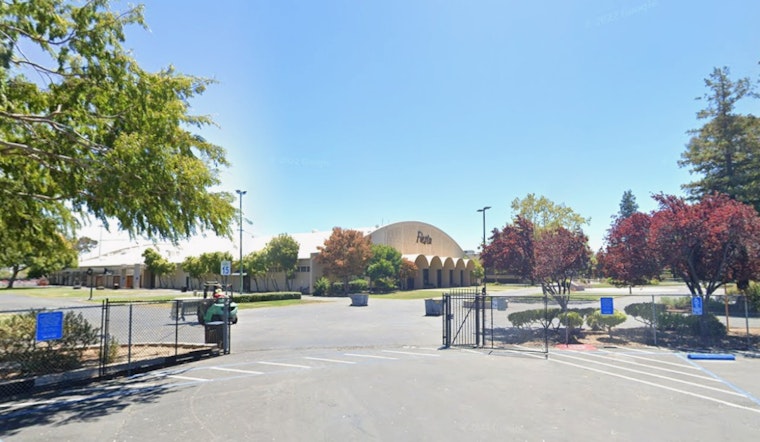
Thousands of people packed the San Mateo County Event Center over the weekend for the 31st annual Bay Area Aloha Festival, a two-day celebration of Hawaiian, Tongan, Samoan, Tahitian and Filipino culture that filled the venue's Central Mall, Plaza Stage and West Lot with music, dance and island food. What began decades ago as a much smaller gathering has grown into one of the Peninsula's most anticipated cultural traditions, drawing families from across the Bay Area for a weekend built as much around community as celebration.
As CBS News reported, the festival brought together thousands of attendees for a weekend showcasing multiple Pacific Islander traditions side by side. The event is produced by the Pacific Islanders' Cultural Association, an all-volunteer nonprofit founded in 1995 to preserve and promote Pacific Islander heritage in Northern California, according to PICA. This year's festival ran Saturday and Sunday at the event center at 1346 Saratoga Drive, per the San Mateo County Event Center.
From the Presidio to the Peninsula
The festival wasn't always a San Mateo institution. It started as the San Francisco Aloha Festival, held at the Presidio of San Francisco, before mandatory park renovations forced organizers to relocate, according to PICA. The move prompted a rebrand to the Bay Area Aloha Festival and, in the process, expanded the event's reach across Peninsula communities rather than keeping it tied to a single city.
That relocation turned out to fit the region's demographics well. San Mateo County is home to one of the largest Tongan American communities in the United States outside of Tonga itself, with local demographic records estimating roughly 13,000 residents of Tongan descent, according to Wikipedia. Native Hawaiian and other Pacific Islander residents make up an estimated 1.15% to 1.3% of the county's population, nearly three times California's statewide average of 0.40%, per data cited by San Mateo County Health.
A Festival Built to Fund College, Not Profit
Rather than charge a mandatory admission fee, organizers ask for a $5 suggested entry fee that doubles as a raffle ticket, with proceeds going toward academic scholarships for students of Pacific Islander descent, according to Funcheap's event listing. PICA has distributed more than $115,000 in higher education grants to local students over the years, per the same source. The nonprofit model reflects the festival's stated mission: a community-run event designed to reinvest in the very population it celebrates.
Programming stretched across both days from 10 a.m. to 5 p.m., with continuous main-stage music, hula and Tahitian dance performances, and Lomi Lomi massage demonstrations, per Funcheap. Families with kids ages 2 to 12 could stop by the Ohana Keiki Korner for traditional Hawaiian games and lei making, a detail also noted by Celebrate Family. CBS News' coverage highlighted the festival's Hawaiian, Tongan, Samoan, Tahitian, and Filipino cultural showcases as central to the weekend's draw.
A Regional Hub for Pacific Islander Communities
San Mateo's role as a gathering point isn't accidental. More than half of the Bay Area's total Pacific Islander population is concentrated across just three counties — San Francisco, Alameda and San Mateo — according to a demographic report from the Bay Area Regional Prosperity Initiative Task Force. Community demographic reports also note that Pacific Islander residents in San Mateo County frequently maintain multi-generational households, a pattern shaped both by high Bay Area housing costs and by cultural preferences for staying socially connected, per the same report.
Regional organizations have folded themselves into the festival's mission as well. The Hawaiʻi Chamber of Commerce of Northern California runs outreach booths at the event and supports PICA's educational grant programs, according to HCCNC, with board members regularly volunteering at the annual gathering. That kind of institutional backing, layered onto decades of volunteer organizing, has helped a festival that started with modest Presidio roots grow into a fixture that now draws visitors from across the region every August.





