

























































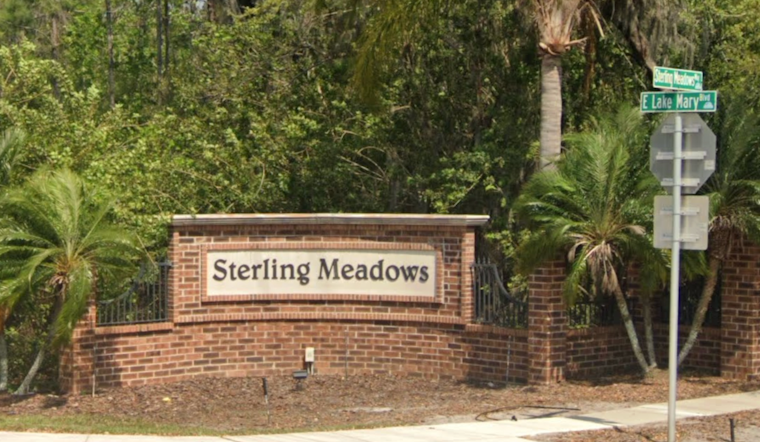
A Sanford homeowners association has paused its plan to euthanize a flock of Muscovy ducks after residents in the Sterling Meadows neighborhood stepped in and moved 25 of the birds to a private farm about an hour away. The ducks, which had multiplied well beyond control in the community, were known to sleep in the roads at night and leave behind significant messes around the neighborhood.
The Sterling Meadows HOA board announced on August 22 that it would follow a Florida Fish and Wildlife biologist's recommendation to humanely euthanize the ducks, according to WKMG. Neighbors pushed back against that plan, and by August 25, residents had captured and transported 25 of the ducks themselves to a private farm equipped with a pond and fencing. Resident Robert Scott told the station the birds were taken somewhere they could actually be looked after, saying simply that the community takes care of one another.
Board Says Culling Was Never the Goal
The HOA board maintains that the Muscovy duck situation remains a genuine community safety and environmental concern, even as it paused the euthanasia order. Board members acknowledged that culling was never their preferred approach, and the station's report notes the board now says it will work with residents to identify a humane, responsible solution consistent with FWC and federal guidelines. Organizers involved in the relocation effort plan to move additional ducks on Thursday and Saturday, per the same account.
That plan runs into real legal constraints. Muscovy ducks are non-native, invasive birds in Florida, and under Florida Statute Section 379.231, it's illegal to release them into the wild — any relocated ducks must be kept in a secure, fully enclosed captive setup where they cannot escape or contact native wildlife, according to the Florida Fish and Wildlife Conservation Commission. Whether the farm the Sterling Meadows ducks were sent to meets that containment standard has not been reported.
Why Wildlife Officials Discourage Relocation
The FWC does not perform duck removals on private property at all, and the agency has warned that live relocation itself carries risks: it can cause severe stress, territorial fighting, starvation, and disease transmission among waterfowl forced into unfamiliar territory. Federal rules add another layer. Title 50, Section 21.54 of the Code of Federal Regulations lets landowners, local governments, and HOA boards capture, control, or euthanize Muscovy ducks and destroy their eggs without a federal permit — but it explicitly bars capturing and releasing them elsewhere, a restriction that helps explain why the HOA leaned toward euthanasia in the first place.
Even so, Muscovy ducks aren't outside the law's protection. Despite their non-native status, they fall under Florida Statute Section 828.12, the state's animal cruelty statute, which requires that any capture, handling, or culling be done humanely, according to the Animal Rights Foundation of Florida. FWC also classifies Muscovies as Class III non-native wildlife, meaning Florida residents can keep them as pets without a state permit, though commercial breeding or exhibition requires a $50 game farm permit.
A Breeding Problem That Won't Solve Itself
The underlying reason Sterling Meadows ended up with an unmanageable flock comes down to biology. Female Muscovy ducks are prolific year-round breeders, laying clutches of eight to 15 eggs that hatch in roughly 35 days, and a single hen can lay 30 to 40 eggs annually, per the Cornell Lab of Ornithology. That reproductive pace means relocating 25 birds does little to address repopulation unless the HOA also tackles the ducks left behind, one of the open questions the board has not yet answered.
Dense duck populations also create measurable environmental and health problems. The FWC reports that concentrated waterfowl in stormwater ponds drive excessive nitrogen loading, while droppings carrying bacterial pathogens like salmonella can pollute walkways and swimming pools. Those hazards are part of why HOA boards across Central Florida increasingly treat Muscovy overpopulation as more than a nuisance complaint.
How Other Central Florida Communities Have Handled It
Sanford's dilemma echoes a broader regional pattern of municipalities drawing a hard line on ducks even as they loosen rules on other backyard poultry. Sanford itself updated its city code in October 2025 to permit backyard hens while keeping an explicit ban on ducks, geese, and peafowl, and Casselberry followed with a similar update in August, as Hoodline previously reported.
Winter Park offers a different model. In December 2022, its city commission unanimously approved an integrated Muscovy duck management program that combined public education and habitat modification with FWC-compliant humane trapping to resolve conflicts around municipal lakes, according to the32789. Whether Sterling Meadows adopts a similar long-term approach, or continues relying on ad hoc relocations, remains an open question as the HOA works through the pause it announced this week.





