

























































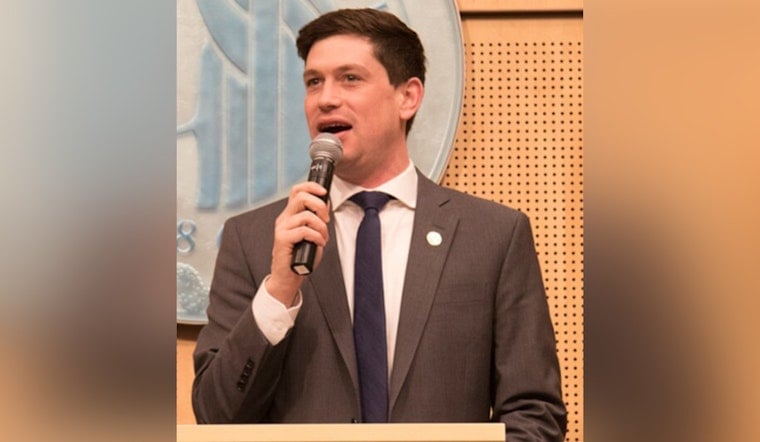
Seattle Councilmember Dan Strauss announced a package of six pieces of legislation Friday meant to build the city's first coordinated system for people living out of cars, vans, motorhomes and travel trailers. The plan, called the Vehicle Resident Assistance Program, arrives as roughly one in four of the region's unsheltered residents is living in a vehicle rather than a shelter or a tent.
According to a Seattle City Council news release, the city currently offers very few services designed specifically to help vehicle residents get connected to support or move toward housing, and has no comprehensive strategy for doing so. The six bills, bundled as VRAP, are meant to change that by creating new resources for people living in all types of vehicles, from sedans to full-size RVs. Jen Manlief, whose statement was included in the announcement, said the legislation provides resources to help vehicle residents stay safe and legal while in their vehicles and move toward more stable situations.
The centerpiece of the package targets motorhomes and travel trailers parked on city streets, which would get both clearer rules and a pathway toward shelter and housing under the proposal. Under the plan, people who engage in services, follow existing laws and comply with basic rules could receive a vehicle resident assistant permit, allowing them to keep living in their motorhome or travel trailer on city streets while they wait for appropriate shelter or housing to open up. Motorhomes and travel trailers without a permit, by contrast, would be limited to just two hours of parking on any city street at a time.
How the Rules Change on Seattle Streets
That two-hour cap would represent a major shift from the enforcement tools the city currently relies on. Seattle Municipal Code already restricts vehicles from parking on the same block for more than 72 consecutive hours and bars vehicles wider than 80 inches from overnight parking outside industrial zones, according to the King County Regional Homelessness Authority. The VRAP package would also clarify Seattle's junk vehicle law, which addresses vehicles abandoned or inappropriately stored on city streets and has not been updated in 25 years, per the council announcement.
Any crackdown on vehicle residents runs into real legal limits. In August 2021, the Washington Supreme Court ruled in City of Seattle v. Long that vehicles used as primary residences automatically qualify as homesteads under state law, meaning cities must evaluate a person's ability to pay before imposing impoundment fees or payment plans, according to the Municipal Research and Services Center. That case began when Steven Long's pickup truck was towed in 2016 for exceeding the 72-hour limit, sparking a legal challenge over excessive fines. The ruling is part of why blanket towing has become difficult and expensive for the city, pushing officials toward tools like 72-hour enforcement, Unified Care Team sweeps and targeted outreach instead.
New Storage and Staffing Tools
The legislation would also create a shelter storage system, letting the city store a vehicle resident's vehicle once they move into shelter or housing rather than forcing them to abandon or sell it. Vehicle resident outreach, which has addressed this population's needs since 2011, is currently seeing more need than its outreach workers have the capacity to handle, the council release states. VRAP would also give the city's Finance and Administrative Services director new authority to sign leases and open safe lots, safe storage sites and other resources more quickly.
The city already has a working example of what a safe lot can look like. The Low Income Housing Institute opened Salmon Bay Village in Interbay in December 2023, running the region's first dedicated RV safe parking lot paired with tiny homes under a $1.9 million regional contract, and the site decommissioned 27 rundown RVs within its first six months while offering utilities, shared kitchens and case management, according to the Low Income Housing Institute. Seattle officials announced a second such site, Glassyard Commons in West Seattle, in February — a $3.3 million project on state-owned land that will host 72 RV safe parking spaces and 20 tiny homes, per the West Seattle Blog.
A Rockier History With Safe Lots
Not every past attempt has gone smoothly. Seattle previously launched municipal safe parking sites in Ballard and SoDo back in 2016, but both closed within two years due to higher-than-expected operating costs, poor site quality and safety concerns, with the SoDo lot shutting down in 2018 following multiple deaths there, according to The Stranger. That history looms over the $5 million VRAP allocates from the existing city budget to expand services and build pathways to housing, since safe lots have historically proven expensive to run well.
The friction between RV clusters and neighborhoods is not abstract for District 6, which Strauss represents. Seattle's Unified Care Team made 18 visits to Greenwood's Sandel Park between February and May, resulting in just two shelter referrals while the team also coordinated trash clearing and 72-hour parking enforcement amid neighbor complaints about open drug use and sanitation, as Hoodline previously reported.
Governance Shake-Up in the Background
VRAP also lands amid a broader restructuring of how the region delivers homelessness services. King County Executive Girmay Zahilay and Seattle Mayor Katie Wilson announced in August that Seattle's Human Services Department and King County's Department of Community and Human Services will reclaim nearly $160 million in service contracts from the King County Regional Homelessness Authority by January 2027, according to KING 5. That reorganization follows administrative and cash-flow struggles at the regional authority, whose own 2026 Point-in-Time Count found homelessness across King County rose 9% between 2024 and 2026 to 18,365 people, with roughly 64% living unsheltered in vehicles, parks and other outdoor locations.
Strauss has spent recent months focused on affordability measures beyond vehicle residency. In July, he sponsored a unanimous expansion of Seattle's Utility Discount Program that changed eligibility to Seattle-area median income, a change expected to lower bills for an estimated 31,000 additional low-income households starting in January 2027, per the Fremont Neighbor. He also led budget negotiations as City Council Budget Chair for the city's $8.9 billion 2026 budget, which Mayor Wilson signed into law last November as Seattle's first unanimously passed budget since 2013.
What Happens Next
Strauss framed the new package in personal terms. Speaking about the legislation, he said it is about ensuring people who live in vehicles are not forgotten, are cared for, and have a clear road to housing. The VRAP resolution lays out how the six legislative pieces are meant to work together toward that goal.
The Public Safety Committee is scheduled to discuss the Vehicle Resident Assistance Program next Tuesday at 9:30 a.m., with a committee vote anticipated in mid-September. Whether the $5 million allocation proves sufficient, and how enforcement will distinguish permitted RVs from unpermitted ones parked side by side on the same block, remain open questions as the legislation moves through committee.



.jpg)